It’s not rocket science to ascertain the moral poverty in our society and in the entirety of human history. Whenever we made progress as a people in a civilization, it increased the possibility of ruining it all in a grandeuse manner. We take one step forward and three steps backwards. Even a simple blessing like a natural resource can become a huge curse to the people it belongs to. Something is fundamentally wrong everywhere in every field, in every nation and in every discourse. We can’t pretend it’s not there. We can’t beat around the bush. It’s the reality of evil.
Fallen State
The fact that people find it hard to believe in God, the epitome of good, and literally nobody doubts the existence of evil should tell you something. This world is fallen. The natural man is in a fallen state. Thus, no matter how far the world progresses, it will only be employed to propagate more manifestations of evil that never existed hitherto. Every single tool man has ever invented – from cars to the Internet to AI – always started as a good solution to existing problems, only to end in a dilemma of evil fashions.
Since we live in a fallen world, the law of diminishing returns rules over the realm. Everything leans towards the negative side. In this realm, barely are there any absolutes, and everything can have a positive and negative repercussion for it. Thus, those who do evil can benefit from it; a reality inconsistent with the original design and system God created to govern the world. All such inconsistencies are discussed in the book of Ecclesiastes, where the author calls them meaningless. Do we have values anymore? Are they still emphasized?
If the only reason we teach people to avoid evil is because of natural consequences, they’ll grow to enter the systemic evil and realize how elites spend resources to alleviate consequences. Evil is not evil because an evildoer will reap evil consequences. It’s possible to benefit from evil and deflect all its natural consequences. Because of the benefits and no imminent “karmic retributions”, posterity will rise to embrace such evil as good. Because the sentence against an evil work is not executed speedily, therefore the heart of the sons of men is fully set in them to do evil (Ecclesiastes 8:11).
The Mystery of Evil
What do you mean the race is not for the swift? Bread is not to the wise? You’re telling me you can be a fool and still be rich? So it’s possible to be a poor wise man? How can evil prosper? Why do good people suffer? It does not obey the laws and principles and order. No wonder the Bible calls lawlessness a mystery. No matter how much the world prospers materially, all such material wealth will be used to expand the boundaries of evil creatively. The problem has never been without but within. Technology can be designed to make the world safer until someone redesigns the same technology as the very threat. Tools are neutral. Tools in the hands of evil become evil tools.
You may think I’m just philosophizing. How do you make sense of the Epstein case? Do you know that up until now, not a single person has been prosecuted in connection to it? The world gets better materially, but keeps rotting morally. Right now, the masses are being conditioned to seeing evil go unprosecuted. Expecting justice from a system of injustice never made sense anyway. That notwithstanding, anytime you saw the system judge evil, it only got rid of what Haman created. It never got rid of what created Haman in the first place. That’s the real definition of systemic.
Don’t let the city lights fool you. There’s so much evil in this world. That is not to make you fear or put you in a panic mode where you anticipate evil overcoming you as though you’re a victim. This is to make you aware that there’s a spirit more ancient than material in this world, the spirit of this age. It indoctrinates that good can co-exist with evil. Some of the nicest people in the room of global influence and within the corridors of power are satanists who eat babies for breakfast. Your brain will not be able to fuse those two characters into one person. Slavery hasn’t ended. It has evolved. Human trafficking is the highest now than it has ever been. The world rots from within.
the Systems of this World
The systems of this world is fashioned to beat you into conformity. It can pull all the strings on you in an attempt to beat into line. Just look at the rat race. Despair is one of the silent evils of this world. Once you bring a person into that state, you blur their lens of good and evil. It now becomes by hook or crook for them. Before they realize, they are benefitting from the evil they used to condemn. Another is poverty. The vicissitudes of life captures it all, and it is fashioned to make you crumble, focus on your survival, and never walk the path of destiny. It is all an attempt to keep you from seeking God’s Will for your life.
The systems of this world has 3 main expressions: the lust of the flesh, the lust of the eyes, and the pride of life. The lust of the flesh because your flesh is your weakest link. It’s still in its fallen state, and therefore more susceptible to evil than any other part of you. The lust of the eyes, because your eyes is the biggest gate into your person. Scientifically, it accounts for over 80% of the information your brain receives. It is more powerful than all your senses combined. The pride of life is how you incarnate the spirit of the antichrist into your vessel. It’s the cardinal sin.
Being the Light of the World
If you want to be the light, you first have to come out of the darkness. In Christ, we are transported from the kingdom of darkness into His marvelous Light. The kingdom of darkness has their own “light”. Remember, the epitome of evil used to sit in the office of a lightbearer. His light is now darkness. If you have anything to do with this darkness, you’ll never overcome it. By dwelling in the Light only, you escape the corruption that is in this world through lusts.
There’s a way you can be rich, not by the means of mammon. Yes, you can be tremendously influential even in evil Babylon as a Daniel and not be stained by darkness. It’s never by having a victim mentality as though darkness can cover light. Light rather shines in darkness. Even in the deepest darkness, light shines the brightest. However, take an absolute stance never to defile yourself. You can never overcome evil with evil. We rather overcome evil with good.
Eons ago, the Greeks gathered under trees, and absolutely drunk, they discussed wild ideas. Such an informal gathering in open space is what birthed some of the prevalent ideas in modern society today. It was an open-mindedness so open trash was considered genius because it was new. Soon, philosophy became a thing as these informal schools came up with schools of thought that debunked the status quo. People want something unconventional instead of something fresh. They want stable truths debunked because, to them, they are stale. Don’t we see much of that today? Let’s delve into the 4 areas that will be responsible for the confusion of many. Do you remember how confusing last week’s post was? So hard to read, right? Today, I’m going to lay it bare before you so you can realise the Truth.
Philosophy
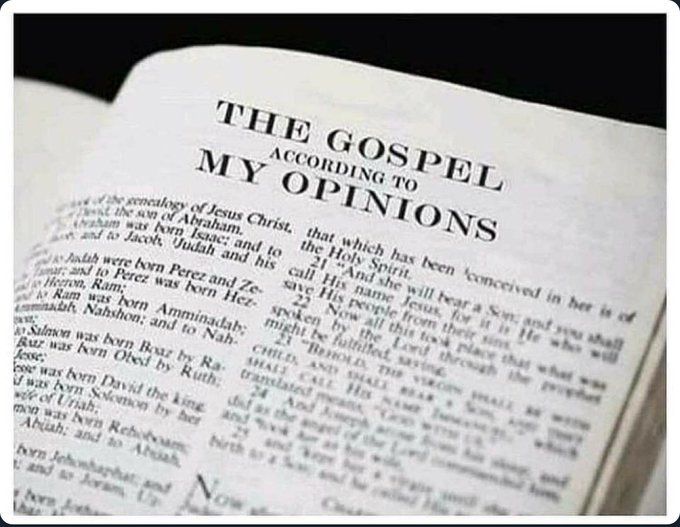
Philosophy is a rabbit hole into nothingness. In the beginning, it seems like a wise discourse or a platform for the exchange of ideas and knowledge. What it basically is is the Gospel according to opinions. It’s what I call the spirit of the Greeks. People can clearly see Mammon, the spirit of Babylon. Some recognize the spirit of Medo-Persia, especially in areas where the Haman spirit chases down Christians with threats and murder. However, comfortable Christians have been rampaged by the spirit of the Greeks. Where this spirit dominates, the Gospel never faces fierce opposition. You can easily be allowed to share the Gospel like Paul was when he reached Athens. However, the Gospel is treated as simply one school of thought.
Acts 17:21 says “all the Athenians and the foreigners who were there spent their time in nothing else but either to tell or to hear some new thing.” The science of opinions. No wonder people are easily offended nowadays. Unity is not when our opinions align and agree. People don’t want to know the truth anymore. Just want to hear what makes them feel good and strokes their ego. Cunningly-devised fables, if you will. As 1 Timothy 6:20 puts it, this is what people falsely call “knowledge”.
The desire for something new instead of something fresh is what Scriptures call itchy ears in 2 Timothy 4:3. “God loves me? I already know that. That’s not new. Tell me something I haven’t heard before”. When they hear something new, weird and don’t understand yet, they then say, “wow, this is deep”. This is what pushes people to now invent new things from old truths in order to entertain their listeners. Don’t fall for the “go deeper” shenanigans. There’s always a fresh Word from God but never a totally new word from that which has already been established.
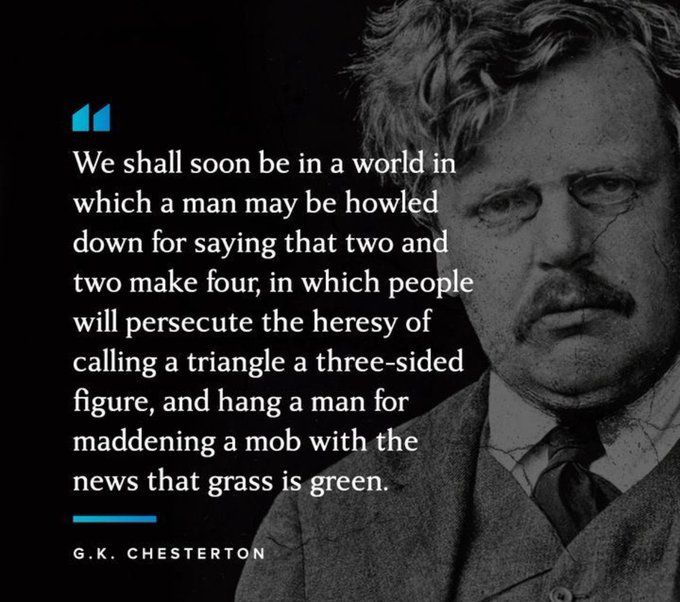
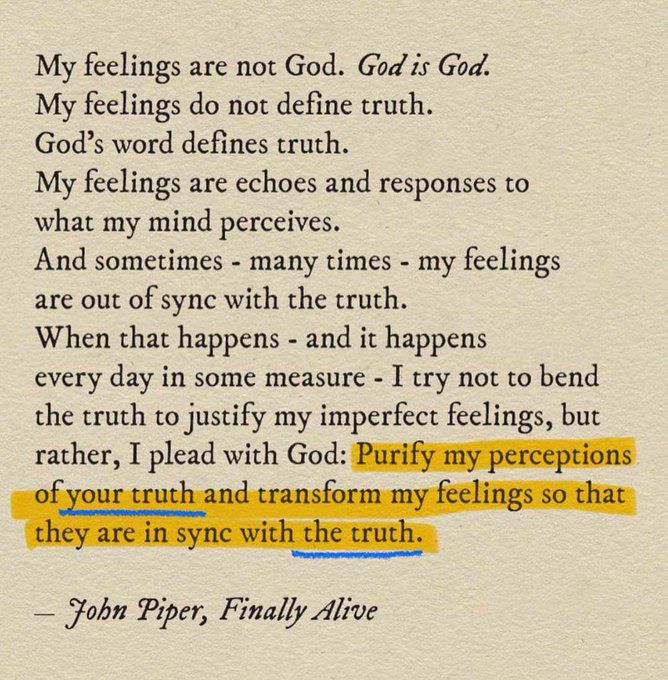
This is what gave birth to “relative truth” rundown. One will say we all have our truths and that you have your truth and I have my truth. Some even say there’s no such thing as truth. Well, if that’s the case, then why should I believe you? It’s all mindless confusion. You follow it at your own peril. You will become a very wise fool. The gospel according to our opinions is responsible for why people want to hear what celebrities have to say. We have become so open-minded that historical facts seem not to exist anymore because it has become a matter of opinions. This is also the basics for the “I feel; therefore I am” movements. You feel like a girl even though you are a boy so you dress like a girl. Feelings over facts. It is the wisdom of men as Paul said 1 Corinthians 1 and 2. Speaking of wisdom, let’s talk about psychology.
Psychology
When we discussed the wisdom of the devil, we mentioned that there are 3 kinds of Wisdom; the Wisdom from above, the wisdom of this world and human wisdom. Even the foolishness of God is wiser than the wisdom of men. It is the foolishness of God to pick what men reject to confound the wise, not that God is actually foolish. Human wisdom does not guarantee anything. If you really are a Christian, let your way of thinking be solely based on Scripture. Psychology will only support what Scripture has already established. I say this because a lot of psychology and philosophy is preached from pulpits and what most Christians believe, they cannot even point to one Bible verse to support it.
Do you believe in psychology quotes or do you quote Scriptures? This “follow your heart”, “do what you love”, “believe in yourself” etc is all psychology and philosophy. With time, someone will come and debunk it and propose a new theory that makes sense in another way. Today, psychology wants us to believe that hard work is not important and that we should work smart instead. In the next 10 years, working smart will be seen as archaic and wrong. Meanwhile, Scriptures offer principles that are established and proven, regardless of person, time or even place. It is dangerous to live your life based on what psychology is saying. It is like building in the sand. If you are indeed a Christian, the Scriptures should form the bedrock of all your beliefs and worldview.
When someone speaks psychology and philosophy, they make sense because they speak to the mind. However, making sense and knowing the truth is not always the same. The truth does not always make sense, my dear. Whoever speaks truth speaks to the spirit. Jesus said His Words are spirit and life. In hard times, you can hold on to the Word of Truth in your spirit. All your knowledgeable psychology ideas will fall like a pack of cards because none of them will even come to mind in tough times. Motivational speakers speak to your mind. Bible teachers speak to your spirit. The latter makes a lasting impact. You can use mindfulness to achieve things in this life but you cannot use it to conquer sin, the world and Satan. It’s only the Word!
Pseudoscience
The foundation of science was laid by people who believed in God and looked forward to His inspirations. Many of them had visions and saw answers via dreams. Today, the average scientist wants you to believe otherwise. For crying out loud, Sir Isaac Newton had more notes from Bible Study than on science and mathematics combined. Much of what we call science is basically pseudoscience. Certain theories have been held in higher esteem than even the laws in science. Atheism wants it to look like it’s backed by the world of science. Meanwhile, everything in science screams of a Designer. Big bang theory is simply a theory. It was even first proposed by a Catholic priest, a theist. It has not been proven, and yet, it is always discussed as if it is.
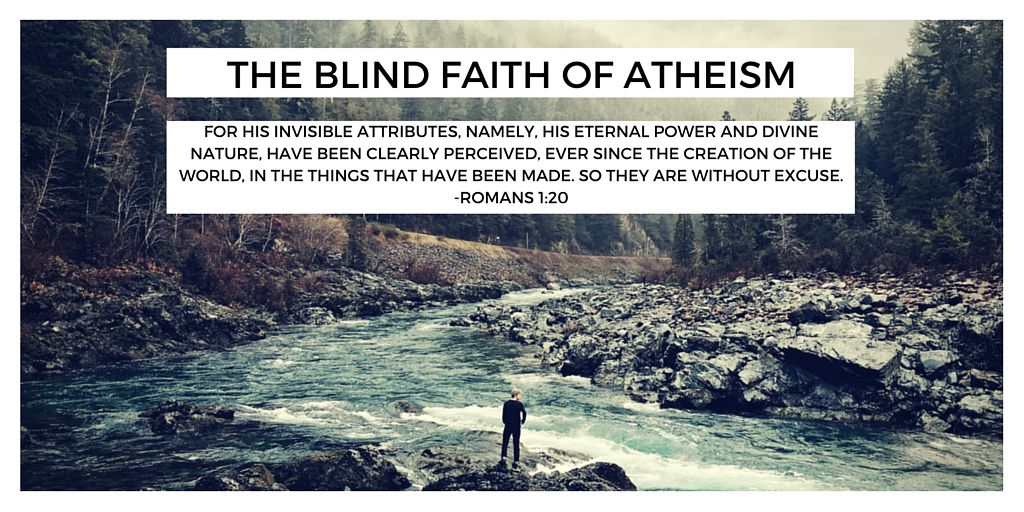
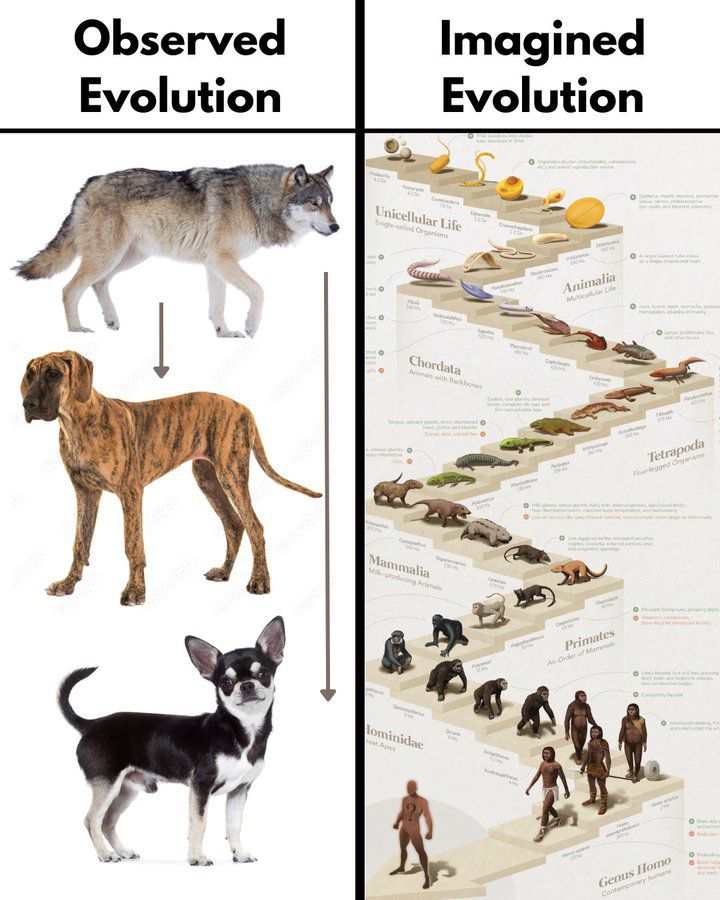
Also, why has the big bang theory become an atheist worldview of the beginning of life when it was proposed by a theist and hasn’t been proven? Are you telling me you knew what happened 300 million years ago but don’t believe in the resurrection of Jesus, something that happened just 2000 years ago and was confirmed by 500+ witnesses? Seriously? You really think we actually share a common ancestor as apes? Pseudoscience has reduced human beings to simply animals. It has stripped us of the “fearfully and wonderfully made” identity and scoffed us into believing we are insignificant compared to the rest of the universe. What will you choose? Christianity that gives you genuine purpose and hope, or a Pseudoscience that proposes that you’re just a random happening? It takes more blind faith to be an atheist. There’s too much make-believe.
Also, Charles Darwin clearly stated that he could be wrong concerning his theory of evolution. He said if a complex organ could not be explained by gradual modifications, his theory “would absolutely break down”. Guess what? A complex organ cannot be objectively explained by gradual modifications. Scientists say the belief in God will influence their scientific experiments but atheism is equally a worldview that influences as much. We can create as humans but we weren’t created? We came from nothing and are evolving into nothingness? Oh wow! We don’t even know how life came from non-life but let’s pretend all of science is based evolution theory and the big bang theory.
Is evolution real? Yes. However, the leap from “animals change slightly over time” to “all life is the result of mindless natural processes” is completely absurd and untrue. It’s an extrapolation of the adaptation of species. All this is targeted at eroding humanity from his true origin. Today, “intelligent” people believe in these things, making us look foolish for believing we are made in the image of God. Take heart! It is only a recent dilemma. About 99% of people who have ever lived believed in the existence of God. Don’t let them deceive you that we were indoctrinated to believe in God. There are isolated tribes in the world with no contact with our current civilization and yet, they believe in a Supreme Being. It is Charles Spurgeon who said “atheism is a strange thing. Even the devils never fell into that vice”.
Perspectives
In the realms of humans, nothing was made to be permanent. Everything has advantages and disadvantages. God can bring good out of something evil and something good can lead to something evil. That being said, don’t justify your wrong when God brings something good out of it. Also, perspectives have become the venue to erode absolutes and objectivity. When you do good, there are both advantages and disadvantages to it. The advantages or disadvantages are not what predetermines what is good or bad. Otherwise, what is good or bad becomes a matter of perspective rather than an objective morality upheld by God.
Let me give you an example. It is good to give, not because of the advantages of giving (because there are also disadvantages), but because it is commanded by God. Goodness is based on God. Take God out of the picture and now, we are just left to determine what is good and bad from its advantages and disadvantages. Meanwhile, there are advantages and disadvantages of every action in this realm, whether good or bad. The fact that something gives you an advantage does not mean it is the right thing to do. Have you seen why modern societies are now finding it hard to determine what is good and what is not? Subjective morality is no morality at all. It will only be a matter of opinions until we accept pedophilia as an acceptable form of sexuality.
Let’s Put Religion Aside?
Have you ever heard someone say, “let’s put religion aside. We are humans first”. Really? We don’t know what religion is again, do we? It is because Christ taught and exemplified love for one another that I am compelled by His Grace to do the same. If we put that aside, what will be left? “Humanity first!”. True humanity is what Christ exemplified in the flesh. “Let’s put the Bible aside”. No, we aren’t. If we put all of this aside, wherein lies the core of my morality? We will go back to the Gospel according to opinions. Objective morality only exists because God. If we put God aside, everything in society will crumble.
What they won’t tell you is that western civilization was built on Christian values. That’s why we aren’t seeing a sudden collapse just yet. Objective morality is so strong, people wish the well-being of others and generally, help is available; people are nice to each other, systems work and the needs of the underprivileged are addressed. All these are as a result of Christian values entrenched into the system. The dilemma is that African culture is built on idolatry so we are yet to fully let go of idolatrous influence and fully embrace Christian values. Thus, you will see atheist Westerners showing you more love than Christians in Africa. Don’t be confused from now onwards.
If western civilization refuses to uphold and recognise the place of Christ in society, their civilization will collapse like many other civilizations in human history. This is not rocket science.
The Scoffing spirit
Scriptures, especially in Proverbs, point to the spirit of scorners and scoffers. You may not have noticed but once you understand it from here, search the Scriptures to see. It is one of the highest expressions of pride. In Psalm 1, we see a progression from ungodly to sinners to scornful. These are people who mock God and the things of God. They make you feel foolish for believing in something so simple. Not only that, they seem to have a way of making something great look small and insignificant. Pseudoscience have tried their best to paint humans as insignificant. Feminism have tried their best to paint men as insignificant. Modern societies have tried their best to paint being a housewife as someone insignificant. It is their nature to belittle things that actually form the core.
Do you have a friend who always finds a way to devalue your achievements? They have this diction and mindset of seeing it from a different perspective in a bad light. The same is done to Judeo-Christianity perpetually throughout centuries. There’s a way the Gospel can be painted to look as though it is dumb. That’s why the Scriptures say “the message of the Cross is foolishness to those who are perishing”. If you give attention to such ideologies for long, you will follow the progression of the wicked in Psalm 1. You will walk, stand and eventually sit in the seat of the scornful. You will cast pearls before swine. You will treat what is Holy as a common thing, as Hebrews 10:29 puts it. Our minds are fragile; we believe something in accordance with how many times we hear it. Believe you me, if you give your attention to the scoffing spirit, you will become an evangelist for this religion of vanity. They will make a mockery of the simplicity of the Gospel but won’t tell you how empty their worldview is. Beware!
Philosophy, psychology, perspectives and pseudoscience. If you give your attention to any of these four, you become knowledgeable but you will lack wisdom. Selah!
Since the beginning of human history, religion had been the most defining element of society. It literally sat at the pinnacle of all civilizations and defined a people, their culture, architecture and way of thinking. However, about 300 years ago, there was a huge paradigm shift. The Age of Enlightenment. Science and religion were at loggerheads, and God was replaced with “self” as the focal point of society.
The Age of Enlightenment is the very definition of modernism. A movement that – right at its conception – matrixed traditional beliefs with modern ideas. This new way of life influenced literature, visual art, architecture, dance, and music. This is simply called the New Age in our time today.
Values
Modernism encouraged the re-examination of every aspect of existence, from commerce to philosophy, with the goal of finding what was holding back progress and replacing it with new ways of reaching the same end. Thus, even in art, Modernism fostered a period of experimentation after questioning the status quo. Modernists did not believe in uniform values; they cared little for social norms and instead were occupied with a lack of identity, lack of faith, and cynicism.
Roger Griffin observes that modernity produced a longing for a “sense of sublime order and purpose” in a world where the sacred canopy had been torn apart by secularization and fragmentation. In this vacuum, movements and ideologies that seemed unrelated began to flourish with near-religious devotion: Expressionism, Futurism, vitalism, Theosophy, psychoanalysis, nudism, eugenics, utopian town planning, architecture, modern dance, Bolshevism, organic nationalism—and, in the end, even the cult of self. What once appeared fringe soon became the cultural norm.
This also gave rise to new concepts such as Individualism, Symbolism and Absurdity. It was more about what an individual thought about a certain idea – for instance, polygamy – not necessarily about what society thought. The individual determined his morality rather than the collective whole. Every petty yardstick in society was challenged and seen as a social construct. We still see it till today as people doubt that Jesus even existed although He is one of the most documented people in history. Perhaps, even what was thought to be cast-in-stone common knowledge were now challenged as being fluid; God, gender, rights, morality, to mention but a few.
Beliefs
It started as Christian Science, a religion that sought to fill the portholes when science and religion combined path. However, the patch didn’t last. Religious fundamentalists believe in the superiority of their religious teachings, and in a strict division between righteous people and evildoers. This belief system regulates their thoughts, but also all conceptions regarding themselves, others, and the world.
The core of every religion is its belief systems. Existing religions now needed a modern touch or a simple abandonment. “Traditional” religion became formalism; excessive adherence to prescribed forms from authorities. The modern man thought that was questionable. This gave rise to liberalism. Liberalism took the more “flexible” approach; a world of logic, physical matter and no eternal consequences for one’s willful actions. Pseudoscience has reduced man to a piece of insignificance – just a composition of gases and atoms – leaving him with no defined purpose.
The “modern” man reduced religion to mere forms — ceremonies, rituals, and outward observances stripped of inner meaning. Ethics, too, became formal, grounded in the shell of moral law without wrestling with motive or consequence. Modernism, born out of applying critical methods to the Scriptures and the history of doctrine, shifted the focus. It diminished the weight of historic creeds and dogmas, and instead exalted the humanistic side of religion — stressing man, while sidelining the eternal.
For the first time in history, people were not looking to God for definitive answers; they grew skeptical of their religion and religious faith. Modernism basically showed a society that was rebelling against tradition, while realism simply showed how society dealt with the normalities of life. Realism talked about the traditions of characters, how they lived, and what they dealt with.
Expression
Modernity defined itself by its own standards — technological advancement, systems of governance, and socio-economic shifts. To embrace modernity was to see one’s generation as breaking into new realms of knowledge and organization, making the immediate past appear obsolete or outpaced. Voices like David Hume, hailed as one of history’s great philosophers, embodied this spirit by urging philosophical agnosticism toward almost everything, yet granting man a fragile sense of certainty and a huge lack of identity.
In modernist literature, man is assured that his own sense of morality trumps. Modernist fiction spoke of the inner self and consciousness. Instead of progress, the modernist writer saw a decline in civilization. Modernism was a break with the past and the concurrent search for new forms of expression. This is because society is heading to a place with no structure, no universal basics, no fundamentals, no yardstick and no acknowledgement of a Godhead.
Since time immemorial, man has known that there’s more to what the naked eye could see. Life was so strange to be normal. There had to be a higher being who overlooked it all. This began the use of the visible to represent the invisible. These symbols had spiritual significance and kickstarted what I called spiritual architecture. Some built altars, others built statues while others carved gods out of wood.
Imhotep, the very first architect known by name was Egyptian. Architecture in the first civilization went hand-in-hand with craftsmanship. Imhotep was more of an artisan who carved the physical till the spiritual was revealed. Today, architects are more or less photoshop experts. Spirituality was so relevant in architecture that palaces, temples and all public buildings were dedicated to gods and built to show that spiritual significance.
Architects of the early eras were either kings, spiritual leaders or an honorable man chosen to carry out building instructions according to the oracle of the gods. Bezalel, mentioned in Exodus 31, was the architect who built the Tabernacle of Moses. The first man mentioned in the Bible to have been filled with the Spirit of God. Architects were held in high esteem and had some spiritual backing. Today, the average person doesn’t know how relevant the architect is, underpaying them into depression.
Buildings with spiritual significance have produced masterpieces well ahead of a million generations to come; the Pyramid of Giza, King Solomon’s Temple, the Temple of Hephaestus, to name but a few. The architecture had divine concepts for a start. That is, the architect had a divine intuition to design it in a particular way that overlaid the spiritual on top of the physical realm.
The Pyramid of Giza following the Golden Ratio
Such places were seen as the place where diviniy met humanity. The mathematical order still made it more functional, beautiful and durable than most buildings today. Facts! Not only were the temples built in this way, the entire community was. The place of worship was mathematically placed as the centre of the city. Also, there wasn’t a single redundant element in the design. Every symbol, design and handiwork had spiritual significance.
In the Bible, God goes into exquisite detail into how the Ark of Noah and and the Tabernacle of Moses is to be built. The Bible also goes into tremendous detail into how the Temple of Solomon was built. A typical vernacular architecture had symbolic meanings to every craft and design technique too, reflecting the religion and culture of each clan and tribe. Can we say same for modern architecture?
The Pantheon following the Golden Ratio
“Spiritual” architecture has mathematical order. Only mathematics can be used to explain spiritual relevance in a physical way. That’s why most church designs have order, symmetry and repetitive pattern, designed a little bit above the human scale for the user to experience awe and see how small one is in front of a big God. It is mathematical order that makes ancient masterpieces more functional, beautiful and durable than most designs today.
Frank Gehry wasn’t lying when he said 98% of what is built and designed today is pure shit. I couldn’t agree more. Including his designs, if you ask me. What is the focus of modern architecture? “I saw a nice building in that place. Can we replicate it here?”. Does the average architect know mathematical order, understand mathematical beauty and use them in designs? Golden ratio? Fibonacci sequence? Any spiritual significance? Any mathematical basis? Anything? Any?
Let me hear your thoughts on this. Please comment below.
Almost all major fields in science were discovered by Christians. Scientists like Sir Isaac Newton were found to have more notes from Bible study than papers on his research in Science and Mathematics combined. Yet, Christians has no voice in the world of technology. Why is this the case? Why is the modern scientist more susceptible to agnostic or atheistic beliefs?
Let’s go all the way back to the 15th century, where almost all phenomena were explained superstitiously. All of Christendom were under the umbrella of the Universal Church, popularly known as the Roman Catholic Church. The Church’s voice were like the Word of God, and the Pope had such massive political influence. However, the Church began to persecute scientists whose experiments revealed scientific knowledge contradictory to the beliefs of the Church.
One of such beliefs is the earth being flat, and another being that the earth is the centre of the universe. Copernicus and especially Galileo were heavily persecuted, defamed and had their scientific works banned. This was the beginning of the modern separation of science from religion. Christendom waged an unnecessary war with science as if it were the exact opposite of Christian faith.
Christians “feared” that science will explain logically something they chose to believe blindly. This is because Christianity is based on blind faith while science is based on logical reasoning and systematic analyses. Although not written anywhere in the Bible, Christians believe that the world was created 6000 years ago while science speaks of billions of years. Christianity thought science was belittling the uniqueness of humans after the discovery of billions of galaxies. Humans felt so small and insignificant compared to the vastness of space.
By the beginning of the Enlightenment Age started by Réné Descartes, the average scientist realised that Christian beliefs only retarded scientific quest to investigate natural phenomena by following scientific methods and resulting with scientific data. Why would a Christian want to know how it simply rains? “It is the work of God. God works in mysterious ways. There is no way we can understand Him.” Eventually, science and religion began to have contradictory explanations for every natural occurrence.
About a 100 years into the Enlightenment Age, the Holiness movement began in Christendom. Teachings about focusing on Heaven rather than the things of the earth popularised. Many verses about being poor on earth but rich in Heaven were stressed. In Jesus’ own words, “it is easier for a camel to pass through an eye of a needle than for a rich man to enter the kingdom of Heaven”. Why amass wealth on earth, where moths can eat them? Why make the world a better place, if you’re going to die and go to Heaven?
Soon, being poor was tantamount to being Christian. That’s how come the phrase “filthy rich”, was framed. While Christians focused more on the afterlife, the world focused on more on technology and making the world a better place. The world of technology expanded and it had nothing to do with Christianity. Early televanglists began to speak heavily against the evils of technology in modern day, all the while using technology to propagate their messages. Many Christian leaders still censure technology to this day.
Before the Prosperity Gospel movement could start in the late 20th century for the world of Christianity to believe there’s nothing wrong with being rich, Christians were far behind in making an impact, not only in the world of technology, but the world at large. The political arena, world of science and technology and even sustainability were no longer dominated with “Christian” power. The richest people in the world, most influential and most revolutionary people were not necessarily Christians.
Christendom was united under the Roman Catholic Church for about 1000 years. After Martin Luther submitted his 99 theses to spark the start of Protestantism, there hasn’t been a stop to separation within the “Body of Christ”. Today, there are a whopping 45,000 denominations and counting. There is still an on-going debate against the speculations of science. The world no longer knows what we believe, because we lack oneness. Thank goodness the world went on to make itself better – in terms of technology – without us.
Today, the average scientists believes in making the world a better place but this is yet to sync into the reality of the average Christian. The average scientist still thinks one need not believe in God because it will be an impediment to discover, uncover and explore. The world no longer looks to the Church. Rather, the Church is yet to catch up with world movements. This is all because the Church refused to embrace the world of science and technology at the beginning of its modern history.
If you’re a Christian and you believe in science, let me hear your thoughts on this.