Category: Stress

  • How to Care Too Much Without Being Worried

    How to Care Too Much Without Being Worried

    Caring is the most human thing to do. There are many words for “care” in Greek. Two of them are used in 1 Peter 5:7 and give the perfect difference between them.
    “casting all your cares [all your anxieties, all your worries, and all your concerns, once and for all] on Him, for He cares about you [with deepest affection, and watches over you very carefully].”
    1 PETER 5:7 AMP

    Cast all your cares because He cares. Wow. Should we actually cast all our cares? Will that make us careless or care less? Will that make us carefree or not care anymore?
    Psychology says one of the most difficult tasks in life is to convince yourself that you do not care. You will have to repeat it over and over to yourself and others and you will still not find peace. No matter what you are in the world; liberal, criminal, realist, atheist, even the worst person on earth, there is someone or something you care about because that is how you were designed; to care. This orchestration to care reaches its max when one becomes a parent, biologically or logically.
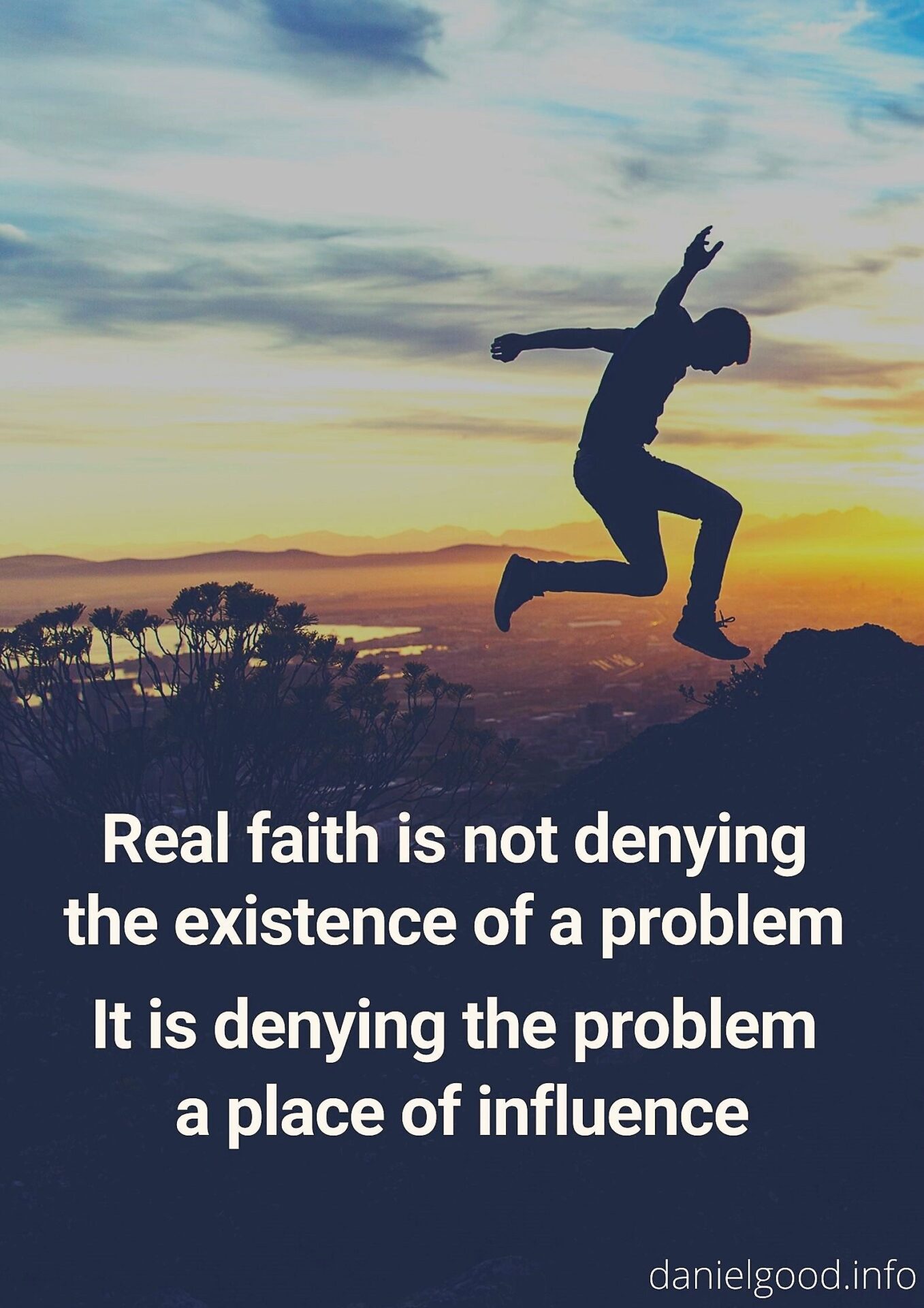
    What about faith? When I have an issue at hand, isn’t it normal to worry about it? Real faith is not denying the existence of a problem. It simply denies the problem a place of influence. My substance of faith is not based on my circumstances but on the reality of what isn’t yet seen. Real faith does not cause me to deny that I don’t have money or that I need money; it makes me emotionally stable in my financial crisis because my conviction is not based on what I see. That is just beautiful. The vicissitudes of life is no justification to be worried.

    Worrying doesn’t mean you care. Worry is the sin of leaning on your understanding instead of trusting in God. Jesus said in Matthew 6:27, “Who of you by worrying can add a single hour to his life?”. Worrying is anxious care. The Greek word for the word “worrying” has the same root word for the word “cares” in the verse “casting all your cares”. It means solicitude. It has an idea of distraction. Any form of care that makes you anxious is called worry. Beloved, let us not normalize worry. Worry is a problem that has never solved any problem. As humans, are we supposed to worry sometimes? The answer is in 1 Peter 5:7. Worrying is pretending you care more than the God who said He’ll take care of it.
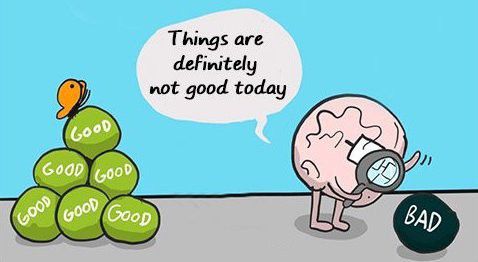
    Worry is one of those sins that is so subtle. It can show up in your own words to curse your life. We speak 150-300 per minute. That is about 50,000 words a day. 70% is subconscious. Research says we have a negativity bias and tend to value negative thoughts over positive ones. 95% of what we say is repeated most of the time. “As a man thinketh in his heart, so he is.” (Prov 23:7). What have you been thinking about and saying to yourself in the loneliness of your thinking? As Joyce Meyer would say, “Think about what you are thinking about”. Have you brought negative thinking from your distant past into your immediate future?

    Matthew 13:20-21 says “the seed on the rocky soil represents those who hear the message and immediately receive it with joy. But since they don’t have deep roots, they don’t last long. They fall away as soon as they have problems or are persecuted for believing God’s word.” Worry comes to attack the Word of God you have. If the Word has no root in you, you will let go of the Word. We can all say nice words until hard times hit. When worry attacks you, do you hold on to God’s Word in your heart or the Word was simply in your head so what is planted in you wilts under the heat of the sun?

    Worry does nothing but pull you down. When you’re worried that something may happen, worry doesn’t stop it from happening. It doesn’t make you human. It makes you a prophet of doom over your own life. It breaks you down. It distracts you and distorts your reality towards negative aspects. Worry is a burden. It is burdensome. It changes your focus. It makes you focus on your problem instead of your solution. It magnifies the problem with increasing attention. If you give in to worry every time life becomes hard, worry will control your life in hard times where you need peace and joy the most.

    It all starts with denormalizing worry in your mindset. Realise that you don’t have to worry for a single moment in your life, because Jesus is your rest. Worrying is not planning. Worrying is not caring. Worrying is not thinking. Worrying is stressful. I can think about what I will eat, drink and wear tomorrow without worrying about it. Whenever you begin to worry, think about God’s Truth concerning the matter and cast it ALL on Him. You will realise that many of the things we worry about are actually petty petty things. No problem is ever bigger than God. We have a Father who is willing to take care of us all the way. Put your trust in Him. He knows your end because He planned it.
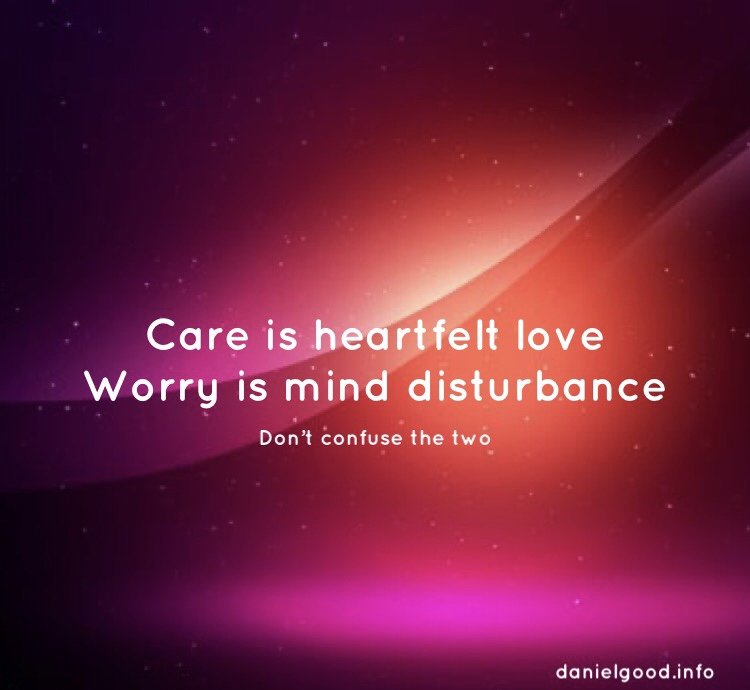
    Worry can be used as an English word but should not be tempered emotionally. You were made to care, not to worry. Language may mix it but don’t mix it emotionally. Care is heartfelt love. Worry is a mind disturbance. Jesus’ yoke is easy and His burden is light. He gives us rest for our souls. Read Matthew 11:28-30. “So do not worry about tomorrow; for tomorrow will worry about itself. Each day has enough trouble of its own.” Care because you do. “Do not be anxious about anything, but in every situation, by prayer and petition, with thanksgiving, present your requests to God.”

    I love you ❤

  • Why Does Life Have To Be So Hard?

    Why Does Life Have To Be So Hard?

    None of us wants to be in calm waters all our lives. Where there is no challenge, there is boredom. Passion dies whenever there’s nothing new to try.

    There ought to be something that looks bigger than us. Something that alters our mindset at the end of the journey. Something that challenges us, not just to do better, but BE better; to live to our utmost potential. Something experiential that challenges our perspective to something we’ve never seen before but was always there. Something that is worth living for. Something that is worth dying for.

    There’s gotta be something.

    But why does it have to be this hard? It’s like I’m always at my wit’s end. It’s like my bones are crushing, my teeth gnashing. It’s like the only reason why I have no reason to live is the only reason why I am living.

    Left to me alone, I would give up but I just can’t give up now. There’s something that keeps leading me on, telling me there’s gotta be something to all of this. Giving up hurts more, and failure is better than regret. It will definitely be worth the risk. What I become in the process is far greater than what I have as the product.

    Life is just like giving birth. After so much pain we thought we could never bear, what we are expecting finally becomes a reality, but in a way, we certainly did not expect. That is when we realise that the more the sweat, the greater the “sweet”.

    The joy at the end is far more unbearable than the pain we went through. The pain now just becomes a passed memory, but the joy becomes a present reality.

  • Negative Emotions & Realities: How To Deal With Them

    Is it possible to live in a reality that is out of place with our present circumstance? Are we supposed to allow ourselves to go through the incumbent emotions triggered by our brain due to the nature of present circumstances or we are supposed to “fake” a positive reality till we “make it”?

    The brain releases negative emotions a few moments after a negative experience. Any further negative emotion from then on is self-inflicted. Self-inflicted because we continue to dwell on the negative image our senses fed our minds over and over, thereby releasing the negative emotions over and over.

    Emotions are Symptoms

    Pain is a symptom. Anxiety is a symptom. Depression is a symptom. Whatever we feel are symptoms, insignia. It’s not the actual thing. It’s a reaction to the actual thing. The chemical reactions in our system are the same for everyone but how the reaction manifests differ from one person to another. That’s why people cry when they are sad, hurt, angry or even happy. Same reaction, different circumstances. The body will release different tears in these different circumstances but that’s not the point.

    The point is that we can inadvertently control how our body reacts in any given circumstance. Not by manipulating or tricking our brain. No. Our brain is the centre of our intelligence. It picks our reaction from previous scenarios. Any time we react calmly to a given circumstance, it teaches our brain to be calmer in similar circumstances. If you’ve been in a circumstance where you didn’t know how to react it’s because your brain didn’t have any “default settings” based on its archives. You hadn’t been in such a scenario before, therefore you found it hard to react in a certain way. You don’t know if you’re confused, happy, sad or simply indifferent, and that is okay.

    Emotional Maturity or Avoidance Coping?

    The goal is not to stop yourself from feeling any negative emotions ever. That’s insane. In fact, it has been scientifically proven that it’s necessary to feel both positive and negative emotions occasionally instead of feeling either of them all the time. What we can do is to channel that negative emotion into positive action. That’s the real deal. Elizabeth Scott, MS said it this way, “Managing negative emotions is more about embracing the fact that we are feeling them, determining why we are feeling this way, and allowing ourselves to receive the messages that they are sending us before we release them and move forward”.

    positive and negative emotions

    Stopping yourself from feeling hurt, disappointed, grieved or simply down is not emotional intelligence. It is avoidance coping. It can heavily backfire if we don’t tackle it. It’s like hunger. Hunger is a symptom, a sign that you need to feed your body with food. Avoiding the feeling of hunger and doing nothing about it creates more problems. If you kill the symptom, the underlying problem still persists. True emotional maturity is allowing yourself to feel the feels but not letting it change your mindset and stance into a negative reality.

    I love you

  • Hurt & Pain

    Hurt & Pain

    One of the lessons we need to learn very quick in life is that we cannot avoid getting hurt. It is only those who are wounded that get healed. It’s only those who mourn that get comforted. First time I heard the song, “Brokenness is what I long for”, I was confused. It makes complete sense now. Pain is inevitable. Sometimes they could have been avoided if we had taken the right decision, but we can’t reverse time. What we can do is learn the lesson the long way and make better decisions in the future.

    But some pain is absolutely inevitable. No man has never walked the earth without encountering that pain. The pain from the passing on of a loved one. The pain of losing someone close to you; someone you trusted; someone you thought would always be there. There is also the pain of false accusations. When even the people close to you speak negative about you. It is not just an African thing. It is everywhere. Prepare yourself for it. It happened to Jesus too.

    First of all, when you lose a loved one or any other inevitable circumstance come your way, allow yourself to feel pain. Wallowing in pain is bad; not allowing yourself to feel pain is equally bad. Immediately you fall into such a situation and you “swallow” the pain, you store it in your threshold. One day that threshold will be full. It may be triggered by a totally innocent person or situation. It can cause you to break down for a relatively longer period of time. What you would feel will not be pain but grief. This is certainly not the way to deal with pain.

    To Jesus, weeping for Lazarus was not doubt. It was humanity. People confuse faith with aggression. When such a situation arises, they try to act all tough in the name of religion. If you develop that habit, you will involve yourself in weeping behind closed doors while pretending to be strong in front of people. Avoid that trap. Many pastors have lived in this trap. It is a living hell. Always be sincere and honest about how you feel, especially to yourself.
    That is not say live your life by how you feel. But how you feel often says a lot about how you are and how you think.

    In the same vein, when you start rising on the ladder of destiny and people you cherish stand to point accusing fingers at you, allow yourself to feel the pain. You don’t want to store pain in your heart. You want to store love instead. And sometimes pain comes to crack our hearts open in order to reveal the content; what we are made of. People often say, “they don’t really know how I am. That’s why they are fooling with me.” God has been looking in your heart since, and now every hidden thing you didn’t even know was inside will be revealed in that moment. God is in the business of winning hearts and giving His heart of flesh for your hearts of stone.

    Never forget this in this situation; don’t talk back to your accusers. After all, some of what they are saying will be true. When Jesus told Zaacheus that He would stay in his house, his own town people called him a sinner. Zaacheus will be hurt. He will be embarrassed. It was really shameful. But Zaacheus never tried to defend himself or even talk back to the people. He spoke to Jesus rather. If anybody would have listened at all, it would have been Jesus. Jesus knows your pain because He feels it too. He is one with you. Open your heart to Him about it.

    I love you ❤

  • Keeping Your Shit Together

    Keeping Your Shit Together

    If you live in the past too long, you will be depressed. If you live in the future too long, you will be anxious. The only place you are designed to live is in the present, with your back towards your past and your face looking towards the future. Hope is imagining your future with God in it. Hope is one of the things – hope, faith and love – that will last forever, amazingly. That means God is so awesome that He expects us to look forward to His wondrous glory even in the times of the New Heaven and New Earth. He never ceases to amaze us.

    Sinach’s single epitomizes God’s assurance of everlasting Hope (1 Cor 13:13)

    That’s why I love Sinach’s song “He Did It Again”. There’s a line that goes, “and when I thought that He had done too much, Jesus did it again.” I have realised that the relevance of Hope is sadly missing. Over-ambition is not hope. Hope is confidence in patience. You can have faith and lack hope. In other words, you can totally believe in what God can do and still see hopelessness in your situation. You are not doubting God. You are just imagining a future without God in it. If a “makeup world” you have imagined is causing you distress, why don’t you just simply make up something good?

    It is so easy to wallow in hopelessness. We just lie down and think of all the problems we have in the world just because we are starving and do not have enough money. One small mistake we make, make us think about all the stupid decisions we have ever made and how bad we are when it comes to such situations.

    The more we wallow in hopelessness, the more we feel like the most miserable person in the world.

    When we remember out of nowhere how someone misunderstood us; then we link to when we were misunderstood by another guy sometime back; then another link to a very similar experience 2 years ago; then we link it to 6 more examples at once; then we are like, “I’m the most misunderstood person in the world
    😩😩”.

    All this happens under 5 minutes. It all started from one small not-even-a-big-deal problem. Then one seemingly harmless thought. Before you realise, you’ve had a bad day. This happens way too often. And today, we are leaving this attitude with all its accompanying emotions of hopelessness behind us. If my mind brings up a problem and another problem tries to connect to it, say “no! Not today.” We are learning to tackle one issue at a time, one step at a time.

    If doctors were told how many patients they will attend to in even a day, hopelessness may set in. But they attend to all these patients one at a time wonderfully. If teachers made a big fuss about the number of papers they had to mark, no one would like to be a lecturer of a huge class.

    You can never tackle all your problems at once so don’t think of all of them at once

    Some moments are just not the right time to think about important issues. When you wake up at the wrong side of your bed, don’t think about the reason why you were born. It may seem like a good thing to do but it will filter towards you and leave you with negative emotions and hopelessness. Someone may then ask, when is the right time to think about your problems? When you have properly dealt with your anxiety about the problems.

    Going over and over allll your problems will not help you, it will not heal you, it will not even get anything fixed. It is just a pity-party.

    If you want to talk about your problems, make sure the person listening is a person with hope; someone who will make up for your hopelessness. Don’t also think you always need someone to talk to. Once you get attached to that thinking and no one is ready to listen, it will add insult to your injury. Know when to deal with your personal issues personally. Know when to invite a 3rd party. Either ways, God is willing to talk about it with you. Yes He already knows but He wants to hear you pour your heart out to Him. He is closer to the brokenhearted. Just like David the psalmist, we are looking within ourselves on this day and telling our soul, “Hope in God”. Remain hopeful and praise God, for He is your God and your Help. Amen

    Why are you cast down, O my soul, and why are you disquieted within me? Hope in God; for I shall again praise Him, My Help and My God.
    Psalm 42:11

    I love you ❤

  • Why Do We Argue A Lot? Understanding Arguments In a Relationship

    Why Do We Argue A Lot? Understanding Arguments In a Relationship

    Every relationship begins on a “honeymoon” phase. The feelings are so heightened and the love for each other is so heartfelt that we tend to overlook our partner’s flaws. Every shortcoming is taken lightly. Any misunderstanding that shoots up is swiftly swept under the carpet by reminding ourselves of how madly in love we are with each other. Yet as time goes by, friction starts to come into play. We all are never perfect so our flaws, mishaps and insecurities are soon exposed in our relationships. That’s because now there are two of us sharing our lives together. Surely that doesn’t justify why we should argue all the time. That should rather justify why we should deal with our personal problems together as a couple. So then, why are we still arguing?

    We argue;

    1. ’cause we wanna be right

    It’s such a bad feeling to feel wrong. So whenever an issue comes up, we wanna justify our actions. We are so busy trying to make a point that we forget that our significant other is coming from a place of love. What makes the argument difficult the more is when we’re trying to convince ourselves that we indeed did the right thing. Because indeed we are not convincing our partner; we are trying to convince ourselves by justifying the right in our wrong. We don’t want to look like the one in the relationship always making the silly mistakes. This leads us to the second point which is closely tied;

    2. ’cause we wanna prove that the other is wrong

    If there’s something more difficult than trying to convince someone that we’re right, it’s trying to convince them that they’re wrong. In doing this, we are projecting something wrong on them. Since no one is perfect, we’re definitely going to find something to point out. If nothing really comes to mind at the time, we’d make something up. That’s why we as couples should never store any dislike for our partner in our minds. If there are any dislikes that we happen to come across, we should immediately point it out. Nothing hurts more than your lover pointing out all their dislikes about you that you initially didn’t know they disliked in one argument.

    3. ’cause we feel attacked so we get defensive

    All living things have adaptive features that protect them against harm in the environment. As humans that are evolving, we still have that defensive mechanism. Thus, we’d defend ourselves against what is trying to degrade our mental state of being in any way. The argument is a mental fight. Winning it boosts our ego. Losing it is mentally disturbing. What do we do when we realise we’re losing? We get defensive. We talk about how good and supportive we’ve been to our partner in the past. We remind them of our sacrifices. As a way of working on their soft spot, we try to convince them that we’re not that bad. Though it sounds like a good thing, it is actually unnecessary to do so when all the other partner needs is a sincere apology.

    4. ’cause we attack as a means of being defensive

    The best way to defend is to attack. When one is attacking, the other has to defend. Sometimes, that’s not really the case. We rather counter-attack. As our partner is listing our flaws and how we need to put our shit together, we decide not to go down so easily. We dirty ourselves in the mud. We also list all their flaws and shortcomings and exaggerate on how bad it is. Counter-attacking means my voice should be louder than yours. The emotional trauma alone of being shouted upon is disheartening. It never stops ringing in your ears. When the same point is repeated over and over, that adds insult to injury. This is because it really gets into our minds at the end of the day.

    We should always remember that there’s a difference between having a misunderstanding and arguing. Misunderstandings will always arise because we are not all the same. We must make sure that we don’t argue when there’s a misunderstanding. Arguing is basically stress. No one should sincerely have the energy to argue all the time. After all, what do you want at the end of the day; to win the argument or to enjoy your relationship?

    I love you ❤

  • Fear:  A Good Servant or A Bad Master?

    Fear: A Good Servant or A Bad Master?

    “For God did not give us a spirit of fear, but of power, and of love, and of a sound mind”
    2 Timothy 1:7

    One thing that has a force equal to passion and yet as sublime as insecurities is fear. No matter how intelligent you are; no matter how popular you are; no matter how religious you are; if you don’t know how to deal with your fear, your fear will know how to deal with you. Fear is as personal as our interests. My fears are unique and so are yours. In fact, my fears are so unique that defines where my interests lies, shapes what my beliefs are and influences how I see myself.

    Yes. Fear can be self-imposed, inherited or even adopted, but there’s a fear within us that is a tangible part of us. As humans, it is proven that we are born with two types of phobias; fear of loud noises – that explains why children cover their ears so hard when they anticipate a loud noise – and the fear of falling, and that all other phobias are learnt. Yet there’s a fear within us that is a tangible part of us.

    Isn’t it amazing that a child can play with a sharp knife or can crawl straight into an exposed fire? Perhaps, it’s amazing but it’s definitely stupid. That’s why fear exists. Fear is a natural instinct meant to protect us from harm. When there’s an unidentified danger, everyone in the right frame of mind would first of all run in the opposite direction. Fear is the guard of your life. The easiest way to foolishly die is to be fearless.

    Take a minute to think about the many times the fear within you saved your life. It kept you from passing that dark alley. It stopped you from picking that taxi. It made you stay instead of being in a hurry to leave. It made you leave hurriedly instead of staying. We ought to be grateful to our innate fear. It cautioned us without reason or explanation. This is certainly not what you thought I’d say about fear. Contrary to popular belief, fearlessness is more dangerous and stupider than innate fear.

    So did God actually give us a spirit of fear? Good question. Imagine you standing by your mom, all smiley and all. Now imagine you being kidnapped right in front of your mom. Does she look afraid? Of course. What’s the point? Fear is a good servant but a bad master. Love should be the master and let fear serve you. When fear is made the master, it distorts your reality, darkens your perspective, shatters your dreams, downgrades your abilities, lowers your self-esteem and weakens your confidence.

    In other words, it basically plays it safe. Safe Mode. Fear being the master is overprotective. It will keep you from trying out new things, stepping into new territories and having new experiences. Fear as a master makes you a slave, keeps reminding you of your failures so that you don’t dare to try again. Fear usually makes us think we have no choice. Fear wants to control everything. Fear is more interested in you surviving than living.

    “What if you take risk and it puts your life at risk? You can’t do it so don’t even try. What if you fail? What if you succeed and you cannot keep up with the pressure?”.
    A life ruled by fear is a life filled with unnecessary precautions and no actions.

    NB: When your fear poses questions of life that needs solid answers to you, then your fear is your servant. When your fear does not allow you to even think of questioning the status quo even when you know something must be wrong, then fear has been made a master. Innate fear does not put in bondage; it protects you from unknown bondage. When fear is put in charge, you become a slave of yourself, a slave to a reality that does not even exist. It’s all in your head.

    So then, what do I do with my fear? Use it. Pay attention to what your fear is paying attention to. Fear is an insignia. Once you have tackled why you fear, what you fear loses its relevance. The more you ignore your fears, the more persistent it becomes in drawing your attention to the problem. Fear is the stop sign in our lives. It is always disapproving, preventing and avoiding. So never think there will be no fear. Fear will faithfully serve you as long as you live. Just make sure you don’t make fear your master.

    When Love leads, there is no timidity. Love deposits the power of choice right within you. Love makes us responsible for our choices. Love is freedom. Love gives us a sense of peace and clarity. Love makes us accept what we can’t control and govern what we can control. Love does not control fear. Love governs fear.

    I love you ❤

  • I Sleep because I Can’t Come and Go and Come and Kill Myself

    I always wondered why we needed to sleep every day. Can’t it be like an annual thing? That should tell you something. Humans spend at least a quarter of their lives being asleep. It’s the most activity you would ever do with your life. If you are around 20, you may have slept for a total sum of 5 years already. It’s not a waste of time, to be honest. It’s the most important activity of your body. That’s why if you choose not to sleep for a couple of days, your hypothalamus will automatically induce it.

    Priorities & Productivity

    So prioritize sleep. Sleep deprivation can literally kill you. If sleep didn’t exist, life would have been about 90% shorter than it already is. See sleep as your body’s way of extending your life. If it was really a priority, it wouldn’t be the first thing you cut off when there’s a deadline. People spend an average of 3 hours a day on their phones but it’s the 6 hours of sleep they want to cut off to work productively. Don’t make it a habit of draining yourself to the point of exhaustion like a low battery.

    The most productive people have a good sleep life. It’s not the lack of sleep that makes you a workaholic. There are so many unnecessary activities in the day you could have done away with. Yet, you chose to cut off your sleep time. Lazy people are not those who sleep the most. Lazy people are those who get bored easily and lose focus. It takes mental discipline to be resilient and productive, not lack of sleep. In fact, adequate sleep makes you a better human being; physically, spiritually, mentally. There are more benefits of sleep than any other physical activity.

    Glorification of Struggle

    There is so much unnoticed glorification of struggle in our society. It’s pretty weird that people boast about how tired they are and how much they have suffered. People can just gather around to talk about how they’ve suffered more as compared to others. Subconsciously, we think that if we struggle, we are destined to succeed. It doesn’t necessarily work that way. It may also account for belittling things people do with effortlessness, like artistic works. The surest end-product of struggle is exhaustion. That’s for sure.

    Yes, something good can come out something bad, but that doesn’t mean the bad thing was something good. If I jump off a cliff and people donate to save my life and I end up rich, it doesn’t mean it was good I jumped off the cliff. Please note that, and avoid unnecessary struggles in your life, hoping something good may come out of it.

    Lions sleep 18-20 hours a day, yet they are the king of the jungle. It’s not about how much time you spent working. It’s about how much time you were productive. Effort only counts in areas that are necessary. We can spend so much time trying to fix something insignificant that we are out of time to do the needful. Remember that energy rises, peaks and falls. Make sure you are pouring it into an area that counts.

  • Is It Even Necessary to Go to School in Our World Today? (II)

    Education has no end but school does. When school is done, that’s when reality hits. You begin to wonder why the reality of school has been made so different from the real world. That’s why we all question the relevance of what we are being taught and how it is going to help us in any way in future. Should we, though?

    Information & Instruction


    There are two things that makes school so great without we realizing; instruction and information. School builds a structure within us. Yes, there are a billion books you can read on the internet without attending school and a billion things we can get to know. However, in school you are tasked to finish 32425 assignments in very limited amount of time you wouldn’t have prescribed for yourself. Thus, school is building a structure within you. In architecture school, you could be given a thousand redoes on a task you don’t even want to do. What it builds within you is a resilience for life. It is on this structure that our formation for going about tasks is built.


    Structure vs Creativity


    Growing up, it is the ideas you are thought that shapes how you think. Our early school teachers either teach us what to think or how to think for ourselves. Yet, most school systems are stuck with teaching students what to think. School is just about learning only what the teacher taught, memorizing and vomiting it on the exam sheet to show how “smart” you are. Students have been trained to swallow the teacher’s vomit so much that students are stranded with lecturers who leave too much room for ingenuity. Even students of universities want to be spoon-fed, and that is a worry.


    Exams is not Needful?


    The best law student is not the best lawyer. This is enough reason to change how school assesses students. Is examination even necessary? To me, it isn’t. Examination favors the fool. You can simply be good at writing exams and passing tests without learning anything. This is why many creative students don’t really perform well in school. Students with the best results are mostly teacher’s pets, memorization experts and are pretty much concerned about marks. In the real world, you are not assessed based on marks. This can leave such teacher-pleasing people a little bit frustrated in real life. There is no grand final exam in the actual world. Once you are done with a load of work, another one is piled up on you. Life will always give you new problems as you solve the old ones. If there is any assessment at all, it should add to the existing body of knowledge rather than be a regurgitation of existing literature.


    Too Much Theory

    Leonardo Da Vinci once said, “He who loves practice without theory is like the sailor who boards ship without a rudder and compass and never knows where he may cast“.
    Theory is needful. Without theory, humans will just be like most animals; each coming in to life to discover things outside of their instinctive nature without prior knowledge of previous lives’ discoveries. Theory enables us to catch up with and come at par with all what previous generations have discovered since existence. Therefore, we don’t start afresh. Theories are developed based on one’s experiences. Once we learn all of such theories, we needn’t need to a thousand lives but simply build up on such theories within our own lifetime for the next generation. Isaac Newton once said, If I have seen further than others, it is by standing upon the shoulders of giants. Thus, it is not the abundance of theories in school that is the problem. It is the un-application of it. Once we cannot apply it in our own little way, and the basis for us learning is because “it will come in the exams”, we have failed as intellectuals. Are we in school to produce similar answers in exams or we are in school to make a difference in life?


    Let’s not deceive ourselves that school is not needful. You can have all the information in the world available to you via the Internet but the question is, will you even make time for them outside of school? School has failed in

    • making such information relevant to our societal needs in various fields
    • making the information the basis (not the replacement) for our own creativity and ingenuity

    Nonetheless, school provides us with education and we ought to be grateful for that. Or I’m just saying this so that this write-up ends on a good note? Trust me, if a lecturer tasked me to write this for marks, it would have been copy-and-paste and quillbot. Do you agree with me? Please leave a comment or two.

  • Nocebo Effect: What Is Your Brain Looking Forward To?

    We’ve known times without number how powerful the brain is. Sometimes we can trick our brains to do the seemingly impossible. Other times, our brain tricks us that the situation is seemingly impossible. Placebo and Nocebo effects are no different. Hope you’ve heard of Placebo before; A patient swallows a sugar pill that lacks active medicine and yet pain falls away, nausea recedes, mood lifts. It was first experimented by John Haygarth, a British physician, in 1799. God knows how many years the pharmaceutic industry has made money from this. Since you have heard a lot about Placebo, let’s delve more into Nocebo. How is it applicable in our everyday lives?

    Nocebo is on the other side of the extreme; it is when the placebo makes you feel worse. So, basically, a doctor gives you a sugar pill and tells you there will be side effects; every time you take the medicine, you will feel dizzy, nausea and a little migraine. Though the drug has no medical effect, you will still anticipate and experience the side effects for real. Have you ever felt sick and then googled it before? What happens after you know all the symptoms you are supposed to have and how deadly the disease is?

    Sometimes what we know causes us to worry, be anxious and fear. This is why we say ignorance is bliss. Not that being ignorant is a good thing, but sometimes not knowing how painful or distressing something is, makes us more positive to face it upfront. The word “melancholy” relates to both intelligence and sadness. When you know a lot, it can easily make you sad. You simply look all around and all you see is people living in bondage without knowing they could be free. It’s simply heartbreaking to see people choose folly, stupidity and mediocrity time and again. As if they have been programmed to be that stupid.

    Sometimes what we know can stop us from experiencing what we don’t know, even if it may be a good experience. Our brain is super excellent at relating seemingly unrelated things together. Like when someone who promised to text you forgets and it reminds you of when your teacher in Primary 4 promised to reward you for your outstanding performance but didn’t. It was the beginning of you not trusting people too much anymore. This Nocebo effect cautions us from experiencing something tremendous in our lives just because we remember a similar situation in the past where we failed or were disappointed.

    Our brain not only picks the cue from only our experiences but from other people’s experiences we know of as well. Perhaps, the reason why certain unnecessarily weird circumstances keep coming our way is that we keep “hoping” for it to happen. Just because it happened to your mother; it’s a thing in your family; it happened to the only one who was courageous enough to try; it happened to someone you feel you are a really like; doesn’t mean it will happen to you. Until you get it out of your subconscious mind and stop anticipating its manifestation, it is more likely to happen. It is unnecessary to know everything that can go wrong if you don’t care to know what could go right. You don’t want sound mental health?

    nocebo effect exists but placebo your way through

    So I entrust you to look for the good things in life; look for the good in people you relate to and hope that they manifest in your life as well. We all know that there are bad times and tough seasons in life but please; don’t carry that burden in your subconscious mind and be anticipating weird negative scenarios. You are not a hero for predicting doom accurately. Rather anticipate you coming out of the difficult times stronger and better. Let your hopes be good.

    I love you

  • Jack & Jill: A Uni Love Story

    Jack & Jill: A Uni Love Story

    Jill was a freshman in college who is dating an older guy named Jack. She has worn her heart all over her sleeve in this relationship. She has told him (and he has told her) that they will be married someday. They’ve talked of family, dreams, careers, homes, and everything they possibly can. Because they believe they will end up married, they have had a really hard time keeping the relationship pure. I think they just might make it because I see how much they love each other.

    But right now, Jack is barely interested in pursuing her, and they are taking a “break” from the relationship. He’s more interested in his band, his friends and his future. Why shouldn’t he be? He already has her right where he wants her.

    She is heartbroken and finds it difficult to wake up in the morning. She is experiencing some of the pain that comes because she made choices characteristic of the “crash and burn” in the area of her conduct. She is as committed to him as if she were married to him and finds herself unsatisfied. In having everything she wanted in the relationship very quickly, she found herself in a period where she has nothing of the relationship. She forgot that she was single. She forgot that she belongs to herself and God during this season of her life.

    Learn from Jill. If the state still recognizes you as single, don’t live like a married couple. If you give all your heart to a guy so early, he’d stop pursuing you soon enough because there’s nothing more left for him to keep on pursuing. Never open your legs to someone who doesn’t know your heart; never open your heart to someone who doesn’t know your mind.

    I love you ❤️