Category: Truth

  • Dunning-Kruger Effect: How the Politicians Lie to the Masses

    During his dictatorship, Joseph Stalin came to one Politburo meeting with a live hen. He slowly plucked out its feathers as the hen quaked in pain, with blood oozing from its pores. He threw the animal to the ground, took some feed and began to throw it at the poor creature. The helpless hen followed him around, eating up the crumbs. Stalin exclaimed, “this is how easy it is to govern stupid people. They will follow you no matter the pain you cause them, as long as you throw them worthless treats once in a while. They will even forget that it’s you who brought them to that situation in the first place”. Bizarre! A story by an Anti-Stalinist in his biography of Stalin.

    The dunning-kruger effect states that “the less you know, the more confident you are”.

    This is one of the ways the politicians and media deceive the masses. It’s not that knowledge is directly proportional to confidence. It’s just that we blow people’s knowledge out of proportion because of their confidence. You would find Ministers in positions they have zero education and knowledge in. They would pay the media to advertise their social skills and gain the confidence of the masses. Yet, they lack the basic knowledge for the job.

    Confidence is Truth

    Why does it get us every time? Confidence is associated with truth. We tend to think that confident people speak the truth. If you had nothing to hide and someone asked you a sincere question, you would confidently give your answer. Once the answer loses enough confidence, people tend to think you are not sure of what you’re saying – which is true most of the time.

    One of the ways our brains detect if someone is speaking the truth is the emotion they express the truth in. Therefore, if you can tell a straight lie but say it with enough confidence, you can easily convince the masses. It’s the wrong use of confidence, but it works every time.

    It’s an unspoken important rule in the political arena, that if you don’t know the answer to something, just say anything with great confidence as if you know what you are talking about, and some people will believe you. Lie to the masses but believe in what you are saying so that they believe you too. We see that in their propaganda and interviews all the time.

    The dunning-kruger effect can also be seen in this way; The less the masses know about the intentions and inner workings of a political party, the more confident they are of them.

    You see this used by frontrunners of major political parties. When you’re in opposition, never go into details about how you are going to solve a problem. Intellectuals within the masses will find fault with your strategy and punch holes in it. Just make general statements. Talk more into detail about the gravity of the problem, not your solution. Every good speaker says a thousand words about the seriousness of the situation and concludes with a one-sentence solution. Simple.

    Another instance is this; if die-hard supporters of the political parties got to know that the political party offers blood sacrifices for victory, adds a percentage to the national budget for their benefit and even has their front-runners involved in the whole scandal, they will immediately lose faith in them.

    The masses like to think that the front-runners themselves (President, Vice-president etc) are not corrupt. It’s those a little below the pyramid who are squandering the money and it’s making the leaders look bad. This is far from the truth. Democracy is a bureaucratic system of running things that makes sure that the main bosses are aware of all operations – both the corrupt ones and the not-corrupt ones – and are usually the pretenders because they are directly involved in every scandal.

    Once someone has too much information about the inner workings of a party, he/she is handed a position once they are in power; Both to avoid blackmail and to shut them up from revealing too much to the public. It’s like seeing your friend discover $30 million under the carpet and before you can make noise to someone else about it, he gives you a quarter of it. Everything can be bought at a price.

    As much as possible, anyone who comes to reveal a dirty lie to the masses must not have credibility. They should look paranoid. Thus, the masses find it difficult to believe. For instance, if I went to Joy FM to say the government stole $30 million from my carpet last night, nobody really cares. Yet, it would be headline news if the President or Vice-President said it. That’s what I mean by credibility.

    Interesting, right? What’s more interesting is going through all this stress to lie to the masses. No wonder politics is now tantamount to cunningness to the layman.
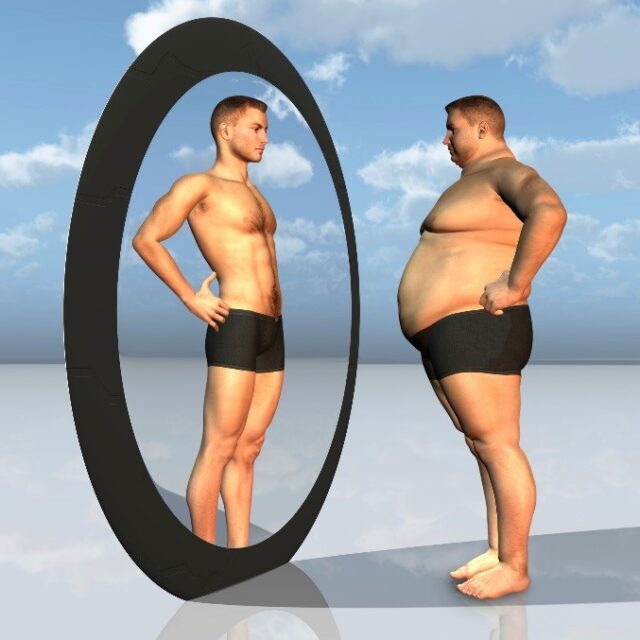
  • Self-Deception & Assumptions: How You Lie to Yourself without Realising

    Self-Deception & Assumptions: How You Lie to Yourself without Realising

    The brain was primarily designed to create, not store. Our thought stream is so amazing that we can think about and come up with assumptions on any random thing at any time at all. The speed of thought is so fast that I can travel to Jupiter and back in just 7 seconds. However, our brain has the power to focus our line of thinking. In order words, despite all the random thoughts, we choose which thought to pick and ponder on. Since our brain is not primarily for storing, we forget some thoughts as fast as we get them.

    See your stream of thoughts like search results. Our brain draws thoughts to our attention based on what we have previously fed it. Everything is mathematical in nature. Without self-consciousness, our brain picks data, derives meaning, makes analysis and draws potential conclusions without us even voicing it out. However, most of these “mathematical equations” in our brain don’t always draw the right conclusions.

    It’s like solving an MSQ math question, seeing our answer in the options and still getting it wrong. Our brain had all the needed data to put in but still produced a misconception. This is so dangerous to the extent that most of what we know to be true could just be lies assumed to be true. Let’s dive in.

    The first influences the rest

    One’s first thought concerning a particular and specific matter, aspect, facet, situation, field or even circumstance – be it truth or deceit – will affect the build-up of ideas that comes afterwards pertaining to that area. A foundation of truth is, therefore, essential. Building incorruptible on the corrupt results in deception. That is why it is very important to renew our minds in our new life in Christ.

    We don’t have the luxury of hitting the reset button for our minds. How you were brought up to perceive something and how you were conditioned to think about any particular thing will always influence your thoughts, opinions, ideas, concepts, philosophy and mindset. Since you initially didn’t know anything concerning let’s say thermodynamics, your very first knowledge of it is likely to become your absolute truth. You’ll swallow it hook, link and sinker.

    Any further knowledge you have about it will be believed only if it’s in line with prior knowledge or any already believed knowledge in another field. Speaking of the latter, let’s talk about our ability to believe something we know nothing about when it’s related well with something we already know;

    It is easy to agree with opinions in line with our thinking

    If you have no clue in a particular area of study, one can relate it with an area of study you are already conversant with so as to make you understand better. Thus, you now understand because it’s in line with your thinking. This is brilliant and dangerous at the same time. Transfer of knowledge is not always accurate. In many cases, it’s not.

    Having had the wrong conception as a foundation, any deception in line with it will easily be treated as truth. Any simple logic that may be true in a particular context can be transferred to fit into another unrelated context just to add up to our made-up fact. This is one concept of deception. Another concept is adding a pinch of lie to a wholemeal truth. When deception is built on a misconception that is already in line with one’s stream of thought, it is difficult to convince the person otherwise.

    Sometimes we don’t need a third party to deceive us. Our minds can draw its own conclusions and conceive lies based on truth. This is the concept of misconception. For instance, some whites think it’s the scorching sun that burnt our skin black. You’ll find some blacks who think this way. No one told them. It’s just their own theory they came up with based on the truth of skin burn, the hot sun around the equator and black skin. Their brain took the right equation and still came up with a misconception. Our skin actually produces melanin to protect us against the sun, not that the sun burnt it black.


    So how do we avoid making unnecessary assumptions that make us look paranoid when our weird assumptions turn out to be untrue?

    1. Ask

    Stop wasting energy that could be used for a productive thought process on an area where you can simply ask to confirm and affirm. If you don’t know, ask. You may realize that the issue is not in the direction of your assumptions at all. If it is, hallelujah. That leads me to my next point;

    2. Being right is not a trophy

    The reason why we may like assuming is that we find pleasure in being right. We have lots of theories and make baseless assumptions which could still come to pass due to the unpredictability of life. Okay, your assumptions were right. Now what? Should we carry you on our shoulders?

    3. Keep your assumptions to yourself

    Truth is, we can’t stop our brain from analyzing and coming up with possible explanations for issues we experience. We don’t even need to stop our brain. We need that drive, that curiosity. When there’s a problem, we need to come up with possible solutions. We need to make decisions based on predictions. So don’t stop assuming. It’s not something bad. Rather, keep most of your assumptions to yourself.

    This is a good read. I know you just read only the words in the pictures. Please go back to the top and read every word. You’ve probably heard this idea of cognitive biases before. I’ve articulated into words, so read and understand. This last paragraph is intentionally full of assumptions so you’d have a good laugh. Now where’s my “my assumptions were right” trophy? 😂

  • The Truth You Didn’t Know About Lies

    Lie. Deception. Cheat. Falsehood. Mislead. Falsity. Untruth. Fiction. Concoction. Fabrication. Hoax. Forgery. Exaggeration. Malarkey. Hogwash. Exaggeration. Baloney. Misrepresentation. Fake.

    There seem to be so much in the word family of lies. Perhaps, this shows that lying is something more definitely known and understood than the truth. If we had explored the truth long enough and had definite knowledge of it, we surely would have had a deeper understanding of truth. That’s not the case for many people. Lies, however, is where we all somewhat agree on and are very familiar with. What is the noun for people who tell the truth? Mmm, doesn’t exist. What about those who lie? Liars. That says a lot.

    WHY ARE WE SO GOOD AT LYING DAILY?

    If we were to separate people into those who lie and those who don’t, the whole thing will be one big lie because we all lie. Everyone lies! Sometimes, without even realising. We lie unperturbed. Some lie to their doctors about their health condition, sadly. In court, a witness swears by a Holy Book to tell the truth, the whole truth and nothing but the truth. Yet, that’s where we fabricate even bigger lies. Lies are so multi-faceted that for every one truth, there are a billion lies.

    The truth is, lying is a psychological trait passed down to us hereditarily. This also means that the more we passed down the trait as a species, the more we became good at lying. In other words, someone born today is much better at telling more complicated lies than someone born 200 years ago. See, we are born natural liars. A study showed that we begin to lie to avoid punishment as early as 3 years. We tip the bowl over and when asked, we blame it on the innocent dog or cat. 

     It’s not like lying is any simpler. It takes more effort to fabricate a lie than to tell the truth. However, we lie because it is easier for our nature. On a daily basis, our brain makes what I call a calculated lie. A lie smooth enough to be true and not raise suspicion. We lie so much and have evolved in it so much that we lie to ourselves. This is so alarming. That means one part of yourself is actually keeping information from our own consciousness. 

    Further studies have shown that college students lie in a quarter of the conversations they have with their best friend, half the time with acquaintances and almost 80% of the time when talking to strangers. They lie to their romantic partners in a third of their conversations, and half of the time when they call their moms at home.

    LYING IS NATURE

    The thing is, lying is bigger than all of us. It is in the DNA of all creatures. Lots of animals deceive their prey or predator with their movements, chemicals, sounds and/or behavior. Viruses are lying to our immune system. Scientists call it molecular deception. Parasites deceive their hosts in order to survive. Chameleons use camouflage to deceive their prey of their presence. Lying is everywhere in nature. Yet, humans reserve the repertoire to consciously fabricate and verbalize lies. The more we tell/verbalise, the more we tell “verbal lies”.

    The average adult speaks about 10,000 words a day, and we lie about 10 to 200 times daily. The more you speak, the more you lie. As one speaks, one is likely to omit facts, twist them, cite some and fabricate new ones. Solomon said it beautifully in Proverbs 10:19, “The more you talk, the more likely you are to sin. If you are wise, you will keep quiet.”

    Does keeping quiet, however, solve the cure for lying? Not at all! Lying is so complex that sometimes keeping quiet can pass as a form of lying, especially in cases where you were supposed to simply tell the truth. So why we do lie, why is it so often and what can we do about it? Fasten your seat belt, my guy!

    I really enjoyed the Truth series. Are you ready for the Lies series? I can’t wait to delve deeper. I have all the answers….

    Okay, that’s a lie 😂 I don’t have all the answers, but it’s going to be exciting. No doubt about that 😊