Category: Worry

  • How to Care Too Much Without Being Worried

    How to Care Too Much Without Being Worried

    Caring is the most human thing to do. There are many words for “care” in Greek. Two of them are used in 1 Peter 5:7 and give the perfect difference between them.
    “casting all your cares [all your anxieties, all your worries, and all your concerns, once and for all] on Him, for He cares about you [with deepest affection, and watches over you very carefully].”
    1 PETER 5:7 AMP

    Cast all your cares because He cares. Wow. Should we actually cast all our cares? Will that make us careless or care less? Will that make us carefree or not care anymore?
    Psychology says one of the most difficult tasks in life is to convince yourself that you do not care. You will have to repeat it over and over to yourself and others and you will still not find peace. No matter what you are in the world; liberal, criminal, realist, atheist, even the worst person on earth, there is someone or something you care about because that is how you were designed; to care. This orchestration to care reaches its max when one becomes a parent, biologically or logically.

    What about faith? When I have an issue at hand, isn’t it normal to worry about it? Real faith is not denying the existence of a problem. It simply denies the problem a place of influence. My substance of faith is not based on my circumstances but on the reality of what isn’t yet seen. Real faith does not cause me to deny that I don’t have money or that I need money; it makes me emotionally stable in my financial crisis because my conviction is not based on what I see. That is just beautiful. The vicissitudes of life is no justification to be worried.

    Worrying doesn’t mean you care. Worry is the sin of leaning on your understanding instead of trusting in God. Jesus said in Matthew 6:27, “Who of you by worrying can add a single hour to his life?”. Worrying is anxious care. The Greek word for the word “worrying” has the same root word for the word “cares” in the verse “casting all your cares”. It means solicitude. It has an idea of distraction. Any form of care that makes you anxious is called worry. Beloved, let us not normalize worry. Worry is a problem that has never solved any problem. As humans, are we supposed to worry sometimes? The answer is in 1 Peter 5:7. Worrying is pretending you care more than the God who said He’ll take care of it.
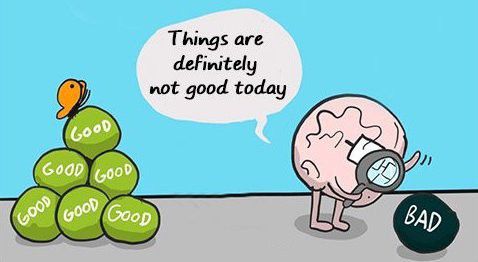
    Worry is one of those sins that is so subtle. It can show up in your own words to curse your life. We speak 150-300 per minute. That is about 50,000 words a day. 70% is subconscious. Research says we have a negativity bias and tend to value negative thoughts over positive ones. 95% of what we say is repeated most of the time. “As a man thinketh in his heart, so he is.” (Prov 23:7). What have you been thinking about and saying to yourself in the loneliness of your thinking? As Joyce Meyer would say, “Think about what you are thinking about”. Have you brought negative thinking from your distant past into your immediate future?

    Matthew 13:20-21 says “the seed on the rocky soil represents those who hear the message and immediately receive it with joy. But since they don’t have deep roots, they don’t last long. They fall away as soon as they have problems or are persecuted for believing God’s word.” Worry comes to attack the Word of God you have. If the Word has no root in you, you will let go of the Word. We can all say nice words until hard times hit. When worry attacks you, do you hold on to God’s Word in your heart or the Word was simply in your head so what is planted in you wilts under the heat of the sun?

    Worry does nothing but pull you down. When you’re worried that something may happen, worry doesn’t stop it from happening. It doesn’t make you human. It makes you a prophet of doom over your own life. It breaks you down. It distracts you and distorts your reality towards negative aspects. Worry is a burden. It is burdensome. It changes your focus. It makes you focus on your problem instead of your solution. It magnifies the problem with increasing attention. If you give in to worry every time life becomes hard, worry will control your life in hard times where you need peace and joy the most.

    It all starts with denormalizing worry in your mindset. Realise that you don’t have to worry for a single moment in your life, because Jesus is your rest. Worrying is not planning. Worrying is not caring. Worrying is not thinking. Worrying is stressful. I can think about what I will eat, drink and wear tomorrow without worrying about it. Whenever you begin to worry, think about God’s Truth concerning the matter and cast it ALL on Him. You will realise that many of the things we worry about are actually petty petty things. No problem is ever bigger than God. We have a Father who is willing to take care of us all the way. Put your trust in Him. He knows your end because He planned it.
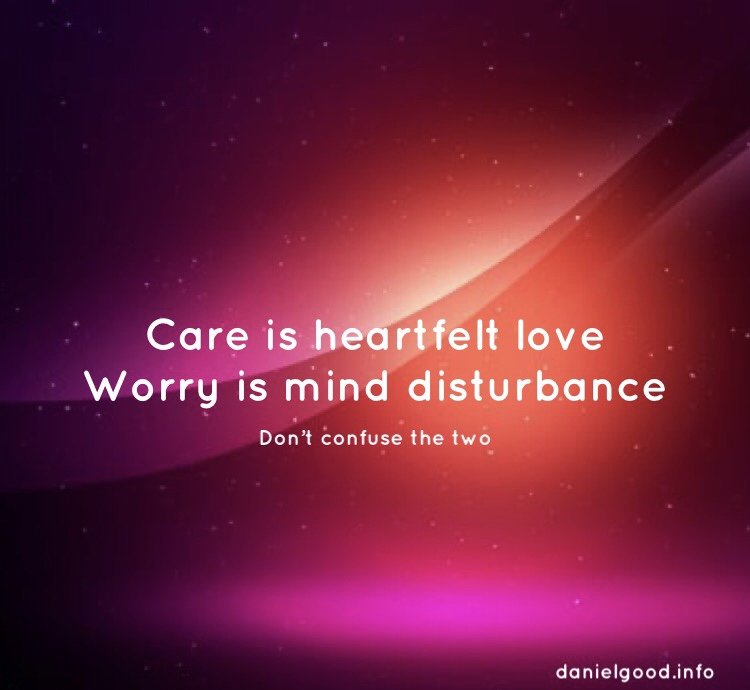
    Worry can be used as an English word but should not be tempered emotionally. You were made to care, not to worry. Language may mix it but don’t mix it emotionally. Care is heartfelt love. Worry is a mind disturbance. Jesus’ yoke is easy and His burden is light. He gives us rest for our souls. Read Matthew 11:28-30. “So do not worry about tomorrow; for tomorrow will worry about itself. Each day has enough trouble of its own.” Care because you do. “Do not be anxious about anything, but in every situation, by prayer and petition, with thanksgiving, present your requests to God.”

    I love you ❤

  • Edification, Exhortation & Comfort : God’s Architecture of Grace

    We all get tired. Even the strongest believers sometimes feel drained. Some feel stuck. Others begin to gradually lose interest and give up. Many get sick and tired of being tired and sick. Even leaders and pastors who spend their lives strengthening others can often find themselves empty. God, in His wisdom, has built a spiritual system to keep His people from collapsing in the vicissitudes of life. He designed a divine rhythm for the soul; edification, exhortation, and comfort. It is God’s healing system for the whole person (spirit, soul, and body) and the whole Body. It is how He keeps His family standing, growing, and enduring until the end. Next week, we will talk about the Mystery of Encouragement but for now, let’s establish the doctrinal side of it.

    Edification: Increasing Our Capacity

    The word edify comes from the Greek oikodomeō which means to build up. It is the act of strengthening, forming, and maturing until a life becomes stable. Spiritually, edification is God’s way of stretching our capacity to carry His life. When you are edified, something within you expands. Your faith deepens, your understanding widens, and your endurance strengthens. You become more capable of carrying divine weight.

    “And now, brethren, I commend you to God, and to the word of His grace, which is able to build you up.” (Acts 20:32)

    God builds us through teaching, truth, and time. Like a master builder laying one stone after another, He establishes your inner man until you can contain more of His strength, more of His wisdom, and more of His people. We do not grow by accident. We grow because the Spirit keeps laying stone upon stone, truth upon truth, grace upon grace. Edification is how God turns the fragile into giants.

    Exhortation: Increasing Our Expectation

    Once you have been built up, you must be stirred up. Exhortation comes from the Greek paraklēsis which means to call near, to urge, to appeal. It is the voice from Heaven that says, “Do not give up. Lift your eyes again.”Sometimes you know the truth, but you no longer expect it to happen. You are built up but not stirred up. That is when the Spirit exhorts. He calls you near, speaks courage into your heart, and rekindles anticipation for what God will yet do.

    “Let us consider one another to provoke unto love and to good works… exhorting one another: and so much the more, as ye see the day approaching.” (Hebrews 10:24–25)


    Exhortation raises your expectation. It awakens the dormant parts of your faith. It moves you from “I know” to “I believe again.” Through a message, a friend, or the quiet whisper of the Holy Spirit, God exhorts His children to rise. The fire may be small, but exhortation breathes upon it until it burns bright again.

    Comfort: Increasing Our Threshold

    Comfort is not about removing pain. It is about raising the threshold to endure it. Comfort comes from paramuthia, meaning to speak closely, to console, to strengthen. It is the tender voice of God in the midst of trial.

    “Blessed be God, the Father of mercies and the God of all comfort, who comforteth us in all our tribulation.” (2 Corinthians 1:3–4)

    When life feels unbearable, the Comforter sits beside you. He does not scold you for weeping. He stays with you through it. Comfort increases your threshold, your ability to face tomorrow without collapsing today. The comfort of God is not sentimental. It is strengthening. It restores your equilibrium, renews your peace, and brings sanity back to your soul. Comfort does not make life easier. It makes you stronger.

    God’s System for the Prosperity of your Soul

    This threefold process of edification, exhortation, and comfort is God’s divine therapy for the believer. It is how He balances spiritual maturity with emotional wellbeing. It is how He keeps your spirit sharp, your faith alive, and your heart tender. Built up, stirred up, and held up. That is the full rhythm of what I call God’s architecture of Grace.

    God never intended anyone to walk alone. From Eden to the early Church, His answer to human needs has always been another person. He builds through teaching and discipleship. He stirs through encouragement and prophecy. He heals through companionship and compassion.

    > “Iron sharpeneth iron; so a man sharpeneth the countenance of his friend.” (Proverbs 27:17)
    “Bear ye one another’s burdens, and so fulfil the law of Christ.” (Galatians 6:2)

    When you isolate yourself, you disconnect from this system. Isolation dries the soul. Even pastors need edification. Even prophets need exhortation. Even apostles need comfort. God’s love often comes disguised as a friend who refuses to give up on you, a mentor who speaks correction where you don’t see one, or a circle of friends who simply sits with you in silence. His help usually comes with a human face. A true Word from God will always carry this triadic essence. It will build, stir, and heal. When you stay in fellowship, you stay within God’s healing cycle. The Church is not a club of perfect people but a living organism through which grace circulates. Each believer is both a receiver and a dispenser of Grace.

    “Wherefore comfort yourselves together, and edify one another, even as also ye do.” (1 Thessalonians 5:11)

    You are God’s instrument of renewal to someone else. Your word, your prayer, your listening ear may be Heaven’s hand to a weary soul. And in your own day of need, that same grace will return to you through others.

    God’s Architecture of Grace

    Edification increases your capacity to grow. Exhortation raises your expectation to believe. Comfort strengthens your threshold to endure. Together, they form the architecture of grace, the system by which the Spirit constructs, energises, and heals His people. When God builds you, He does not only strengthen your spirit. He heals your mind, renews your emotions, and strengthens your endurance. We are built to last, established to be immovable and in a system that will preserve until you finish your race.

    So when you feel weary, do not withdraw. Do not hide your pain. You may be tired, but you are not alone. The same Spirit that builds, stirs, and comforts is reaching for you still to help you stand until the end.

  • Trusting God in the Process Even When It Doesn’t Make Sense

    Earlier this week, God has been putting it on my heart to write about trusting the process and hoping against hope. So that is what I’m going to share with you. I’m going to give examples for you to realize that you’re actually on the right track. We are called believers, not feelers. There are going to be seasons where everything is going to feel like it’s not in the right place but you are actually on the right track and you are in good company because most of the people you even know in Scriptures were on this exact path.

    The first person I would like to point to is that one precious believer during the time of Jesus who saw Him being beaten mercilessly and was looking from afar, praying sincerely for His rescue. However, God did not answer that prayer the way the person wanted because He had a bigger, eternal plan.

    The Bigger Picture

    That person is not mentioned in Scriptures but there was definitely somebody there who was praying to God that “Oh God, this guy is actually righteous. He’s holy, there’s nothing wrong that He has done. He has been doing good for as long as I have known Him. Please save Him”. He saw Jesus go through all the brutality, carry the cross, and die on the cross. He continued, “God, this is the right time to show up. If you show up right now, everybody will believe that you actually sent Him.”

    He must have continued, “God, let Him just mysteriously come off the Cross and then, you know, be in white clothing and say that, ‘Yes, it is true, I am actually from God’. Oh oh God, please answer this prayer.” It was a genuine, sincere prayer to actually save somebody. The person saw how brokenhearted Mary was and was like, “Oh God, look at this mother. What have they done to deserve this? Even people as wicked as Barabbas have been set free. If you’ve done it for Barabbas, please do it for Jesus.”

    Trust God in the Darkness what He Said in the Light

    But you know what? That prayer went unanswered. In fact, that day Jesus was buried. The following day there was no noise whatsoever. It was like a normal day. No show, no sign, nothing. So what the person would say is, “oh God, so Jesus is actually dead? So that is all? God, I don’t understand.” God expected that person to trust Him in the process because how you want it to go is not better than how God wants it to go.

    Jesus in the Garden of Gethsemane also asked God if there’s another way He could do it without drinking the cup of God’s wrath. That notwithstanding, God has His way of how things should go. Sometimes it’s very difficult to explain the entire process to somebody who just does not just feel how the thing should go. So God may not explain so much to you because he has already given you a Word. You need to trust God in the darkness what he told you in the light. He expects that you hold on to the Word because His Word must test you. That’s why he told you when the skies were blue before the days where there will be no sunshine.

    You need to trust Him — what He said when your mind was straight — now that everything looks confusing and clumsy and you want a sign and want God to explain. Whatever He says now, you actually won’t understand. You will say, “but God, You are omnipotent. You can do all things, so why don’t You just do it now? God, You know all things, so why are You allowing this to happen?”

    That is where we will try to blackmail Him. So He has taught every one of us to trust Him in darkness what He told us in the light. The reason why God did not answer that man is because he had a bigger, better plan. It was not about showing Himself strong in the midst of just those few people who had gathered. No. It was a transgenerational agenda. It was an eternal script that He will raise up from the dead and conquer death. A bigger and greater purpose.

    Painful but Necessary

    Even though you have good intentions and genuine reasons, believe you me, God’s plans are better. Every time we subject ourselves to God’s Will, we expect everything to go well. But how God orchestrates things is certainly not how we think it should be because with God, Romans 8:17, if we share in His sufferings, we share in His glory.

    At the end of the day, you will stand somewhere and share your testimony. People will not understand what you went through because you will even say it in some simple plain words. You will not look like what you’ve been through. But trust me, everybody who has walked with God has gone through the process. At the end of the day, you will also be glad God took you through the process.

    The process is painful but necessary. It’s very necessary but it’s still painful. It’s painful. It does not make sense to the human mind but that is God’s agenda for you. He even prunes those who bear much fruit so they will bear more fruit. It’s not shameful to admit that it’s painful because the Bible says “no discipline seems pleasant at the time, but painful. Later on, however, it produces a harvest of righteousness and peace for those who have been trained by it”.

    Joseph’s Thirteen-Year Preparation for Eighty Years of Glory

    Look at Joseph. God gave him a wonderful dream of dominion but from that day onwards, everything went downhill for 13 years straight — betrayal, slavery, false accusation, imprisonment. He went from being hated by his brothers to being thrown into a pit. He was sold into slavery by his own brothers while God watched on. He was supposed to live as a slave till he died. Then Potiphar’s wife made matters even worse. He was thrown into prison for life. Yet, God was emptying Joseph of all pride and childishness.

    If Joseph had skipped the process, he would have carried immaturity to the palace and brought shame to the God who lifted him. But through suffering, God moulded him so that when he finally rose to power at 30 years old, he reigned wisely for 80 years. Jesus also suffered for a few hours, but now He is seated at the right hand of the Father, with all authority in Heaven and on earth. See, this season won’t last forever, and your glory days will far outweigh the circumstances. Indeed, the sufferings of this present time cannot be compared to the glory that shall be revealed in us (Romans 8:18).

    Let me show you what it means for everything to work together for our good. It wasn’t God’s Will that you’ll be in the circumstances that you are in but He will use the circumstance as a healthy tool to shape you into what He wants you to be. All things (the good, the bad, the beautiful and the ugly) will work together for good. What good? It’s not referring to the end of a Nigeria movie where all your enemies die and you end up as rich nigga.

    The good of God is explained in the next verse: “For whom He foreknew, He also predestined to be conformed to the image of His Son”. God foreknew you and your story and predestined it to end as a way of conforming you to be more like Christ. This is what He wants to achieve at the end of the day with everything He allows you to go through, provided you continue to surrender to His Will regardless of the circumstances.

    When everything is going opposite to what God promised, trust is crucial. Psalm 25:3 says, “No one who trusts in You will ever be disgraced.” The process might be slow, confusing, and painful, but God comes through always. Trust is not based on sight; it is based on the unchanging nature of God. It’s about believing His character even when you don’t see His hand.

    Trust the Doctor — Even If You Don’t Understand the Surgery


    Look at Abraham. God promised him descendants as numerous as the stars, yet he waited 25 years for just one child. Why? Because it wasn’t about just having Isaac, it was about becoming the father of many nations. It was about making him a blessing and giving Abraham a name that would echo through all generations. Since Abraham’s generation till now, every generation that has come to earth knows about Abraham. He’s more famous than all of the people who go to the devil for fame. Today, Jews, Christians, and Muslims all trace their faith back to Abraham. God indeed gave him a great name and yet, during his lifetime, barely did anyone know him because he was a nomad on the Promise Land.

    One challenge of our generation is that we have not been properly taught about the necessity of process. We are conditioned for quick results because we live in the era of instant gratification but in the Kingdom of God, endurance is key. Nobody today would want to wait 25 years like Abraham did, yet greatness demands patience. You should know that if God is disciplining us, it’s because we are not bastards. Process is not punishment — it is preparation. So yes, you are actually on the right track. You are in a good process. As long as you are going through this, it shows that God is killing certain things in you that will be a disadvantage to you in the coming seasons.

    When God is working on you, it’s like a painful surgery. Until this scrutiny – this surgery – is done, He will not want you to get up from the hospital bed. Even though the surgery is painful, it is definitely necessary. If the Doctor tried to explain every detail of the surgery process, you would run away. That’s why He asks for trust. If you knew how long some seasons would last, you would give up today. But God has good plans for you (Jeremiah 29:11). Trust Him even when nothing makes sense. Trust Him when the darkness is thick. Trust Him because He is good, and His plans are far better than anything you could orchestrate for yourself. Stay the course. God is faithful. He has a track record in these matters; you are not the first.

    You need to trust that yes, He has your best intentions at heart and He has plans of good, not of evil, and He will bring you to an expected end come what may. I hope that this has been a blessing to you ❣️

  • I Don’t Care: Breaking Free from the Apathy & Indifference

    I Don’t Care: Breaking Free from the Apathy & Indifference

    Ever met or been that person who is always like, “As for me, I don’t care. I don’t feel anything.” And we admired such people because they looked to us like strength. The best and most beautiful things in the world cannot be seen or even touched – they must be felt with the heart. The Presence of God is known and it is also felt. Knowing God in our minds is boring and repressive. Having mental knowledge of God without ever experiencing Him is basically a religion. Joy, Peace, Love, Gratitude, Responsibility, Humility etc are expressions. Whatever we express is emotionally relevant. This means that anytime we try to act all cool and don’t really care who even died in our family, it’s because we have squirmed into ourselves.

    I have been a victim of “I don’t care”. Whenever I live constantly like that, I feel like I am a wall upon which all emotions around me are being thrown. I don’t feel like a person. I feel like an object in that situation. So I become invisible by becoming silent and I hide in plain sight. I don’t let people in. I am in a state of avoidance; being physically not present. So I go away so there’s nothing to relate to anymore. I hold strong boundaries or walls, keeping my feelings contained or even suppressed. And as long as I took this path of emotionlessness, I barely experienced God for myself. I interpret everything on a logical level. Even prophetic and worship meetings were full of my mind telling me how pretentious what was happening was.

    There are so many cover-up emotions today. This is where we can’t tolerate one emotion so we cover it up by feeling something else, usually something more acceptable. We can’t feel rage, so we feel frustration. I can’t tolerate intense betrayal, so I feel hurt instead. We can’t allow ourselves to feel unquenchable grief, so we feel sadness instead. I can’t even express or identify what we are feeling, so I stay silent. Because we do not know how to define what we are feeling or expressing, we would defend, hide, avoid, or escape it. But underneath these “defences” are often feelings of vulnerability. We too often identify a vulnerability with weakness, shame or being too emotional, in an attempt to cover a raw aspect of ourselves.

    No one was born a stoic. All creations are emotional creatures, birds and dogs alike. Because emotions do not come from our bodies though they do have a direct link with them; emotions are what makes us persons connected to the orchestrations of the universe as a whole.

    The truth is, once you close your heart to hurt, you also close yourself to love. Also, closing your heart will never stop you from feeling the negative emotions that come with life. It will rather stop you from fully expressing and benefitting from good emotions. There is hope in the shadows, there is peace in the storm, there is patience in the pain, and there is joy in the sorrow. Open up your heart. The Holy Spirit wants you to enjoy His fruits regardless of the circumstances.


    If you know for yourself that you’re in this “I don’t care anymore” state or you’re heading towards that in any important area of your life, I want you to put your hand on your heart and pray this prayer;
    Heart, you have permission to be wide open towards the LORD, to be fully present, to fully feel, to be fully affected. Heart, you have permission to know that He is emotional about you. You have permission to know that you don’t need to shut down. You don’t need to lock up. Lord, any place where I have stopped feeling because of pain, because of vows that I’ve made, I give you permission to open my heart back to you. I want to have a heart that is fully after yours. In Jesus’ Name, I pray, Amen.

    I love you ♥

  • You Are Not What You Go Through

    You Are Not What You Go Through

    Some circumstances we go through in life are inevitable. No matter your religion, race, color, gender, association or expectations, our story is not unique. Someone may be going through worse, but hei..there’s never a point in our lives where we aren’t going through something of a sort.

    Circumstances don’t obey the law of sowing and reaping.

    You do not have to be worthy of what you go through in life. What you go through does not care about you. It does not care what you care. So when you are going through something that seems unfair to what you are, it is nothing new.

    Circumstances do not define you.

    What you go through is not what you are. It’s always important to be able to differentiate between the two. The fact that you go through ups and downs does not mean even your emotions should follow suite.

    James said “count it all joy when trials come your way” (James 1:2). Why should you be so anxious when you go through a difficult situation? We have the power to live above our situation, not the other way round. What you are should never change or fluctuate because of circumstances.

    Our dog’s ability to be always happy to see us regardless is extremely underrated.

    You actually have the power to define your circumstance. How? By your reactions toward it. 1 Thess 5:18 says “Give thanks in all circumstances, for this is God’s Will for you in Christ Jesus.”

    It said, “in all things give thanks”, not “for all things give thanks”. God didn’t say thank Him for that accident. He said have the heart and lifestyle of thanksgiving, even if you have an accident.

  • Keeping Your Shit Together

    Keeping Your Shit Together

    If you live in the past too long, you will be depressed. If you live in the future too long, you will be anxious. The only place you are designed to live is in the present, with your back towards your past and your face looking towards the future. Hope is imagining your future with God in it. Hope is one of the things – hope, faith and love – that will last forever, amazingly. That means God is so awesome that He expects us to look forward to His wondrous glory even in the times of the New Heaven and New Earth. He never ceases to amaze us.

    Sinach’s single epitomizes God’s assurance of everlasting Hope (1 Cor 13:13)

    That’s why I love Sinach’s song “He Did It Again”. There’s a line that goes, “and when I thought that He had done too much, Jesus did it again.” I have realised that the relevance of Hope is sadly missing. Over-ambition is not hope. Hope is confidence in patience. You can have faith and lack hope. In other words, you can totally believe in what God can do and still see hopelessness in your situation. You are not doubting God. You are just imagining a future without God in it. If a “makeup world” you have imagined is causing you distress, why don’t you just simply make up something good?

    It is so easy to wallow in hopelessness. We just lie down and think of all the problems we have in the world just because we are starving and do not have enough money. One small mistake we make, make us think about all the stupid decisions we have ever made and how bad we are when it comes to such situations.

    The more we wallow in hopelessness, the more we feel like the most miserable person in the world.

    When we remember out of nowhere how someone misunderstood us; then we link to when we were misunderstood by another guy sometime back; then another link to a very similar experience 2 years ago; then we link it to 6 more examples at once; then we are like, “I’m the most misunderstood person in the world
    😩😩”.

    All this happens under 5 minutes. It all started from one small not-even-a-big-deal problem. Then one seemingly harmless thought. Before you realise, you’ve had a bad day. This happens way too often. And today, we are leaving this attitude with all its accompanying emotions of hopelessness behind us. If my mind brings up a problem and another problem tries to connect to it, say “no! Not today.” We are learning to tackle one issue at a time, one step at a time.

    If doctors were told how many patients they will attend to in even a day, hopelessness may set in. But they attend to all these patients one at a time wonderfully. If teachers made a big fuss about the number of papers they had to mark, no one would like to be a lecturer of a huge class.

    You can never tackle all your problems at once so don’t think of all of them at once

    Some moments are just not the right time to think about important issues. When you wake up at the wrong side of your bed, don’t think about the reason why you were born. It may seem like a good thing to do but it will filter towards you and leave you with negative emotions and hopelessness. Someone may then ask, when is the right time to think about your problems? When you have properly dealt with your anxiety about the problems.

    Going over and over allll your problems will not help you, it will not heal you, it will not even get anything fixed. It is just a pity-party.

    If you want to talk about your problems, make sure the person listening is a person with hope; someone who will make up for your hopelessness. Don’t also think you always need someone to talk to. Once you get attached to that thinking and no one is ready to listen, it will add insult to your injury. Know when to deal with your personal issues personally. Know when to invite a 3rd party. Either ways, God is willing to talk about it with you. Yes He already knows but He wants to hear you pour your heart out to Him. He is closer to the brokenhearted. Just like David the psalmist, we are looking within ourselves on this day and telling our soul, “Hope in God”. Remain hopeful and praise God, for He is your God and your Help. Amen

    Why are you cast down, O my soul, and why are you disquieted within me? Hope in God; for I shall again praise Him, My Help and My God.
    Psalm 42:11

    I love you ❤

  • How To Comfort A Friend

    How To Comfort A Friend

    “Praise be to the God and Father of our Lord Jesus Christ, the Father of compassion and the God of all comfort, who comforts us in all our troubles, so that we can comfort those in any trouble with the comfort we ourselves receive from God.”
    2 Corinthians 1:3-4

    Our brain has the capacity to store whatever information we receive, whether it is needful or not. But as time goes on, the brain empties its short-term memory. Also, if what’s stored in the long-term memory – be it your birthday 4 years ago or what you ate for breakfast 21 days ago – is not revised with time, the memory decays.

    Why? Because of emotional overload.

    Every thought, word, taste, smell, scene, touch etc has an emotion attached to it. For eg. You feel sad whenever you think about the death of a loved one. However, some events happen in our lives that are so traumatic that we hit an emotional overload for a long period of time. For eg. losing someone really close to you or seeing someone get shot. These events are traumatic that it’s been scientifically proven to cause neuroplasticity. Did you get it? The victim is so overloaded that it literally changes the structure of his/her brain.

    Do you know one thing? We are all headed for such an experience. Life does not even prepare us enough for it. No matter how much you are prepared for it, it is going to shake the very foundations of your will to survive. Keep this in mind when you see it happen to someone close to you. There’s an Akan proverb that says, “when you see a vulture on someone’s head, say get away from us, not get away from the person. For if the vulture leaves the person, it is coming to you.” The vulture is pain, grief, sorrow, trauma, hurt.

    If pain in this life is inevitable, why do we pretend to be okay? Why then do we act like nothing is wrong? Why? Hmm. Maybe, here’s why. Usually, people don’t know when the other person needs advice, encouragement, upliftment or comfort. It’s frustrating when you simply need comfort and someone is trying to advise you; when you’re pouring out your heart and the other keeps interrupting you with unsolicited advice. In such a situation, it’s difficult to say the right thing, but one thing will always be the right thing to do; listen.

    Listen before you speak. Sometimes the other doesn’t need you to say anything. Don’t make it about you. No one needs to hear what happened to you 5 years ago right now. Listen to the person, not to reply but to be empathic. Also, there’s this culture of belittling people’s experiences just because they are young and “inexperienced”. If a 3-year old is pouring out to you about how frustrating school is, what are you going to do? I guessed it. Downplay it. As if to say the child’s reaction to those experiences are invalid.

    If someone says they’ve lost their mother, it’s stupid to compare it to your experience of losing your dog. It’s insensitive to think that the person should get over it because it’s bound to happen. It’s absurd to think they are young and what they are going through now is “little” as compared to what you’ve been through. Everyone’s capacity is different; everyone’s reaction to the emotional load is different. Don’t belittle someone’s traumatic experiences. You are not the one to validate someone’s pain.

    You’ve probably written a lot of exam in your life and failed some. How are you going to react to a 13-year old failing exam for the first time? Alright. Okay, how about someone who brought hurt and guilt upon themselves because of their actions? Let’s talk about that category for a second.

    Having been called to comfort those who mourn, we have learnt to weep with those who weep and be happy with those who are happy. But how do we comfort other people without denying their reality to sell false hope, and also to avoid our own emotional overload? If you are that friend who always listens to other people pour their hearts out (and we all are that friend in one situation or another), how do you comfort without siding with the person’s mistakes he/she is not willing to admit with uncompromising Compassion?

    Jesus is the character in the Bible who is said to have compassion the most. He had compassion over the two blind men in Matt 20:34, the large crowd in Matt 14:14, the four thousand men in Matt 15:32, the five thousand men in Mark 6:34 and many many more. What I found is that Jesus didn’t tell them that there is hope, Jesus was their Hope. Any time Jesus had compassion on the sick, lame, blind, broken, crushed, sad, wretched, Jesus became a channel of healing for them.

    Don’t let them dump their burdens on you; help them lay down their burdens before the Father. Don’t promise them comfort, comfort them with the comfort God comforted you. Don’t just let them know that you’ll listen – so that the two of you will be wretched? NO! – let them know that when they come to you, they are not leaving with the burden they came with.

    Don’t be a helper in carrying burdens. Be a lifter of one’s head. Learn to comfort the broken without being broken. Don’t absorb their reality, impact yours.

    I love you ❤

  • Why Do We Argue A Lot? Understanding Arguments In a Relationship

    Why Do We Argue A Lot? Understanding Arguments In a Relationship

    Every relationship begins on a “honeymoon” phase. The feelings are so heightened and the love for each other is so heartfelt that we tend to overlook our partner’s flaws. Every shortcoming is taken lightly. Any misunderstanding that shoots up is swiftly swept under the carpet by reminding ourselves of how madly in love we are with each other. Yet as time goes by, friction starts to come into play. We all are never perfect so our flaws, mishaps and insecurities are soon exposed in our relationships. That’s because now there are two of us sharing our lives together. Surely that doesn’t justify why we should argue all the time. That should rather justify why we should deal with our personal problems together as a couple. So then, why are we still arguing?

    We argue;

    1. ’cause we wanna be right

    It’s such a bad feeling to feel wrong. So whenever an issue comes up, we wanna justify our actions. We are so busy trying to make a point that we forget that our significant other is coming from a place of love. What makes the argument difficult the more is when we’re trying to convince ourselves that we indeed did the right thing. Because indeed we are not convincing our partner; we are trying to convince ourselves by justifying the right in our wrong. We don’t want to look like the one in the relationship always making the silly mistakes. This leads us to the second point which is closely tied;

    2. ’cause we wanna prove that the other is wrong

    If there’s something more difficult than trying to convince someone that we’re right, it’s trying to convince them that they’re wrong. In doing this, we are projecting something wrong on them. Since no one is perfect, we’re definitely going to find something to point out. If nothing really comes to mind at the time, we’d make something up. That’s why we as couples should never store any dislike for our partner in our minds. If there are any dislikes that we happen to come across, we should immediately point it out. Nothing hurts more than your lover pointing out all their dislikes about you that you initially didn’t know they disliked in one argument.

    3. ’cause we feel attacked so we get defensive

    All living things have adaptive features that protect them against harm in the environment. As humans that are evolving, we still have that defensive mechanism. Thus, we’d defend ourselves against what is trying to degrade our mental state of being in any way. The argument is a mental fight. Winning it boosts our ego. Losing it is mentally disturbing. What do we do when we realise we’re losing? We get defensive. We talk about how good and supportive we’ve been to our partner in the past. We remind them of our sacrifices. As a way of working on their soft spot, we try to convince them that we’re not that bad. Though it sounds like a good thing, it is actually unnecessary to do so when all the other partner needs is a sincere apology.

    4. ’cause we attack as a means of being defensive

    The best way to defend is to attack. When one is attacking, the other has to defend. Sometimes, that’s not really the case. We rather counter-attack. As our partner is listing our flaws and how we need to put our shit together, we decide not to go down so easily. We dirty ourselves in the mud. We also list all their flaws and shortcomings and exaggerate on how bad it is. Counter-attacking means my voice should be louder than yours. The emotional trauma alone of being shouted upon is disheartening. It never stops ringing in your ears. When the same point is repeated over and over, that adds insult to injury. This is because it really gets into our minds at the end of the day.

    We should always remember that there’s a difference between having a misunderstanding and arguing. Misunderstandings will always arise because we are not all the same. We must make sure that we don’t argue when there’s a misunderstanding. Arguing is basically stress. No one should sincerely have the energy to argue all the time. After all, what do you want at the end of the day; to win the argument or to enjoy your relationship?

    I love you ❤

  • Fear:  A Good Servant or A Bad Master?

    Fear: A Good Servant or A Bad Master?

    “For God did not give us a spirit of fear, but of power, and of love, and of a sound mind”
    2 Timothy 1:7

    One thing that has a force equal to passion and yet as sublime as insecurities is fear. No matter how intelligent you are; no matter how popular you are; no matter how religious you are; if you don’t know how to deal with your fear, your fear will know how to deal with you. Fear is as personal as our interests. My fears are unique and so are yours. In fact, my fears are so unique that defines where my interests lies, shapes what my beliefs are and influences how I see myself.

    Yes. Fear can be self-imposed, inherited or even adopted, but there’s a fear within us that is a tangible part of us. As humans, it is proven that we are born with two types of phobias; fear of loud noises – that explains why children cover their ears so hard when they anticipate a loud noise – and the fear of falling, and that all other phobias are learnt. Yet there’s a fear within us that is a tangible part of us.

    Isn’t it amazing that a child can play with a sharp knife or can crawl straight into an exposed fire? Perhaps, it’s amazing but it’s definitely stupid. That’s why fear exists. Fear is a natural instinct meant to protect us from harm. When there’s an unidentified danger, everyone in the right frame of mind would first of all run in the opposite direction. Fear is the guard of your life. The easiest way to foolishly die is to be fearless.

    Take a minute to think about the many times the fear within you saved your life. It kept you from passing that dark alley. It stopped you from picking that taxi. It made you stay instead of being in a hurry to leave. It made you leave hurriedly instead of staying. We ought to be grateful to our innate fear. It cautioned us without reason or explanation. This is certainly not what you thought I’d say about fear. Contrary to popular belief, fearlessness is more dangerous and stupider than innate fear.

    So did God actually give us a spirit of fear? Good question. Imagine you standing by your mom, all smiley and all. Now imagine you being kidnapped right in front of your mom. Does she look afraid? Of course. What’s the point? Fear is a good servant but a bad master. Love should be the master and let fear serve you. When fear is made the master, it distorts your reality, darkens your perspective, shatters your dreams, downgrades your abilities, lowers your self-esteem and weakens your confidence.

    In other words, it basically plays it safe. Safe Mode. Fear being the master is overprotective. It will keep you from trying out new things, stepping into new territories and having new experiences. Fear as a master makes you a slave, keeps reminding you of your failures so that you don’t dare to try again. Fear usually makes us think we have no choice. Fear wants to control everything. Fear is more interested in you surviving than living.

    “What if you take risk and it puts your life at risk? You can’t do it so don’t even try. What if you fail? What if you succeed and you cannot keep up with the pressure?”.
    A life ruled by fear is a life filled with unnecessary precautions and no actions.

    NB: When your fear poses questions of life that needs solid answers to you, then your fear is your servant. When your fear does not allow you to even think of questioning the status quo even when you know something must be wrong, then fear has been made a master. Innate fear does not put in bondage; it protects you from unknown bondage. When fear is put in charge, you become a slave of yourself, a slave to a reality that does not even exist. It’s all in your head.

    So then, what do I do with my fear? Use it. Pay attention to what your fear is paying attention to. Fear is an insignia. Once you have tackled why you fear, what you fear loses its relevance. The more you ignore your fears, the more persistent it becomes in drawing your attention to the problem. Fear is the stop sign in our lives. It is always disapproving, preventing and avoiding. So never think there will be no fear. Fear will faithfully serve you as long as you live. Just make sure you don’t make fear your master.

    When Love leads, there is no timidity. Love deposits the power of choice right within you. Love makes us responsible for our choices. Love is freedom. Love gives us a sense of peace and clarity. Love makes us accept what we can’t control and govern what we can control. Love does not control fear. Love governs fear.

    I love you ❤

  • Childishness vs. Child-likeness II

    Childishness vs. Child-likeness II

    Everyone has an inner child that we’d never lose as long as we live. No matter how old we grow, we’d still be someone’s child. But the expression of our child-ness is very important in every relationship. There are certain aspects of our inner child that certainly must grow, and then there are those aspects that we must never let go no matter how old we get.

    Adulthood is crowned with complex reasoning that leads to needless worry. As long as we don’t lose our child-likeness, life’s journey will be nothing short of amazing even in the most bizarre moments.

    CHILD-LIKENESS

    Child-like wonder

    A child will always ask the simplest of questions that have complex answers. According to a study in UK, curious kids ask a staggering 73 questions every day. “Why do people die?”, “how are babies born?”, “why is the sky blue?”, “how was I made?”. These questions are so simple that we think we have answers to them, but we usually don’t. Children are fascinated with the world around them and have all the time in the world to at least notice the minutest of details even though they cannot comprehend it.

    When we lose our child-like wonder, we think we basically know the answers to everything. We explain everything away instead of simply letting ourselves be amazed by it. We miss the simplicity of fascination and the acknowledgement of a mysterious beauty that leaves us in awe. Sometimes we feel we have so many things to worry about than to be fascinated by nature and our surroundings. Remember, God is in the detail. It is the little things that do count. If we overlook the little things and focus on the “big” things, we’d be disappointed more times than necessary. Simplicity is the ultimate sophistication.

    Child-like trust

    Like children, we usually don’t know what’s best for us even when we think do. God wants us to trust him like a child trusts the parents. Even as parents, we generally don’t know what’s best for our kids. But we do know much more than kids do. We do know the consequences of their little actions – eating soap, playing with the kitchen knife, not doing their homework; the list goes on and on – and we try as much as we can to direct their paths and instruct them. God, on the other hand, knows all things. He is the only one big enough to see the bigger picture. The only way to trust God is with child-like trust.

    There’s going to be a lot of mess, shortcomings, failures, heartbreak, division and misunderstandings so difficult and unending on our individual journeys that we don’t see how it’s gonna get any better in the end. There’s gonna be times when we think God’s promises are simply outrageous and that His decisions are questionable. It’s only by child-like trust – “It is so because Mom says so: It is so because God says so” – can we continue to trust God in the midst of the storm.

    Child-like joy

    This world is so full of troubles, trials, tribulations and torments. Life is hard. Life has a way of throwing new problems at us while we solve the old ones. We can all relate with how tough life can get no matter who we are. Some situations are clearly out of our control; there is nothing we can do about it. Those are the situations we worry about the most. Worry is not a sign of care. To understand the main differences between worrying and caring about something, click on the link to read Caring Too Much Without Worrying.

    Not being worried also doesn’t mean pretending not to care. Having joy in the middle of the circumstance only comes after establishing your child-like trust in God. Happiness is based on the happenings of life, but joy can only be within. Once you have child-like joy, you stay true to yourself regardless of what happens.

    It’s been said time and again that it’s not about what happens to us that matters, – what happens to us is nothing new; it happens to other people too – it’s our reaction to what happens to us that really matters. Joy comes when we trust in something bigger than the circumstance. Joy is not pretending to be happy; joy is knowing that all things work together for good.

    What is more beautiful than being child-like; you’re innocent in thought, humble at heart, joyful in spirit and fascinated with nature. I believe life is not so much becoming who we are than unbecoming what we are not. We are all born a child and must remain like a child in order to be teachable, love fully, live freely and laugh wholeheartedly.

    I love you ❤️

  • Nocebo Effect: What Is Your Brain Looking Forward To?

    We’ve known times without number how powerful the brain is. Sometimes we can trick our brains to do the seemingly impossible. Other times, our brain tricks us that the situation is seemingly impossible. Placebo and Nocebo effects are no different. Hope you’ve heard of Placebo before; A patient swallows a sugar pill that lacks active medicine and yet pain falls away, nausea recedes, mood lifts. It was first experimented by John Haygarth, a British physician, in 1799. God knows how many years the pharmaceutic industry has made money from this. Since you have heard a lot about Placebo, let’s delve more into Nocebo. How is it applicable in our everyday lives?

    Nocebo is on the other side of the extreme; it is when the placebo makes you feel worse. So, basically, a doctor gives you a sugar pill and tells you there will be side effects; every time you take the medicine, you will feel dizzy, nausea and a little migraine. Though the drug has no medical effect, you will still anticipate and experience the side effects for real. Have you ever felt sick and then googled it before? What happens after you know all the symptoms you are supposed to have and how deadly the disease is?

    Sometimes what we know causes us to worry, be anxious and fear. This is why we say ignorance is bliss. Not that being ignorant is a good thing, but sometimes not knowing how painful or distressing something is, makes us more positive to face it upfront. The word “melancholy” relates to both intelligence and sadness. When you know a lot, it can easily make you sad. You simply look all around and all you see is people living in bondage without knowing they could be free. It’s simply heartbreaking to see people choose folly, stupidity and mediocrity time and again. As if they have been programmed to be that stupid.

    Sometimes what we know can stop us from experiencing what we don’t know, even if it may be a good experience. Our brain is super excellent at relating seemingly unrelated things together. Like when someone who promised to text you forgets and it reminds you of when your teacher in Primary 4 promised to reward you for your outstanding performance but didn’t. It was the beginning of you not trusting people too much anymore. This Nocebo effect cautions us from experiencing something tremendous in our lives just because we remember a similar situation in the past where we failed or were disappointed.

    Our brain not only picks the cue from only our experiences but from other people’s experiences we know of as well. Perhaps, the reason why certain unnecessarily weird circumstances keep coming our way is that we keep “hoping” for it to happen. Just because it happened to your mother; it’s a thing in your family; it happened to the only one who was courageous enough to try; it happened to someone you feel you are a really like; doesn’t mean it will happen to you. Until you get it out of your subconscious mind and stop anticipating its manifestation, it is more likely to happen. It is unnecessary to know everything that can go wrong if you don’t care to know what could go right. You don’t want sound mental health?

    nocebo effect exists but placebo your way through

    So I entrust you to look for the good things in life; look for the good in people you relate to and hope that they manifest in your life as well. We all know that there are bad times and tough seasons in life but please; don’t carry that burden in your subconscious mind and be anticipating weird negative scenarios. You are not a hero for predicting doom accurately. Rather anticipate you coming out of the difficult times stronger and better. Let your hopes be good.

    I love you

  • Everyone Hurts

    There’s so much hurt in the world. There’s too much pain. Everyone hurts. Sometimes we may not have enough time to cry but we bleed anyways. Some don’t just go around exposing their vulnerability and be looking for sympathizers in their situation, though some others do.

    The mental trauma and instability is so alarming that being rude to anyone at all – even those we think we know so much – is stupendously uncalled for. Don’t be part of the problem. Be the light that shines in the darkness.

    People are going through so much. You are going through so much. Don’t isolate yourself into thinking you’re the only one. But guess what? One random act of kindness brings mutual healing. Hug somebody. Mind somebody. Love somebody. They need it, yes! But you need it too.

    I love you ❤️