Tag: Emotional intelligence

  • How to Care Too Much Without Being Worried

    How to Care Too Much Without Being Worried

    Caring is the most human thing to do. There are many words for “care” in Greek. Two of them are used in 1 Peter 5:7 and give the perfect difference between them.
    “casting all your cares [all your anxieties, all your worries, and all your concerns, once and for all] on Him, for He cares about you [with deepest affection, and watches over you very carefully].”
    1 PETER 5:7 AMP

    Cast all your cares because He cares. Wow. Should we actually cast all our cares? Will that make us careless or care less? Will that make us carefree or not care anymore?
    Psychology says one of the most difficult tasks in life is to convince yourself that you do not care. You will have to repeat it over and over to yourself and others and you will still not find peace. No matter what you are in the world; liberal, criminal, realist, atheist, even the worst person on earth, there is someone or something you care about because that is how you were designed; to care. This orchestration to care reaches its max when one becomes a parent, biologically or logically.

    What about faith? When I have an issue at hand, isn’t it normal to worry about it? Real faith is not denying the existence of a problem. It simply denies the problem a place of influence. My substance of faith is not based on my circumstances but on the reality of what isn’t yet seen. Real faith does not cause me to deny that I don’t have money or that I need money; it makes me emotionally stable in my financial crisis because my conviction is not based on what I see. That is just beautiful. The vicissitudes of life is no justification to be worried.

    Worrying doesn’t mean you care. Worry is the sin of leaning on your understanding instead of trusting in God. Jesus said in Matthew 6:27, “Who of you by worrying can add a single hour to his life?”. Worrying is anxious care. The Greek word for the word “worrying” has the same root word for the word “cares” in the verse “casting all your cares”. It means solicitude. It has an idea of distraction. Any form of care that makes you anxious is called worry. Beloved, let us not normalize worry. Worry is a problem that has never solved any problem. As humans, are we supposed to worry sometimes? The answer is in 1 Peter 5:7. Worrying is pretending you care more than the God who said He’ll take care of it.
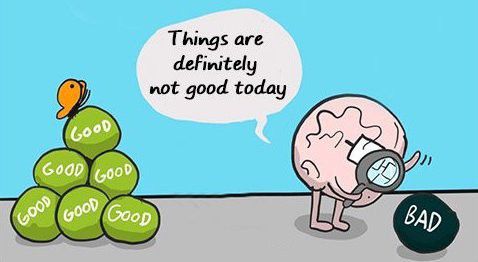
    Worry is one of those sins that is so subtle. It can show up in your own words to curse your life. We speak 150-300 per minute. That is about 50,000 words a day. 70% is subconscious. Research says we have a negativity bias and tend to value negative thoughts over positive ones. 95% of what we say is repeated most of the time. “As a man thinketh in his heart, so he is.” (Prov 23:7). What have you been thinking about and saying to yourself in the loneliness of your thinking? As Joyce Meyer would say, “Think about what you are thinking about”. Have you brought negative thinking from your distant past into your immediate future?

    Matthew 13:20-21 says “the seed on the rocky soil represents those who hear the message and immediately receive it with joy. But since they don’t have deep roots, they don’t last long. They fall away as soon as they have problems or are persecuted for believing God’s word.” Worry comes to attack the Word of God you have. If the Word has no root in you, you will let go of the Word. We can all say nice words until hard times hit. When worry attacks you, do you hold on to God’s Word in your heart or the Word was simply in your head so what is planted in you wilts under the heat of the sun?

    Worry does nothing but pull you down. When you’re worried that something may happen, worry doesn’t stop it from happening. It doesn’t make you human. It makes you a prophet of doom over your own life. It breaks you down. It distracts you and distorts your reality towards negative aspects. Worry is a burden. It is burdensome. It changes your focus. It makes you focus on your problem instead of your solution. It magnifies the problem with increasing attention. If you give in to worry every time life becomes hard, worry will control your life in hard times where you need peace and joy the most.

    It all starts with denormalizing worry in your mindset. Realise that you don’t have to worry for a single moment in your life, because Jesus is your rest. Worrying is not planning. Worrying is not caring. Worrying is not thinking. Worrying is stressful. I can think about what I will eat, drink and wear tomorrow without worrying about it. Whenever you begin to worry, think about God’s Truth concerning the matter and cast it ALL on Him. You will realise that many of the things we worry about are actually petty petty things. No problem is ever bigger than God. We have a Father who is willing to take care of us all the way. Put your trust in Him. He knows your end because He planned it.
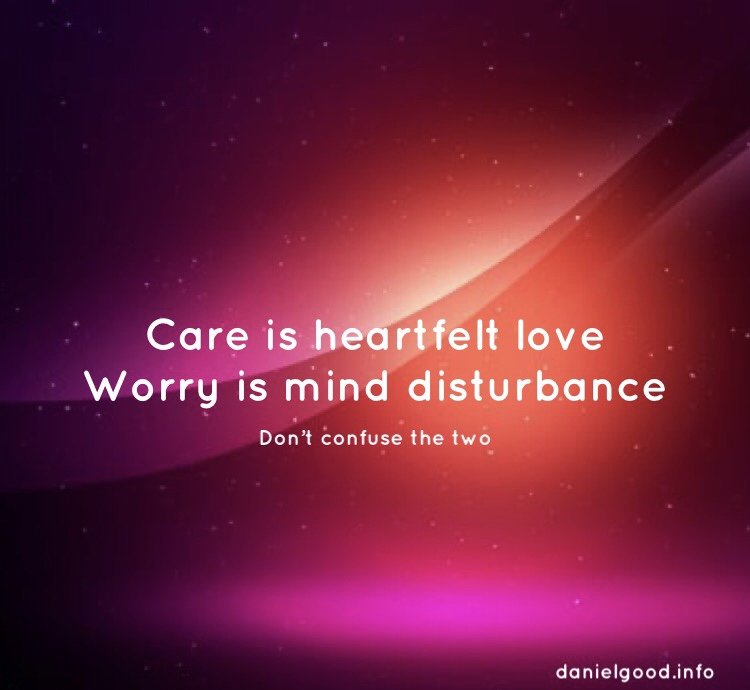
    Worry can be used as an English word but should not be tempered emotionally. You were made to care, not to worry. Language may mix it but don’t mix it emotionally. Care is heartfelt love. Worry is a mind disturbance. Jesus’ yoke is easy and His burden is light. He gives us rest for our souls. Read Matthew 11:28-30. “So do not worry about tomorrow; for tomorrow will worry about itself. Each day has enough trouble of its own.” Care because you do. “Do not be anxious about anything, but in every situation, by prayer and petition, with thanksgiving, present your requests to God.”

    I love you ❤

  • Transparency vs Honesty II

    Transparency vs Honesty II

    Understanding “understanding” is knowing the similarities between two seemingly dissimilar word meanings. The opposite is equally true. There is such an in-depth understanding and enlightenment when we realize the difference between two words with similar meanings. Inasmuch as it’s important to know how honesty and transparency must co-exist in our relationships, in some context these words take sides and it becomes very important to choose one over the other. Let’s dive in.

    What does it really mean to be transparent?

    Transparency is spilling out what someone will need to know about you – because it directly concerns them – without being asked to, so as to let them know what they are getting their heads into.

    The closer we are to someone, the more open we are to them. Very close yet very open. That is what transparency is really about. The difficulty that comes with Transparency is knowing what to keep private and for how long it should remain private

    As to what to keep private;

    Our level of relationship with someone determines what they have earned the right to know. They may never ask because they may have no clue. There are many things we keep to ourselves, where no one deserves to know because it doesn’t affect them directly. But once you’re sharing your life with someone else other than you, those things will eventually be exposed. The more vulnerable we are, the more we expose what we are.

    Letting them know beforehand creates a bond of trust right at the start. You are saying I’m worthy of being in your circle because you have exposed something to me that not just anybody can know. Hiding it from them and they later finding out creates a bond of distrust. The longer the relationship has been and the longer you’ve kept it a secret, the stronger the bond of distrust.

    As to how long it should remain private;

    Being an introvert myself, I find it really weird when I get to know someone for a short while and they trust me with such vital information about themselves. In my mind, I’m like, “TMI..TMI”. This is the principle; start from the known to the unknown. There are things someone can easily get to know about you by asking a few friends, studying the way you go about things and checking out your profile online. Start from there. Allow the other person to earn the right to know certain not-so-obvious stuff. Don’t be an open book.

    When the mutual interest to get to know each other is identified, begin to tell them things only a few would know as time goes by. When it dawns on you that they should probably get to know something about you, tell them right away. Trust your intuition! It tells you what to share when to share it and to the degree it should be shared at a time.

    This is where the line between Transparency and Honesty is drawn. Honesty is telling the truth when I’m asked. Transparency is telling the truth because it deserves to be known. Honesty comes with a condition; you have to ask first. Transparency requires no permission. It is necessary to be honest and much more important to be transparent. Once I’m not questioned, there’s no accountability for my honesty or dishonesty.

    If you have a medical condition, it’s important that your new friend gets to know at the early stages. If you’re single-divorced, your new catch might wanna know. And if you skipped to read only the last paragraph, I might wanna know lol.

    I love you ❤️

  • How To Comfort A Friend

    How To Comfort A Friend

    “Praise be to the God and Father of our Lord Jesus Christ, the Father of compassion and the God of all comfort, who comforts us in all our troubles, so that we can comfort those in any trouble with the comfort we ourselves receive from God.”
    2 Corinthians 1:3-4

    Our brain has the capacity to store whatever information we receive, whether it is needful or not. But as time goes on, the brain empties its short-term memory. Also, if what’s stored in the long-term memory – be it your birthday 4 years ago or what you ate for breakfast 21 days ago – is not revised with time, the memory decays.

    Why? Because of emotional overload.

    Every thought, word, taste, smell, scene, touch etc has an emotion attached to it. For eg. You feel sad whenever you think about the death of a loved one. However, some events happen in our lives that are so traumatic that we hit an emotional overload for a long period of time. For eg. losing someone really close to you or seeing someone get shot. These events are traumatic that it’s been scientifically proven to cause neuroplasticity. Did you get it? The victim is so overloaded that it literally changes the structure of his/her brain.

    Do you know one thing? We are all headed for such an experience. Life does not even prepare us enough for it. No matter how much you are prepared for it, it is going to shake the very foundations of your will to survive. Keep this in mind when you see it happen to someone close to you. There’s an Akan proverb that says, “when you see a vulture on someone’s head, say get away from us, not get away from the person. For if the vulture leaves the person, it is coming to you.” The vulture is pain, grief, sorrow, trauma, hurt.

    If pain in this life is inevitable, why do we pretend to be okay? Why then do we act like nothing is wrong? Why? Hmm. Maybe, here’s why. Usually, people don’t know when the other person needs advice, encouragement, upliftment or comfort. It’s frustrating when you simply need comfort and someone is trying to advise you; when you’re pouring out your heart and the other keeps interrupting you with unsolicited advice. In such a situation, it’s difficult to say the right thing, but one thing will always be the right thing to do; listen.

    Listen before you speak. Sometimes the other doesn’t need you to say anything. Don’t make it about you. No one needs to hear what happened to you 5 years ago right now. Listen to the person, not to reply but to be empathic. Also, there’s this culture of belittling people’s experiences just because they are young and “inexperienced”. If a 3-year old is pouring out to you about how frustrating school is, what are you going to do? I guessed it. Downplay it. As if to say the child’s reaction to those experiences are invalid.

    If someone says they’ve lost their mother, it’s stupid to compare it to your experience of losing your dog. It’s insensitive to think that the person should get over it because it’s bound to happen. It’s absurd to think they are young and what they are going through now is “little” as compared to what you’ve been through. Everyone’s capacity is different; everyone’s reaction to the emotional load is different. Don’t belittle someone’s traumatic experiences. You are not the one to validate someone’s pain.

    You’ve probably written a lot of exam in your life and failed some. How are you going to react to a 13-year old failing exam for the first time? Alright. Okay, how about someone who brought hurt and guilt upon themselves because of their actions? Let’s talk about that category for a second.

    Having been called to comfort those who mourn, we have learnt to weep with those who weep and be happy with those who are happy. But how do we comfort other people without denying their reality to sell false hope, and also to avoid our own emotional overload? If you are that friend who always listens to other people pour their hearts out (and we all are that friend in one situation or another), how do you comfort without siding with the person’s mistakes he/she is not willing to admit with uncompromising Compassion?

    Jesus is the character in the Bible who is said to have compassion the most. He had compassion over the two blind men in Matt 20:34, the large crowd in Matt 14:14, the four thousand men in Matt 15:32, the five thousand men in Mark 6:34 and many many more. What I found is that Jesus didn’t tell them that there is hope, Jesus was their Hope. Any time Jesus had compassion on the sick, lame, blind, broken, crushed, sad, wretched, Jesus became a channel of healing for them.

    Don’t let them dump their burdens on you; help them lay down their burdens before the Father. Don’t promise them comfort, comfort them with the comfort God comforted you. Don’t just let them know that you’ll listen – so that the two of you will be wretched? NO! – let them know that when they come to you, they are not leaving with the burden they came with.

    Don’t be a helper in carrying burdens. Be a lifter of one’s head. Learn to comfort the broken without being broken. Don’t absorb their reality, impact yours.

    I love you ❤