Tag: Jesus

  • How Christ Came & Fully Dealt with Man’s Greatest Problem

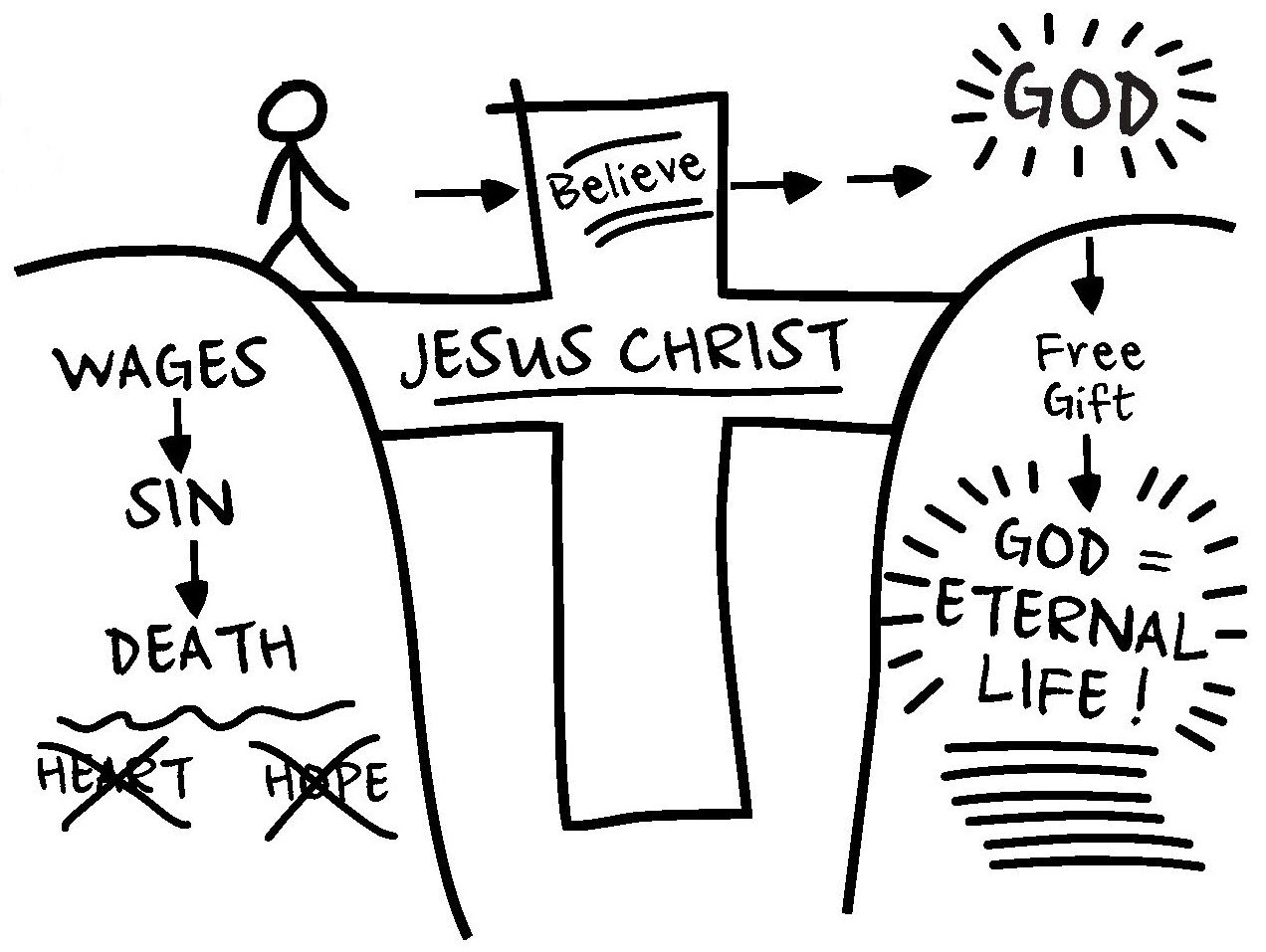
    Sin is man’s greatest problem, not merely because of what it does outwardly, but because of what it separates inwardly. From the moment it entered, sin brought guilt, corruption, death, and distance from God, leaving humanity unable to restore itself. Christ did not come to manage sin, reform behavior, or postpone judgment. He came to deal with it fully, decisively, and forever.

    In His coming, God addressed sin from every possible dimension, leaving nothing unresolved and nothing undone. The Scriptures reveal this complete work through twelve interconnected realities: blood, water, fire, garment, fragrance, oil, light, body, cross, sacrifice, life, and Spirit. Together, they testify that sin has been confronted, judged, removed, and replaced with life in Christ. Let’s explore!

    BLOOD

    1. Hebrews 9:14
    How much more shall the blood of Christ, who through the eternal Spirit offered Himself without spot to God, purge your conscience from dead works to serve the living God?

    2. Revelation 1:5
    Unto Him that loved us, and washed us from our sins in His own blood.

    3. Ephesians 1:7
    In whom we have redemption through His blood, the forgiveness of sins, according to the riches of His grace.

    WATER

    1. Galatians 3:26-27
    For you are all sons of God through faith in Christ Jesus. For as many of you as were baptized into Christ have put on Christ.

    2. Ephesians 5:26
    That He might sanctify and cleanse it with the washing of water by the Word.

    3. 1 John 5:6
    This is He that came by water and blood, even Jesus Christ; not by water only, but by water and blood.

    FIRE

    1. Matthew 3:11
    He shall baptize you with the Holy Ghost, and with fire.

    2. Malachi 3:2-3
    For He will carry out a purifying process. He will be like a refiner’s fire or a launderer’s bleach. He will be as a silversmith who sits refining and purifying silver. He will purify the Levites, refining his priests until they are like pure gold and fine silver. Then I, Yahweh, will have those who bring me offerings in righteousness.

    3. Luke 12:49
    I came to send fire on the earth, and how I wish it were already kindled!

    GARMENT

    1. Isaiah 61:10
    He has clothed me with the garments of salvation, He has covered me with the robe of righteousness.

    2. Romans 13:14
    But put on the Lord Jesus Christ, and make no provision for the flesh, to fulfill its lusts.

    3. Revelation 7:14
    And have washed their robes, and made them white in the blood of the Lamb.

    FRAGRANCE

    1. Ephesians 5:2
    …Christ loved us and gave Himself up for us as a fragrant offering and sacrifice to God.

    2. II Corinthians 2:15
    For we are to God the fragrance of Christ among those who are being saved and among those who are perishing.

    3. Psalms 45:8
    All Your garments are scented with myrrh and aloes and cassia, out of the ivory palaces, by which they have made You glad.

    OIL

    1. Isaiah 10:27
    It shall come to pass in that day that his burden will be taken away from your shoulder, And his yoke from your neck, And the yoke will be destroyed because of the anointing oil.

    2. Leviticus 8:12
    He poured some of the anointing oil on Aaron’s head, thereby anointing him to make him holy.

    3. 1 John 2:20
    But you have an unction from the Holy One, and you know all things.

    LIGHT

    1. John 1:7
    Ephesians 5:8
    For you were once darkness, but now you are light in the Lord. Walk as children of light.

    2. John 8:12
    I am the light of the world: He that follows me shall not walk in darkness, but shall have the light of life.

    3. 1 Peter 2:9
    But you are a chosen generation, a royal priesthood, a holy nation, His own special people, that you may proclaim the praises of Him who called you out of darkness into His marvelous light;

    THE BODY

    1. Hebrews 10:10
    And by that will, we have been made holy through the sacrifice of the body of Jesus Christ once for all.

    2. 1 Peter 2:24
    Who His own self bare our sins in his own body on the tree, that we, being dead to sins, should live unto righteousness: by whose stripes ye were healed.

    3. John 1:29
    Behold the Lamb of God, which taketh away the sin of the world. (Implied sacrificial body offered for sin).

    THE CROSS

    1. Colossians 2:14–15
    Blotting out the handwriting of ordinances that was against us, which was contrary to us, and took it out of the way, nailing it to his cross;
    And having spoiled principalities and powers, he made a shew of them openly, triumphing over them in it.

    2. Galatians 6:14
    But God forbid that I should glory, save in the cross of our Lord Jesus Christ, by whom the world is crucified unto me, and I unto the world.

    3. 1 Corinthians 1:18
    For the preaching of the cross is to them that perish foolishness; but unto us which are saved it is the power of God.

    THE SACRIFICE

    1. Hebrews 9:26–28
    But now once in the end of the world has He appeared to put away sin by the sacrifice of Himself. So Christ was once offered to bear the sins of many; and unto them that look for him shall he appear the second time without sin unto salvation.

    2. Hebrews 10:12
    But this man, after he had offered one sacrifice for sins for ever, sat down on the right hand of God.

    3. 1 Peter 3:18
    For Christ also has once suffered for sins, the just for the unjust, that he might bring us to God, being put to death in the flesh, but quickened by the Spirit.

    LIFE

    1. John 10:10
    I am come that they might have life, and that they might have it more abundantly.

    2. Romans 5:10
    For if, when we were enemies, we were reconciled to God by the death of his Son, much more, being reconciled, we shall be saved by His life.


    3. 1 John 5:11-12
    And this is the record, that God has given to us eternal life, and this life is in his Son. He that has the Son has life; and he that has not the Son of God has not life.

    SPIRIT

    1. Romans 8:2
    For the law of the Spirit of life in Christ Jesus has made me free from the law of sin and death.

    2. John 3:5-6
    Except a man be born of water and of the Spirit, he cannot enter into the kingdom of God. That which is born of the Spirit is spirit.


    3. Romans 8:10-11
    And if Christ be in you, the body is dead because of sin; but the Spirit is life because of righteousness. But if the Spirit of him that raised up Jesus from the dead dwell in you, he shall also quicken your mortal bodies.

    4. Galatians 5:16
    Walk in the Spirit, and ye shall not fulfil the lust of the flesh.

    5. Ephesians 1:14
    The Holy Spirit is the down payment on our inheritance, which is applied toward our redemption as God’s own people, resulting in the honor of God’s glory.

    • Blood deals with guilt
    • Water cleanses
    • Fire purifies
    • Fragrance satisfies God
    • Oil empowers
    • Garment covers
    • Light reveals
    • Body bears sin
    • Cross executes judgment
    • Sacrifice satisfies justice
    • Life restores what was lost
    • Spirit applies, seals, sustains, and completes it all.


    This completes a twelvefold framework of Christ’s finished work in dealing with sin, revealing a single, coherent redemptive reality. The blood of Christ deals with guilt, redemption, forgiveness, and the cleansing of the conscience, while water cleanses, sanctifies, and incorporates the believer into Christ. Fire purifies and refines what belongs to God, burning away all that contradicts His holiness, and the garment of righteousness covers the believer with acceptance before God. Christ’s sacrifice rises as a fragrance that satisfies God, and the oil of anointing breaks yokes, empowers, consecrates, and enables true service. Light delivers from darkness, reveals truth, and governs the new walk of the believer.

    In His body, sin was borne and judged once for all, and at the cross sin, accusation, and hostile powers were executed and defeated. Through His once-for-all sacrifice, divine justice was fully satisfied and sin was put away forever. Life is restored in Christ, eternal and abundant, replacing everything sin destroyed. The Spirit stands as the living agent who applies, seals, sustains, and completes all that Christ accomplished, for without the Spirit the work of Christ would remain historical, theoretical, and impersonal, but with the Spirit it becomes present, active, and eternal.

    By His blood Jesus secured redemption, and by that same blood He made us forgiven and accepted; through water He cleanses, and so He made us clean by the washing of the Word; He baptizes with fire, and thus He kindles our hearts with holy zeal; He offered Himself as a sweet fragrance to God, and now our lives rise as a fragrance of Christ; He is the Anointed One, and He has given us the anointing by the Spirit.

    He is righteous, and He clothed us with the garment of righteousness; He is the Light of the world, and He made us light in the Lord; He bore sin in His body, and made us His body on the earth; He died on the cross, and crucified the old man with Him; He became the once-for-all sacrifice, so we now offer spiritual sacrifices; He rose as Life, and made us alive together with Him; and through the eternal Spirit He accomplished all this, then gave us that same Spirit to dwell in us and make His finished work real and living within us.

  • The God and Father of our Lord Jesus Christ

    The Fatherhood of God is the Pinnacle of all relationships. It is what makes inheritance and  reproduction possible. The highest revelation of the devil is as a deceiver. The highest revelation of God is as a Father. In all of experience, there is no relationship more transformative, more intimate, or more eternal than God being our Father. Not merely a cosmic Creator. Not just a distant Sovereign. Not only a Transcendent Being. Father. This relationship is not symbolic. It is real. It is eternal. It is heavenly DNA. The proof of this fellowship, the seal of this covenant, is Jesus Christ, the Son of God.


    When Jesus walked the earth, He did something radical. See, God had mentioned that He was a Father several times in the Old Testament but it was never a continuous personal reality to any individual. Jesus called God Father over 165 times in the 4 Gospels. He introduced a relationship with God that no Old Testament prophet had ever dared to define so personally: Abba, Father. Not just “God of all Creation” or “God of Israel” but Father. In fact, when He taught His disciples to pray, the very first line was, “Our Father who art in Heaven…” It was a revelation of identity that we are not talking to a Wind or Invisible Being; we are talking to a Person who is really our Father.


    To know God as Father is to know your origin, your identity, your inheritance, and your eternal home. A Father doesn’t just give commands; He gives life. You don’t only serve Him; you have access to Him. It’s not a formal relationship. It is a cordial one with all due respect, love and affection. This is the relationship God the Father has with God the Son. We were created to participate in the relationship that exists within the Trinity.

    Jesus: God the Son, Eternally from the Father

    Now here lies the mystery that grounds this revelation: Jesus, who is Himself God, is called the Son of God. Why? Not because He was created, for He existed from eternity. Not because He was born later, for He is the Word that was with God and was God. He is eternally begotten, not made, as the Church has confessed for centuries. If you believe Jesus was created, you are not even a Christian. This Sonship speaks not of time, but of relationship. He is God the Son, not merely in title, but in nature.

    He is the Son and therefore, everything is done through Him, by Him and for Him. He is the visible image of the invisible God. He did not become the Son when He was born in Bethlehem. Yes, a time came when He was begotten in the flesh as the Son of Man but He always pre-existed as the Son of God. He has always been the Son, because God has always been the Father. The sonship of men is a replica of the Sonship of Christ with God, not vice versa. Giving birth to a son makes us understand the eternal relationship that exists between God the Father and God the Son.

    The Original and Replica of Fatherhood & Sonship

    You cannot be a father without a child. You cannot be a master without a servant. You cannot be an employer without employees. Proof of your fatherhood is your reproduction of sons. Herein lies the depth of this truth: God has always been Father, not because He is the Father of Spirits, but is God the Father in the Trinity. That means He was Father before anything was created. He is the only Being in the entire universe with 3 persons so it becomes difficult to understand the Triune Nature of God. The Father is not the head of the Trinity. Remember that the Father and Son existed before there were fathers and sons. Our replica of having fathers and sons does not and cannot fully depict the relationship between the Father and Son.

    For instance, the Trinity does not have or need a mother. Also, in ours, the father is always higher than the son although the son grows to also become a father. A foreshadow is never a full depiction. The Trinity is not a hierarchy of importance, but a perfect unity of Persons, Father, Son, and Holy Spirit, co-equal in glory, distinct in person. Therefore, not every aspect of our replica is exhibited in the Trinity and vice versa.

    Also, even the arrangement of their names – God the Father, God the Son and God the Holy Spirit – is simply because of how they were revealed to us. It is strategically and intentionally arranged that way but it has no ranking or hierarchy within. God the Father in the Old Testament, Jesus became flesh and dwelt among us, and the Holy Spirit was poured out when Jesus left the earth. Immediately we begin to think that God the Father is greater than God the Son, that means we make God the Holy Spirit the smallest of them all. That is not just a bad idea o. It’s an erroneous and evil one. How about when Jesus said the Father is greater than He, when He walked the earth? You’re right to ask for precision. Let me clarify.

    Is the Father Greater than the Son?

    When Jesus said, “The Father is greater than I”, He was not denying His divinity or eternal equality with the Father, but speaking in the context of His incarnation as the Son who had taken on flesh and entered into the limitations of human life. As at the time He hadn’t died and resurrected, the Bible said He was even made a little lower than the angels as clearly written in Hebrews 2:9. He suffered every affliction known to man and had to fully rely on the Holy Spirit. Though He was God, He did not think that by force He should try to remain equal with God. Instead of this, of His own free will He gave up all He had, and took the nature of a servant. He became like a human being and appeared in human likeness. Imagine God being hungry, tired, travelling on two legs, tempted, surprised etc.

    He was humble and walked the path of obedience all the way to death, His death on the cross. In becoming man, He willingly accepted a lowered position (not a lesser nature), humbling Himself to obey the Father’s will in the work of redemption. The statement reflects the functional distinction within the Godhead during His earthly mission, not an ontological difference. As God, He is equal with the Father. He was fully and truly God as He walked upon the earth as the incarnate Son sent into the world. However, because He laid down many of His God-abilities so He could carry our burdens, He acknowledged the Father as greater in position and authority within the redemptive order.

    📖 “This is my beloved Son, in whom I am well pleased.” – Matthew 3:17

    In this relationship, we see eternal love. The Father loves the Son. The Son honors the Father. The Spirit reveals and glorifies the Son. There is no competition in the Godhead. Only love, only joy, only truth.

    The Son of God & the Son of Man

    When Jesus is called the Son of God, it affirms both His divinity and His mission. What He did can only be done by Him. He is the Son of God as God and He is also the Son of God as Man, born of a woman, born under the Law, to fulfill the promise made to David. The Son of God became the Son of Man so that the sons of men will become the sons of God.


    📖 “The Word became flesh and dwelt among us.” – John 1:14

    He is not God pretending to be man. He is God made man, who took on flesh and yet remained divine; the perfect Son, the obedient Lamb, the image of the invisible Father. By Him, we understand what God intended when He created man. Through Him, we understand who God is. By His Sonship, we are drawn into this family. He reconciles God with man, fully representing God and embodying the fullness of the original intention of man as planned in Genesis 1:26.

    God the Father is the eternal God and Father of our Lord Jesus Christ, who, being the only begotten Son from eternity, shared perfect fellowship with the Father before the foundation of the world. Yet in love, Christ humbled Himself and took on flesh, becoming the Son of Man, so that through His life, death, and resurrection, He might bring many sons to glory. By uniting Himself with humanity, He opened the way for us to share in His relationship with the Father, which is no longer distant or estranged, but reconciled and adopted. Now, through Him, we can boldly call God our Father, for the God and Father of our Lord Jesus Christ has become, through grace, our God and our Father (John 20:17), drawing us into the same covenantal love and divine fellowship that the Son has eternally enjoyed.

    Abba! Father!

    You can know God as a Judge and still be lost. You can know Him as Creator and remain outside the garden. You can even fear Him as Almighty, yet never know Him as Abba. But when you truly know Him as Father, everything changes.


    The Spirit of Sonship is what confirms our adoption. It is what makes us heirs with Christ, co-seated with Him in the heavens. It is what heals our orphanhood and silences the lie that we are abandoned. It is what gives us boldness to pray, to hope, to wait; because we are not begging strangers. We are coming to our Father.

    In ancient Jewish culture, adoption was not a common legal practice as it was in Roman society, but the concept of being chosen and placed into a familial relationship held deep covenantal significance, especially through inheritance and lineage. Unlike modern adoption which often involves bringing an unrelated child into a new family out of compassion, the biblical idea, particularly in the New Testament, emphasizes the act of God legally placing us as sons with full rights and privileges. Paul, writing to both Jews and Gentiles familiar with Roman law, uses the term “adoption” (huiothesia) to express the profound truth that, through Christ, we are not just forgiven but brought into God’s family as full heirs (Romans 8:15, Galatians 4:4-7). This spiritual adoption is not based on need or pity, but on divine purpose and covenantal grace, granting us the same status and access to the Father as His own Son.


    This sits at the heart of the Gospel: that God is not only holy and powerful; He is Father. And through Jesus the Son, He is your Father too.

  • Was Jesus Separated from the Father on the Cross?

    At the very heart of the Christian faith lies the death of Jesus Christ — the greatest act of sacrifice, love, and justice history has ever known. However, one statement Jesus made on the Cross has been tremendously misunderstood and misinterpreted because of lack of doctrine. After this study, you will realise why the emphasis of the Spirit this Easter is on doctrine. When we don’t know the voice of Scripture, we will pick a detail and ignorantly misinterpret it out of the bigger picture and not know how dangerous it is. Was Jesus separated from the Father on the Cross? This question is often provoked by Jesus’ harrowing cry:

    “My God, My God, why have you forsaken me?”
    Matthew 27:46 / Mark 15:34

    Some have taught that in that moment, the Father turned away from the Son. The Father could not look at His Son because He was so filthy from carrying the sins of the whole world. He separated from Him temporarily, especially the humanity aspect of Jesus. For the first time in history, Jesus suffered rejection from the Father. From forsook to abandon to separated, but is that what Scripture really reveals? Let’s carefully journey through this question under three clearly established biblical doctrines.

    God is One

    Before facing the brutality of the Cross, Jesus made this unshakable statement:

    “Indeed the hour is coming, yes, has now come, that you will be scattered, each to his own, and will leave Me alone. And yet I am not alone, because the Father is with Me.” — John 16:32

    Even as betrayal loomed and death approached, Christ affirmed His confidence in the Father’s ever-present oneness. This unity wasn’t temporary — it was, and is, eternal and indivisible.


    If Jesus cannot be separated from God, why did He say that His God has forsaken Him? Jesus was pointing out by Himself that His sufferings and pain were not random; it was prophesied that the Messiah will have to go through it all to fulfil all righteousness. He was quoting Psalm 22:1, “My God, my God, why have you forsaken me?” He was not declaring a divine divorce — Before 1227, there were no chapters and verses in Scriptures. Because the Bible was memorized in Jewish custom, immediately you mentioned the first verse, you were reminding them of the entire chapter. Jesus was showing them that Psalm 22 is a Messianic Psalm whose biblical details pertained to Him right now on the Cross. Read Psalm 22. Inasmuch as the first verse was asking why God has forsaken him, it clearly shows severally that He wasn’t forsaken at all:

    “For He has not despised nor abhorred the affliction of the afflicted; nor has He hidden His face from him; but when he cried to Him, He heard.” — Psalm 22:24

    But Daniel, this explanation you are giving is too long and sounds too technical. Biblical doctrine has established without fail that God is One. Thus, all Scripture ought to be interpreted from that light. Besides, if God the Son could be separated from God the Father, why will the Son now commit His Spirit to Him while still on the Cross? The final moments affirm this:

    The Triune Work of Redemption

    Just like in creation, redemption was also the work of the Triune God. God the Father, God the Son and God the Spirit had distinct roles to play. Thus, the Cross was not a moment of divine division — it was the greatest demonstration of the Trinity of the Godhead at work to redeem humanity and reconcile them into divinity.

    “Christ, who through the eternal Spirit offered Himself without blemish to God…” — Hebrews 9:14

    The Son, through the Holy Spirit, offered Himself to the Father. Notice — Father, Son, and Spirit — all actively and harmoniously involved in the work of redemption.

    Even as Jesus bore the full weight of sin, “In Him all the fullness of Deity dwells in bodily form (Colossians 2:9). God was not absent. In fact:

    “God was in Christ, reconciling the world to Himself, not counting their trespasses against them.” — 2 Corinthians 5:19

    Notice — not “God was separated from Christ,” but God was in Christ. It cannot get clearer than this. The Father didn’t abandon the Son; He was actively present in Him, reconciling humanity to Himself. The Son was not alone on the Cross. The Spirit strengthened Him, the Father was with Him, and redemption was fully accomplished through perfect divine harmony.

    Why is it Important to Know This?

    The idea that the Father turned His face away from Jesus is not only unsupported by Scripture — it is theologically dangerous. We just took one harmless verse out of context and read exaggerated meanings into it, not knowing how harmful it is to the overall framework of Scripture. Notice how i didn’t explain intellectually; I used Scripture to explain Scripture. Now, show me just one verse that says that Jesus was separated from the Father on the Cross? So you see how false doctrines are innocently yet dangerously formed?

    This false doctrine is actually not new at all. It leans toward Nestorianism, an early heresy condemned by the Church, which dangerously divided Jesus’ humanity from His divinity. If the Father forsook the Son, it implies a fracture in the eternal Trinity — something that cannot happen.
    God is eternally one, indivisible in essence, nature, and being. To say there was separation is to say Jesus stopped being God for a moment. To say there’s a separation is to say there’s a difference between the human Jesus who suffered separation and the Christ who is God. All are doctrinally wrong and dangerous. Have you seen how one exaggerated explanation of one verse can cause a serious doctrinal error condemned and contrary to Scripture?

    This is one of the heresies the devil perpetuates in literally every generation because it affects two fundamental aspects of Christianity; the humanity of Jesus and the divinity of Jesus. This forms part of the essentials of biblical doctrine and if you don’t believe rightly, you are not to be even considered a believer. You ought to believe that Jesus is both fully human and fully God, that there is one God, and that there is no separation between Jesus (the human) and Christ (the Lord). We should never in any way try to separate Jesus and Christ. He is literally the same person, fully human and fully God.

    Believing in a moment of separation also dangerously portrays a God divided at the hour of salvation. Yet He said “I will never leave you nor forsake you.” (Hebrews 13:5). If this is His promise to us, how much more was it true for His only begotten Son, who He is eternally one with? The Cross was not God punishing an innocent Jesus while turning away — it was God in Christ, fully present, bearing our sins, conquering death, and reconciling us to Himself. Let us not use the Cross, the place of reconciliation of divinity with humanity as a place where divinity was separated. That’s heresy.

    The Cross : The Altar of Reconciliation

    The Cross was not a moment of abandonment — it was the climax of eternal unity. Yes, Jesus felt the crushing weight of sin.Yes, He endured the agony of death that humanity deserved. Yet, He was never separated from the Father. The Father was in Him.
    The Spirit upheld Him, and God accomplished the greatest act of love and justice ever witnessed in history. As believers, we rest confidently in this unbroken truth: “God was in Christ reconciling the world to Himself.” — 2 Corinthians 5:19

    We have been given this same ministry of reconciliation, for those who were far have been brought near by the Blood. I have been committed with the Word of Reconciliation. I implore you: be reconciled with God!

  • If Adam’s Sin Made Us All Sinners, Why Doesn’t Jesus’ Sacrifice Make Us All Saints?

    If Adam’s Sin Made Us All Sinners, Why Doesn’t Jesus’ Sacrifice Make Us All Saints?

    Christian Universalism argues that if Adam’s sin made everyone a sinner, Jesus’ sacrifice has made everyone a saint. Simple logic! It sounds about right. After all, Romans 5:19 says “because one person disobeyed God, many became sinners. But because one other person obeyed God, many will be made righteous.”

    Adam’s sin brought sin into everyone’s heart even from birth. We had no choice but to sin. Sin was natural to us. Jesus’ finished work brought freedom from sin, breaking its yoke. But I still have a choice to enslave myself to sin if I want to.

    “But but…Adam’s sin made us sinners without a choice?” Wrong! Adam’s sin made us sinners with only one choice; to be a slave to sin. The choice to live free from sin was far beyond our reach. Jesus’ finished work gave us another choice; to be a slave to righteousness. Because we had initially made the choice of being slaves to sin, not making the choice of being a slave to righteousness still makes us sinners.

    This means that one becomes a saint by choice, and not by chance. That’s where Christian Universalism flawed. I should have a choice. What if I don’t want to be a slave of righteousness? This is about eternity; probably the biggest decision that needs my consent the most. “But but…if God wants to save all of us so badly, why doesn’t he make it an automatic process?” Where there is love, there’s choice. Where there’s no choice, there’s no love.

    What if someone doesn’t want to spend eternity with God? After all, if I can live my life here on earth without God, why should I be forced to spend eternity with Him? So people are not going into eternal damnation because of Adam’s sin, but because of their own choice.

    God has forgiven us all our sins – past, present, future – and has blessed us with all spiritual blessings in the heavenly places in Christ whether you agree or not. But guess what? You have a choice; to accept or not to accept. The choice is universal. And no one is choosing for you, not even God. In fact, we will need to make this choice everyday, not just in this age but throughout eternity.

    The choice is not a riddle too. For God will continually show what we must choose. He loves you ❤️

  • Is Jesus The Only Way To God?

    Is Jesus The Only Way To God?

    If God wanted everyone to come to Him, why would he create a narrow path that only a few can thread on? Why won’t He make Himself more accessible?

    The problem is not God. Man failed and fell short. We broke our partnership with the divine and tried so hard to be God. We have each turned to follow our own downward path. Each time God tried to establish a way back to Himself through one man or the other, they failed Him and directed everyone to themselves.
    So guess what? God decided to do it Himself. Since through one man – Adam – man fell, it was only through another “Adam” that man could be reconciled with His Creator. So the Son of God became the Son of Man so that the sons of men will become the sons of God.

    Jesus was the only man who fully walked with God and obeyed every ordained Word of God, thereby establishing the path back to God. By reconciling everyone to Himself, He had reconciled everyone back to God, for He is God Himself.
    But hei…this is the Good News; there’s only one way to God: Jesus, but there are many ways to Jesus through the Holy Spirit.
    I love you ❤️