Tag: righteousness

  • How Were People of the Old Testament Saved?

    Different Dispensation, Same Age

    There are dispensations, eras, seasons and times; A time appointed for everything, as Ecclesiastes 3 rightly says. There is a set time of favour and mercy (Psalm 102:13), and a set time of judgement (Psalm 75:2), amongst others. A season can last as short as a month and as long as a year. Eras define seasons. Since a lot happens in times and different seasons can run concurrently, eras give a summary and pattern to the outworking of the seasons and times. Dispensations are characterised by a life-altering, destiny-defining moment for the rest of the age. For instance, when Adam sinned, all our original destinies were altered.

    There was a dispensation of innocence where righteousness was not fully established in the life of Adam. God could come to Adam in the cool of the day, but Adam hadn’t found how to approach God yet. Then there was a dispensation before the Law was given. Abraham, Isaac, Jacob, Joseph, Job and Judah, etc., did not have the law, but God was with them. It was a dispensation of conscience. The Law brought a new dispensation where the entire justice system of God was revealed to man objectively. Jesus brought about the new dispensation of Grace when He died and rose again.

    However, there hasn’t been a change in this age. We are still in the same age, whether you were born at the time of the New Testament or the Old. The dispensation has changed, but the age has not. To say nothing has changed will be a fallacy that does not acknowledge the work of Jesus on the Cross. To treat it as though it’s an entire new age is the other extreme of the error. It is the same age. Therefore, the standards and requirements for everyone in this age remain the same.

    Avoiding Both Extremes

    Jesus’ death and resurrection did not bring us into a new age. Sin is not dead. We are dead to sin, but sin is not dead. Jesus has all authority, but the devil still has powers. We are not living in the time of the Millennial rule. The world is still evil and corrupt. God’s judgment still exists, just like in the Old Testament. He hasn’t changed, although Jesus’ sacrifice did change us. To now paint God as only a Loving Father who has no power to kill or judge evil because of Christ’s example is making a mockery of God, who has never changed throughout all ages. Jesus’ first coming is Grace and Truth. His second coming is Righteousness and Justice.
    Avoid the other extreme, where we act as though Jesus’ death on the Cross changed nothing. “God forgave before Jesus died”. Yes, it’s just like credit and debit. Those before Christ were debited and those after Christ were credited. Thus, forgiveness, for both those before and after Christ, was only possible because of Jesus’ death that satisfied God’s justice. “If death is conquered, why do we still die?” To leave this corruptible realm and overcome death by resurrection, just like Christ did. Let’s not act as though Jesus’ death changed nothing.

    The Gospel was Preached in the Old Testament

    The Bible says, “All the ends of the earth will remember and turn to the Lord, and all the families of the nations will worship before you in Psalm 22, which is a Psalm about the Messiah. All nations, including the Gentiles. Isaiah 11:10 says, “In that day there shall be a root of Jesse, which shall stand for an ensign of the people; to him shall the Gentiles seek.” Thus, the idea of Gentiles being part of God’s people was a mystery that had always been part of the plan. Remember Genesis 12:3? All families of the earth are blessed through Abraham. In Galatians 3:16, Jesus is referred to as the Seed of Abraham.

    Isaiah 49:6: Salvation reaches the ends of the earth. Psalm 86:9: All nations will come and worship God. Isaiah 56:6-7: Foreigners join themselves to the LORD. Isaiah 60:3: Gentiles come to the light. Malachi 1:11: God’s name becomes great among the Gentiles. Isaiah 11:10: The Gentiles seek the Messiah. Grace is not a New Testament concept. Several times in the Old Testament, the grace of God was spoken about. I listed all these verses in the post on God’s Mercy;

    Being born an Israelite in the Old Testament is like being born into the church by Christian parents today; it didn’t automatically make you a believer and follower of God. We see this clearly when certain generations in Israel’s history completely forsook God and followed after other gods, leaving only a remnant. The Gospel was preached severally in the Old Testament. In Romans 9:17, God chose Pharaoh to use his stubbornness as a tool to evangelise His greatness to the entire ancient world. There are over 350 prophecies about Jesus in the Old Testament.

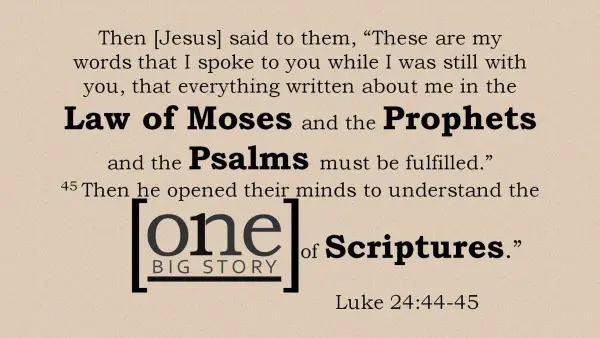
    You can preach the entire Gospel from the Old Testament. Jesus’ gruesome suffering was captured more by Isaiah in Isaiah 53 than the disciples themselves who witnessed it. The entire Bible is the Gospel. The Old Testament captures the promise. The New Testament captures the reality. Jesus Himself, in Luke 24:44, used the Old Testament to preach the Gospel. In fact, whenever you see the Gospel being preached in the book of Acts, you should know they were using the Old Testament, as at the time, because the New Testament was still in the process of writing.

    Why is it necessary to understand this? Because just as we are saved by believing the Gospel, the people in the Old Testament had the same opportunity given to them all to hear the Gospel and believe. Noah preached the Gospel to his generation, and so did Jeremiah. Hebrews 1:1-2 says “God, who at various times and in various ways spoke in time past to the fathers by the prophets, has in these last days spoken to us by His Son“. God has been speaking the Gospel since time immemorial.

    Same Righteousness

    Since we are all of the same age, the same standard of Righteousness is required of us all. In fact, the same standard of Righteousness will be required in all ages to come. My righteousness is no different from the righteousness of Abraham. If it were, why would God choose a man in an old dispensation to be the father of all who believe?
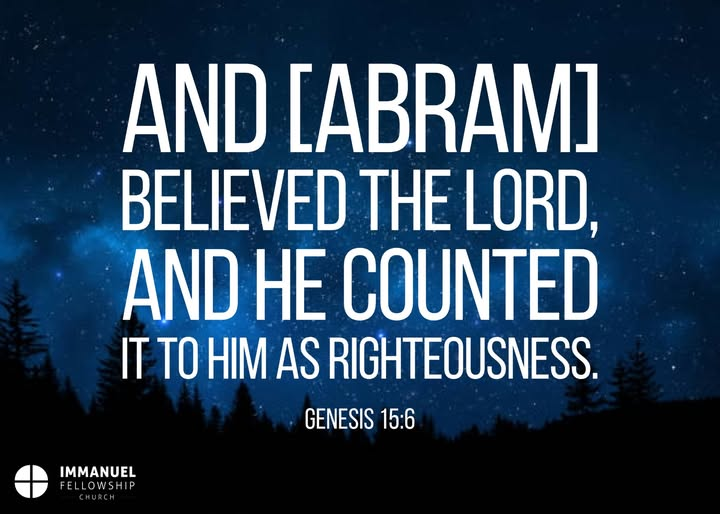
    Abraham is the template God chose to bring redemption to man. The promise was given to him, and the manifestation was fulfilled in Christ. Although men before him, like Noah, were declared righteous – and Enoch – walked with God – it was by Abraham that God established a covenant to save all nations. Abraham was given the promise in Genesis 15, and He believed. That was how righteousness was imputed/accounted/credited unto him.

    In Romans 4:5-8, Paul explained that salvation and justification have always been by faith. God did not change the plan halfway. “It is of faith that it might be according to grace“. The purpose of the law was never about salvation. Through Abraham, God established for all men that you become righteous by responding in faith to the grace He shows. It is the same God, same faith in God, and the same righteousness God imputes.

    So then, if Old Testament saints have the same righteousness as we have, at what point exactly do they become saved, you might ask? After all, Jesus’ death on the Cross was in their future. Exactly! For them, it was a promise and was in their future, while for us, it is a manifestation and is in our past. Just as we are saved by believing in what was done for us in the past, they were saved by believing in what will be done for them in the future. Whoever believed in the promise had Righteousness accounted to them also.
    If you believe Jesus’ death and resurrection are still relevant, although it is in the past, you should not be confused that it was equally as relevant while the manifestation was in the future for those in the Old Testament. Moses’ rich relationship with God was because of the access Jesus paved. God forgave the sins David confessed because of the sacrifice of Jesus on the Cross. In Psalm 65:3, David prophesied that God would be the one to atone for our sins. They saw the shadow, believed and confessed. Their confessions became prophecy for those in their day to also hear and believe.

    Let us explore some examples: Rahab the prostitute became saved by her confession in Joshua 2:10-11. What is the Gospel? One definition of the Gospel is in Romans 1:16; it is the power of God unto salvation for those who believe. Rahab was told about the power God displayed in Egypt; she believed and confessed that the Lord God is indeed God. That was how she was saved and inculcated into the lineage of Jesus. Same with Ruth. Her confession is in Ruth 1:16. I used people originally not in the nation of Israel to show you that, even in the Old Testament, God’s plan of salvation included everyone. In fact, in Isaiah 56:3, God commanded the foreigners who had joined His people not to think of themselves as a different breed. Of course, the full manifestation of this was seen in Christ, as written in Ephesians 3:6.

    The Conclusion of the Matter

    The easiest way to understand all of this is to remember three things: the same God, the same age, and the same righteousness, but different dispensations. God has always had one plan for humanity. The dispensations changed, but God’s character, His standard of righteousness, and His ultimate plan of redemption did not. What changed with Christ was not God’s nature or the standard by which He judges righteousness, but the fulfilment and manifestation of the promise that had been spoken about from the beginning. What about those living in remote places who have never heard the Gospel? How will God judge them? Read the Mystery of Witnesses to understand.

    The people before Christ looked forward to the promise. We look back at its fulfilment. They believed in what God said He would do. We believe in what God has done through Christ. But in both cases, salvation is by faith in God’s grace. This is why we must avoid both extremes. We cannot say that the Cross changed nothing, because it changed everything about how God’s redemptive plan was manifested and gave us access to what the Old Testament saints only saw in promise and shadow. At the same time, we cannot say that Christ introduced an entirely different God, a different standard of righteousness, or an age where judgment no longer exists.

    Therefore, Abraham was not saved by a different method from us. Rahab was not saved by a different God. Ruth was not accepted because she was an Israelite. They believed God, responded to His grace, and righteousness was accounted to them by faith. Different dispensation. Same age. Same God. Same righteousness. Same Gospel. The difference is that they were looking forward to Christ, while we look back at Christ. And that is why the entire Bible, from Genesis to Revelation, is ultimately telling one story: God’s plan to redeem humanity through Jesus Christ.

  • Righteousness: the Operating System of God’s Kingdom

    Righteousness and justice are the foundation of God’s throne. That means God rules in righteousness. That also means what is righteous is what is pleasing and acceptable in the sight of God. Thus, righteousness is right standing with God. We cannot stand before God if we are not righteous. We cannot also represent God if we are not righteous. God alone is right, good and true. He is the only determiner, definer and demonstrator of what is right. Something is only right because God makes it so. Therefore, we cannot seek the Kingdom of God without seeking His Righteousness. His Righteousness is His Way of being and doing right. That means He determines how we become righteous and what deeds are righteous.

    The sin of Adam and Eve is that they ate from the tree of death after listening to the voice of the devil. Thus, they gained the knowledge of good and evil. In other words, they now determined what was good and evil without God. We cannot be righteous outside of God. Ask atheists; the foundation of good and evil collapses when God is taken out of the equation. Without the presence of God, we cannot even differentiate between good and evil anymore. Nothing is inherently right without God. If God says go and you stay, you have faulted. He is the Judge of All, and He judges what is right rightly because He alone has the right to determine what is right.

    The Nature of Righteousness

    Righteousness is first of all a nature. You don’t do to become. You become, then you do. You can never do righteous deeds if you are not righteous. Righteousness is what is pleasing in the sight of God. That means God alone gets to determine what is good and what is evil. However, we were not able to live fully according to His Law. Therefore, we couldn’t stand before Him blameless. The Law was only to show us that we will never achieve righteousness by what we do. Jesus became our substitute in this regard. He is the Righteousness of God. Therefore, if we believe in Him and accept His Life, which is a righteous life, we gain access to the presence of God. By this same access, we are able to live the life of righteousness God has fashioned for us.

    This is why Righteousness comes first in the order; Righteousness, Peace, Joy in the Holy Ghost. Righteousness is when we accept the Lordship of God. This means we give Him the full right to rule our lives and be the one to determine how we live. You cannot claim to be in the Kingdom if you are living according to your own understanding. We ought to seek first His Kingdom and Righteousness. Righteousness is the operating system of the Kingdom of God. It is His government and constitution. The nature of righteousness then flows into our words, works and ways.

    Words, Works & Ways

    Your input determines your output, in computer language. You cannot say you are righteous when you do not bear any fruits of righteousness. Yes, righteous is who you are. Righteousness will naturally flow into what you do. What you do cannot make you righteous but you being righteous will flow into what you do. It’s that simple! Feeding a child does not make you a mother but a mother feeds her child. Being a mother is who you are and it will naturally flow into what you do. Therefore, you are making excuses when we don’t see your righteous works. The very first “output” we will see is your words. The Righteousness of God is the Word of God. If you have the Righteousness of God, you will speak the words of God.

    There are works God has predestined for us to walk in. These works are righteous, for they please the LORD. This is God’s way of doing right. Because we have the Spirit of God within us, we are able to perform the Kingdom duties given unto us. Wherever the Kingdom of God is, the Righteousness of God is established there. Our ways refer to how we do things as our works refer to what we do. How we do things is as important as what we do. The Righteousness of God makes sure that we don’t try to use evil to achieve good. Don’t try to help God by giving birth to Ishmael. God has His Way of doing things, and righteousness demands that we follow that particular way.

  • Mercy and Truth, Righteousness and Justice!

    In my studies of the book of Psalms, I discovered a collocation. I saw mercy and truth together. Whenever I saw righteousness in certain contexts, I simply knew justice was lurking somewhere behind. I’ve studied Scriptures meticulously enough to know that nothing in the Bible is ever by accident or coincidence. Even the details we think are redundant are tremendously intentional. These collocations were no different. Today being the introduction, I’ll simply give a general overview and show you all where these four occur in Scriptures. The next four parts will go into detail for each one.

    In the courtroom of Heaven, God sits as the Judge. Satan, meaning accuser, has a role in the courts as well. In fact, Satan’s role as the accuser of the brethren in the courts of Heaven is more well known to the average believer than our role. If you don’t know your role and authority in these courts, a lot of things in life will not only confuse you; it will make you a victim. Thus, this 5-part series is given for you to understand these 4 pillars that operate in the courtroom of Heaven; Mercy, Truth, Righteousness and Justice.

    Every single decision, intent and outcome passes through this courtroom. Whether in eternity or in time, every decision is foreknown by the Omniscient God, and He chooses to allow or approve based on the 4 collocations. That means nothing has ever happened that wasn’t first approved, acknowledged or allowed by God. If God does not allow or permit something to happen, it can never happen. This Truth can make a lot of us confused, especially when we focus on all the evil and atrocious activities that do happen. However, the fact that God allows it does not mean He condones it.

    God is Just, therefore, He cannot disobey His own Word. He will never disobey one Truth to obey another. He justifies every single action He takes, although He does not need to justify Himself to anybody. Every single decision He makes is merciful, true, righteous and just. All parametres must be fulfilled. That’s how God works. Every single thing that God has ever done and will ever do is within these 4 pillars, all at the same time. Jesus dying on the Cross is the pinnacle of this revelation. On the Cross, we saw Mercy, Truth, Righteousness and Justice all fulfilled.

    I don’t want to be God. Only God can be God. Because this is so incomprehensible, especially to the human mind. Do you understand? If God wants to show you mercy, He has to be true, right and just. If God wants to judge, it ought to be merciful, true and righteous. At no point has any been left out. If God is to choose Jacob and not Esau, He needs to justify His decision. If God favours you instead of anyone else, it’s not random selection. Predestination and election is approved in the courts of Heaven. Many of the unfoldings of this life were approved before the foundations of the world.

    God designed and approved every single person’s destiny before the foundations of the world. Do you get it? He designed everything before He started. That notwithstanding, predestination and foreknowledge are two different things. There are also things God did not predestine but allowed although He foreknew. Even what He allows is based on Mercy, Truth, Righteousness and Justice. It’s not all things that you need to understand before you believe. This should be one of them. If you check really well, there’s a balance to it too. Mercy balances Truth. Righteousness balances Justice. What is Truth without Love? What is Grace without Truth?  Think about it! What is Justice without Righteousness? What is Justice without Truth and what is Mercy without Justice?

    There are many things that God allowed, although He never predestined, because legality was secured by the kingdom of darkness. That’s why you need to understand the jurisdiction of the devil. Because God is just and the person involved broke God’s Word, satan can secure rights in the court of Heaven to perpetuate evil legally. How? An example is when Adam fell. Adam not only disobeyed God; he directly obeyed the devil. The Truth of God’s Word says we are slaves to whomever we obey. Because of this truth, justice demands that we become slaves to death – the one we obeyed.

    However, because of God’s mercy, Adam was not directly cursed. He cursed the ground for Adam’s sake and did not allow humanity to reap the full repurcussion of our gross disobedience. Instead, He paved a way of escape from death according to His Righteousness. He foreknew that Adam would sin but still went on to create man because He had predestined that although man would fall, He would save man according to His Righteousness.

    What I mean by “according to His Righteousness” is that God cannot now speak words for our death penalty to be paid although He is All-Powerful. That would violate His own Word when He said “ye shall surely die”. So someone still needs to die for justice to be fully served. The person needs to be a man for it to be right and just. Thus, God became man, lived a perfect life so He can exchange His life for our death and suffer the full repurcussions of our sins, satisfying Mercy, Truth, Righteousness and Justice. The wrath of God against sin needed to be satisfied; that wrath was poured upon Christ.

    This is going to be an exciting series, isn’t it? Mercy, Truth, Righteousness, Justice!

  • Judgement Day: the Glorious Standard of Righteousness

    Today, we will talk about the standard by which God will judge all humanity. The Bible gives us both the questions for the exams and the answers. In case you don’t know what righteousness is, it is simply having a right standing before God; being able to stand in the manifest presence of God blameless and spotless. It sounds simple but it’s like being able to stand in fire without having a combustible material on you. It’s that serious. Righteousness is God’s way of being and doing right. It’s first of all one’s nature, then it flows into one’s words, works and ways. This was discussed in extensive detail in Righteousness, Peace, Joy: the Kingdom of God.

    The foundation of God’s Throne is Righteousness and Justice and He sits on the Mercy Seat. God’s judgement must be right and just without compromising His merciful nature. In fact, we underestimate how God’s judgement has to be both righteous and just, and how it can even co-exist with mercy. Thus, the right and just Judge gives us the grace to obtain mercy before giving out judgement. If God has to be fair in His judgement when the opportunities and outcomes of our decisions are different, that means God has created certain systems and structures that will make sure His judgement to everyone at the end of the day is both right and just. One of such mysteries is the Mystery of Witnesses.

    Meeting the Standard of God

    The only way to ascend unto the hill of the LORD is by meeting all God’s requirements from the beginning to the end of your life. Since that’s impossible for any man – for all have sinned and have fallen short of the Glory of God – God Himself became the perfect man made in the image and likeness God originally had in mind when He created us. He met the entire justice system, satisfying the requirements to seat one at the highest seat in Glory; at the right hand of the Father. Christ did not just meet the standard; Christ is the standard by which God will judge all humanity.

    Adam’s sin imputed unrighteousness on all of us. If you understood the Family System of the Kingdom of God, you will realise that man was designed in such a way that he can impute their state and inheritance on their offspring. When Jesus was on the Cross, all our sins were imputed on Him. The Divine Exchange! Now, anyone who believes in Him (it’s not by force) will have the Righteousness of God imputed on him/her. Jesus is now the 2nd Adam from whom we receive the God life and the ONLY way of meeting God’s standard.

    The Righteous & Just Judgement

    God never intended to judge all of us uniformly. In the parable of the talents, one received five, another two, and another one (Matthew 25:14–30). Even when the man with two gained two more, he still had less than the one who was entrusted with five. If God wanted to judge everyone strictly based on equal circumstances, He would have placed us all in the exact same families, the same countries, under the same influences, with the same gifts, and the same assignments. But He didn’t and He doesn’t need to do that. Why? Because God does not judge men by comparing them to each other. He judges all by one standard — His glorious righteousness. That standard is absolute. That standard is Christ, the Righteousness of God.

    So, is it unfair? Not at all. God applies the same righteous standard to all and judges our works based on what we did with what we were given. The question of where you will spend eternity is determined by whether you met the standard of righteousness. Those who have Jesus will be rewarded according to their good works since they will stand blameless before God. Those who don’t have Jesus will suffer consequences based on their evil works and their “good” works won’t count anymore. That’s how fair God is! You may end up in hell for a tiny error and you will be “rest assured” that you won’t suffer the same punishment as one who wholeheartedly gave themselves to error even though both of you are in hell. Understandably, those who were once saved will suffer a heavier punishment than those who were never saved.

    What About My Good Works?

    Here is the truth: no man on earth has ever met and will ever meet the standard except one: Jesus Christ. But here is the Good News; whoever believes in Him has that righteous record imputed to them (Romans 3:22–24). That is the grace of salvation. His righteousness becomes your qualification. Without that, your good works are disqualified at the gate because righteousness is the foundation upon which our good works must stand. Without it, your works, even the best of them, are tainted by sin and weighed as evil. You will be judged according to your evil works, and the full penalty of sin will be applied without mercy.

    It isn’t fair that one’s good works don’t count if they don’t have Jesus? Well, even in this realm, you won’t be allowed on a plane if you don’t have a passport, regardless of your degree, calibre, awards or properties. Remember we said righteousness is first a nature then it flows into our works? If you don’t have the nature of righteousness, how can you have the works of righteousness? Psalm 16:2 explicitly says our goodness is nothing apart from God. Just as we cannot attain a righteous nature outside God, no works are counted as righteous outside of Him.

    For those who have passed the standard – those in Christ – their works will be tested, rewarded, and remembered. Eternity will not only be a destination for them, but a divine reward system for what was built upon the foundation of Christ. In most religions, your good works must simply outweigh your bad. That’s a cheapened philosophy. Our God is just and right. Thus, even a single iota of dirt disqualifies you. If you have ever sinned, silently observed sinful actions or thought of sin in any way since you were born, you are disqualified. That’s how glorious the standard of God is. If you want to try to meet the standard without Jesus, well, I wish you the best of luck.


    So in the end, Judgement Day is not a competition; it is an unveiling. God is not looking for those whose good outweighs their bad among men — He is looking for those who met His standard in Christ. Righteousness allows you into the gate; works are put on the scale. Both begin and end in Christ. Without Him, even your best efforts will fall short. With Him, even the smallest cup of water given in His name will not go unrewarded. Let every man examine himself, not to earn salvation, but to build wisely upon the only sure foundation: Jesus Christ. For on that Day, the fire will test every man’s work, and only what was done in Him, through Him, and for Him will endure.