If only you knew how glorious your future is, you wouldn’t be perturbed by the prevalent winds of the present. If only you knew how glorious your future is, the past would remain what it really is; the past.
One mistake we often do is pick our present static state and put it in a dynamic future context. Why wouldn’t we be so anxious?
Hard times make us appreciate the good times. Sad times gives us the experience of learning to do things at the right times. It’s not that we only tend to appreciate things when we lose it, but that we can only understand fully in retrospect.
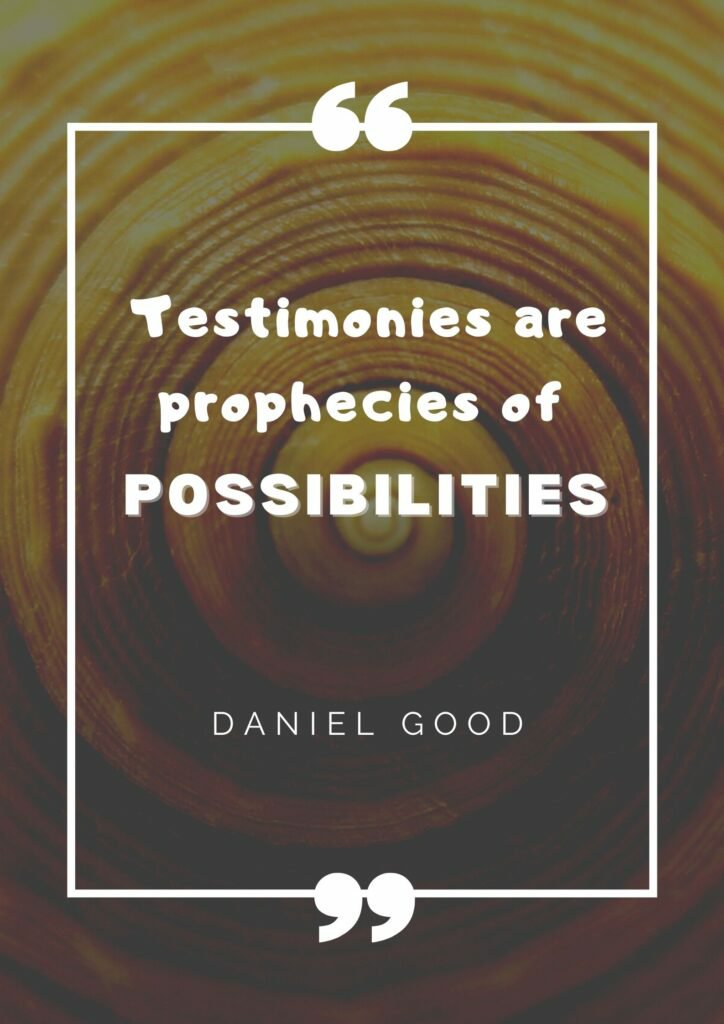
That is why it is necessary to have a testimony. Testimonies are prophecies of possibilities. Have you been through a difficult time where you thought you had hit rock bottom but somehow you came through?
If only you knew how painful giving up is, you wouldn’t have made it an option. It’s better to do your best and fail than to have never tried. There are some things that a person must learn on his own. A person grows up when he is forced to overcome hardships. The best in us will never be revealed until we have come between a rock and a hard place.
Some things don’t change while others always do. Some things will change no matter what you do. Others will never change unless you do something. That is why you must never see “giving up” as an option when it gets so hard. Don’t allow your mind to tell your heart what to do. The mind gives up easily. The mind resorts to our instinctive most immature self when we are hard-pressed.
Let the convictions of your heart be the decisions of your mind. One reason people resist change is that they focus on what they have to give up, rather than what they have to gain. The minute you think you wanna give up, think of the reason why you held on so long.
At the end of the day, it’s not only going to get better; you’re going to get better. If only! If only you knew that one day you’re going to look back and be grateful that you didn’t give up, you’d work so hard to bring out the best in you.
“For God did not give us a spirit of fear, but of power, and of love, and of a sound mind”
2 Timothy 1:7
One thing that has a force equal to passion and yet as sublime as insecurities is fear. No matter how intelligent you are; no matter how popular you are; no matter how religious you are; if you don’t know how to deal with your fear, your fear will know how to deal with you. Fear is as personal as our interests. My fears are unique and so are yours. In fact, my fears are so unique that defines where my interests lies, shapes what my beliefs are and influences how I see myself.
Yes. Fear can be self-imposed, inherited or even adopted, but there’s a fear within us that is a tangible part of us. As humans, it is proven that we are born with two types of phobias; fear of loud noises – that explains why children cover their ears so hard when they anticipate a loud noise – and the fear of falling, and that all other phobias are learnt. Yet there’s a fear within us that is a tangible part of us.
Isn’t it amazing that a child can play with a sharp knife or can crawl straight into an exposed fire? Perhaps, it’s amazing but it’s definitely stupid. That’s why fear exists. Fear is a natural instinct meant to protect us from harm. When there’s an unidentified danger, everyone in the right frame of mind would first of all run in the opposite direction. Fear is the guard of your life. The easiest way to foolishly die is to be fearless.
Take a minute to think about the many times the fear within you saved your life. It kept you from passing that dark alley. It stopped you from picking that taxi. It made you stay instead of being in a hurry to leave. It made you leave hurriedly instead of staying. We ought to be grateful to our innate fear. It cautioned us without reason or explanation. This is certainly not what you thought I’d say about fear. Contrary to popular belief, fearlessness is more dangerous and stupider than innate fear.
So did God actually give us a spirit of fear? Good question. Imagine you standing by your mom, all smiley and all. Now imagine you being kidnapped right in front of your mom. Does she look afraid? Of course. What’s the point? Fear is a good servant but a bad master. Love should be the master and let fear serve you. When fear is made the master, it distorts your reality, darkens your perspective, shatters your dreams, downgrades your abilities, lowers your self-esteem and weakens your confidence.
In other words, it basically plays it safe. Safe Mode. Fear being the master is overprotective. It will keep you from trying out new things, stepping into new territories and having new experiences. Fear as a master makes you a slave, keeps reminding you of your failures so that you don’t dare to try again. Fear usually makes us think we have no choice. Fear wants to control everything. Fear is more interested in you surviving than living.
“What if you take risk and it puts your life at risk? You can’t do it so don’t even try. What if you fail? What if you succeed and you cannot keep up with the pressure?”. A life ruled by fear is a life filled with unnecessary precautions and no actions.
NB: When your fear poses questions of life that needs solid answers to you, then your fear is your servant. When your fear does not allow you to even think of questioning the status quo even when you know something must be wrong, then fear has been made a master. Innate fear does not put in bondage; it protects you from unknown bondage. When fear is put in charge, you become a slave of yourself, a slave to a reality that does not even exist. It’s all in your head.
So then, what do I do with my fear? Use it. Pay attention to what your fear is paying attention to. Fear is an insignia. Once you have tackled why you fear, what you fear loses its relevance. The more you ignore your fears, the more persistent it becomes in drawing your attention to the problem. Fear is the stop sign in our lives. It is always disapproving, preventing and avoiding. So never think there will be no fear. Fear will faithfully serve you as long as you live. Just make sure you don’t make fear your master.
When Love leads, there is no timidity. Love deposits the power of choice right within you. Love makes us responsible for our choices. Love is freedom. Love gives us a sense of peace and clarity. Love makes us accept what we can’t control and govern what we can control. Love does not control fear. Love governs fear.
I always wondered why we needed to sleep every day. Can’t it be like an annual thing? That should tell you something. Humans spend at least a quarter of their lives being asleep. It’s the most activity you would ever do with your life. If you are around 20, you may have slept for a total sum of 5 years already. It’s not a waste of time, to be honest. It’s the most important activity of your body. That’s why if you choose not to sleep for a couple of days, your hypothalamus will automatically induce it.
Priorities & Productivity
So prioritize sleep. Sleep deprivation can literally kill you. If sleep didn’t exist, life would have been about 90% shorter than it already is. See sleep as your body’s way of extending your life. If it was really a priority, it wouldn’t be the first thing you cut off when there’s a deadline. People spend an average of 3 hours a day on their phones but it’s the 6 hours of sleep they want to cut off to work productively. Don’t make it a habit of draining yourself to the point of exhaustion like a low battery.
The most productive people have a good sleep life. It’s not the lack of sleep that makes you a workaholic. There are so many unnecessary activities in the day you could have done away with. Yet, you chose to cut off your sleep time. Lazy people are not those who sleep the most. Lazy people are those who get bored easily and lose focus. It takes mental discipline to be resilient and productive, not lack of sleep. In fact, adequate sleep makes you a better human being; physically, spiritually, mentally. There are more benefits of sleep than any other physical activity.
Glorification of Struggle
There is so much unnoticed glorification of struggle in our society. It’s pretty weird that people boast about how tired they are and how much they have suffered. People can just gather around to talk about how they’ve suffered more as compared to others. Subconsciously, we think that if we struggle, we are destined to succeed. It doesn’t necessarily work that way. It may also account for belittling things people do with effortlessness, like artistic works. The surest end-product of struggle is exhaustion. That’s for sure.
Yes, something good can come out something bad, but that doesn’t mean the bad thing was something good. If I jump off a cliff and people donate to save my life and I end up rich, it doesn’t mean it was good I jumped off the cliff. Please note that, and avoid unnecessary struggles in your life, hoping something good may come out of it.
Lions sleep 18-20 hours a day, yet they are the king of the jungle. It’s not about how much time you spent working. It’s about how much time you were productive. Effort only counts in areas that are necessary. We can spend so much time trying to fix something insignificant that we are out of time to do the needful. Remember that energy rises, peaks and falls. Make sure you are pouring it into an area that counts.
We’ve known times without number how powerful the brain is. Sometimes we can trick our brains to do the seemingly impossible. Other times, our brain tricks us that the situation is seemingly impossible. Placebo and Nocebo effects are no different. Hope you’ve heard of Placebo before; A patient swallows a sugar pill that lacks active medicine and yet pain falls away, nausea recedes, mood lifts. It was first experimented by John Haygarth, a British physician, in 1799. God knows how many years the pharmaceutic industry has made money from this. Since you have heard a lot about Placebo, let’s delve more into Nocebo. How is it applicable in our everyday lives?
Nocebo is on the other side of the extreme; it is when the placebo makes you feel worse. So, basically, a doctor gives you a sugar pill and tells you there will be side effects; every time you take the medicine, you will feel dizzy, nausea and a little migraine. Though the drug has no medical effect, you will still anticipate and experience the side effects for real. Have you ever felt sick and then googled it before? What happens after you know all the symptoms you are supposed to have and how deadly the disease is?
Sometimes what we know causes us to worry, be anxious and fear. This is why we say ignorance is bliss. Not that being ignorant is a good thing, but sometimes not knowing how painful or distressing something is, makes us more positive to face it upfront. The word “melancholy” relates to both intelligence and sadness. When you know a lot, it can easily make you sad. You simply look all around and all you see is people living in bondage without knowing they could be free. It’s simply heartbreaking to see people choose folly, stupidity and mediocrity time and again. As if they have been programmed to be that stupid.
Our brain not only picks the cue from only our experiences but from other people’s experiences we know of as well. Perhaps, the reason why certain unnecessarily weird circumstances keep coming our way is that we keep “hoping” for it to happen. Just because it happened to your mother; it’s a thing in your family; it happened to the only one who was courageous enough to try; it happened to someone you feel you are a really like; doesn’t mean it will happen to you. Until you get it out of your subconscious mind and stop anticipating its manifestation, it is more likely to happen. It is unnecessary to know everything that can go wrong if you don’t care to know what could go right. You don’t want sound mental health?
So I entrust you to look for the good things in life; look for the good in people you relate to and hope that they manifest in your life as well. We all know that there are bad times and tough seasons in life but please; don’t carry that burden in your subconscious mind and be anticipating weird negative scenarios. You are not a hero for predicting doom accurately. Rather anticipate you coming out of the difficult times stronger and better. Let your hopes be good.
Jesus didn’t have that luxury of time to explain the matter to the Pharisees. If anyone should have been worried, it should have been John, but John had said, “He must increase and I must decrease.” First of all, it was misinformation. Jesus wasn’t the one baptizing; it was his disciples. In life, make sure you don’t act based on rumors. If it matters, find out for yourself. If it doesn’t, don’t waste your time.
Secondly, it wasn’t a John vs Jesus matter. John and Jesus were not rivals. When Jesus heard what was being said, he left. He didn’t need to explain himself to them. He didn’t need to let it worry Him. If you follow the matters of Phariseeism, they will always give you something to be offended about, and you’ll break friendships with people you weren’t supposed to have issues with.
If it’s not a matter that matters, learn to walk away from the issue and it will die out. Don’t add any additional burden to your life. Focus, and leave the distractions to fall away. They said you’re 30 and you’re still yet to marry, so what? Who’s even more concerned about the issue in the first place; isn’t it you? People talk about issues that don’t concern them as if they care.
There are two sides of the same coin. There are people who genuinely care and bring someone’s matter up to you but if it’s not your matter, don’t bother yourself. If two people have an issue, the only time you can address the issue with the two of them is when the two invite you in. Don’t make yourself a judge over a matter that nobody invited you to.
If someone’s girlfriend invites you into a matter and you personally don’t know her boyfriend, it doesn’t concern you. From the passage, Jesus didn’t know the other brother, so He didn’t bother Himself. If two strangers are having an argument by the roadside and they invite you in, don’t explain anything. If two best friends are fighting and they invite you in, be discrete. They will get back together like they always have, and your rushed advice won’t be forgotten.
When Jesus came to earth, there were billions of problems as there is now. With many social problems, He didn’t even try to solve them or even address it. He didn’t come to judge the world, He came to save it. He solved what was man’s most important need and the underlying cause of all other problems. All others were just distractions.
Pandemics happen when a new virus emerges to infect people and can spread between people sustainably. Because there is little to no pre-existing immunity against the new virus, it spreads worldwide. Viruses are microscopic organisms that can infect animals, plants, fungi, and even bacteria. They are considered the most abundant biological entity on the planet. A virus exists only to reproduce. When it reproduces, its offspring spread to new cells and new hosts. Viruses may transmit from person to person, and from mother to child during pregnancy or delivery. They can spread through touch, exchanges of saliva, coughing, or sneezing, sexual contact, contaminated food or water and so on.
Some viruses can live on an object for some time, so if a person touches an item with the virus on their hands, the next person can pick up that virus by touching the same object. Whether it’s smallpox, common cold, measles, chickenpox, and shingles, hepatitis, herpes, polio, rabies, Ebola, HIV, there is no cure for a virus, but vaccination can prevent them from spreading. If there is no cure, how do people recover? When you get a virus, you may not always get sick from it. Your immune system may be able to fight it off. For most viral infections, treatments can only help with symptoms while you wait for your immune system to fight off the virus. This means you’re more likely to survive a viral disease if you simply live a healthy lifestyle; a balanced diet, exercise, sleep, personal hygiene.
Humanity has come a long way and has survived the pandemic outbreak of new diseases which then had no known cause and treatment. From cholera to tuberculosis all the way to ebola, towns have been wiped out and cities have been quarantined in the wake of such calamities. Consider the Justinian Plague in 541 A.D. which claimed up to 10,000 lives per day. People were dying so fast that unburied bodies were eventually stacked inside buildings or left in the open. In the end, more than 25 million people died. What about the second greatest pandemic; the Black Death? Those were the Dark Ages of human history. The plague lasted half a decade and wiped out about 50 million people – more than half the population of Europe at the time – as people were buried in mass graves. The Third Plague Pandemic happened not long ago. Claiming over 15 million lives, it erupted in 1855 in the Chinese province of Yunnan. The disease traversed the globe over the next several decades, and by the beginning of the 20th century, infected rats traveling on steamships had carried it to all six inhabited continents. Not to talk of the Great Plague of London, the Great Plague of Marseille and the Italian Plague of 1629. Did I forget to mention the infamous H1N1 virus that killed one-tenth of the world’s population from 1918-1920?
Countries affected by coronavirus since its outbreak in January 2020
On March 11, 2020, the World Health Organization declared coronavirus a pandemic. The coronavirus disease 2019 (or COVID-19 for short) is affecting 157 out of 195 countries. So far, there has been 167,682+ cases of coronavirus. 6,456 lives have been claimed and 76,598 have recovered. This means that the viral disease has a 3.4% mortality rate, that is, there is a 97% chance you’d survive after receiving medical treatment if you contract the disease. The symptoms include runny nose, headache, dry cough, sore throat, fever, a general feeling of being unwell and difficulty in breathing. Human coronaviruses can sometimes cause lower-respiratory tract illnesses, such as pneumonia or bronchitis. The virus primarily spreads between people in a way similar to influenza, via respiratory droplets from coughing or sneezing. There are four main sub-groupings of coronaviruses, known as alpha, beta, gamma, and delta. Human coronaviruses were first identified in the mid-1960s. The seven coronaviruses that can infect people are:
229E (alpha coronavirus)
NL63 (alpha coronavirus)
OC43 (beta coronavirus)
HKU1 (beta coronavirus)
MERS-CoV (the beta coronavirus that causes Middle East Respiratory Syndrome, or MERS)
SARS-CoV (the beta coronavirus that causes the severe acute respiratory syndrome, or SARS)
Up until December 2019, we only knew of six coronaviruses.
Total recorded cases and deaths since January 22 to date
Coronaviruses are respiratory syndromes and they attack the lungs. Sometimes coronaviruses that infect animals can evolve and make people sick and become a new human coronavirus. Three recent examples of this are 2019-nCoV, SARS-CoV, and MERS-CoV. Coronaviruses are a large family of viruses that are common in people and many different species of animals, including camels, cattle, cats, and bats. The sequences from U.S. patients are similar to the one that China initially posted, suggesting a likely single, recent emergence of this virus from an animal reservoir. Early on, many of the patients at the epicenter of the outbreak in Wuhan, Hubei Province, China had some link to large seafood and live animal markets, suggesting animal-to-person spread. Later, a growing number of patients reportedly did not have exposure to animal markets, indicating person-to-person spread. Community spread means some people have been infected and it is not known how or where they became exposed.
How come it’s spread so quickly throughout the world? Because people interact with people. In 2017 there was an average of 9,728planes in the skyat any given time, carrying an average of 1,270,406 people. Last year, a record 1.4 billion people traveled by air from one country to another and an estimated 2 billion people are expected to do so this year. Since the world has advanced in technology – speedy networking, speedy Wi-Fi, speedy transactions, speedy communications, and speedy travels – the world has also become more and more vulnerable in spreading any new negative outbreak. Diseases can now travel as fast as humans travel across the world. More so, it’s equally faster to hear news from the around the world. Though this makes people more aware and precautious, any empire and kingdom understand that the last thing to do is cause panic among citizens.
Why Do We Fear? When you study history and you see the numbers who had died because of a disease outbreak, they just look like numbers. 50 million people. 25 million people. 15 million people. Though there are far deadlier diseases than coronavirus like malaria, cholera, stroke, cancer and the likes, people are naturally afraid of the unknown. Coronavirus is a new disease with little to no knowledge of its cause, why it so easily spreads and how to vaccinate people against it. Not just that; how long will it continue to plague us and how many lives will it claim before it eventually takes a downward path? Even if it claims just 3% of its victims, no one wants to be a statistic. If I gave you 100 pieces of yam balls and I said 3 of them could kill you, you’d simply avoid eating any of them. The danger is only dangerous if it’s imminent.
Why Shouldn’t You Fear? Because there are a billion ways to die. Thousands of diseases have no cure. This is not the last major outbreak we’re going to see. Plus we are all going to die anyway and life is too short to live in fear and panic. Something must kill a man. As Baz Luhrmann rightly said, a life lived in fear is a life half lived. This doesn’t mean we should live life anyhow. It means that life boils down to the simple stuff all the time. There is a pandemic and you can prevent contraction by simply washing your hands, drinking more water, keeping the environment clean and keeping good personal hygiene. This cannot be done in isolation since one bad apple can spoil the whole bunch. One sick individual in our homes can infect all of us with the virus. So look out for your neighbor’s well-being as well. Plagues do not stop with quarantining. They only stop after a corporate fight. So let’s mobilize ourselves and keep ourselves clean, not in any way paranoid of other people around us. Let’s go viral with living healthy lifestyles and keeping clean environments. The old adage still remains true; Cleanliness is next to Godliness.
Though there are new cases everyday, there are new breakthroughs as well
There’s so much hurt in the world. There’s too much pain. Everyone hurts. Sometimes we may not have enough time to cry but we bleed anyways. Some don’t just go around exposing their vulnerability and be looking for sympathizers in their situation, though some others do.
The mental trauma and instability is so alarming that being rude to anyone at all – even those we think we know so much – is stupendously uncalled for. Don’t be part of the problem. Be the light that shines in the darkness.
People are going through so much. You are going through so much. Don’t isolate yourself into thinking you’re the only one. But guess what? One random act of kindness brings mutual healing. Hug somebody. Mind somebody. Love somebody. They need it, yes! But you need it too.
But the fruit of the Spirit is love, joy, peace, longsuffering, kindness, goodness, faithfulness,
Galatians 5:22 NKJV
Goodness cannot be taken advantage of. What people take advantage of is insecurities. When you are insecure about doing good to others, you basically care about your public image, the show you’re putting up, how people will see you and praise you, how you can use your goodness now for a favor later. True goodness is not ignorant or blind. People take advantage of whatever that is ignorant and blind. True goodness understands the situation, sees the need, has the resources and is willing to help.
True goodness is not forced or coerced. True goodness is a decision to help when you are willing and able. True goodness is not to the benefit of others and a detriment to yourself. That is a dualistic thinking. Not every situation is dualistic. Giving someone an advantage does not necessarily put you at a disadvantage. Your parents spending huge sums of money on you is not to their disadvantage.
Sacrifice is not detrimental, how much more goodness. Don’t be shortsighted. Look at the big picture. Yes! Sacrifice is costly. But we choose the value we place on anything, including ourselves. If it’s worth it, it’s worth sacrificing for. If we don’t learn to prioritise what really matters in the long run and sacrifice for it, we would hold on to everything there is and eventually lose everything. Laying down your life for someone is not necessarily killing yourself. Every parent understands this perfectly.
Goodness is not only giving what we have materially. Sometimes all the other person needs is not the amount of money they are asking from you and will be unable to pay. Sometimes they just need the peace of mind you’re not willing to give away. That will mean not giving them what they think they need in the short term but what you know would be beneficial in the long term
Goodness from time immemorial has been a coverup for a hidden motive or evil deeds that need not be seen. That is the kind of goodness that can be taken advantage of. Why? Because such a goodness has to be put up to cover up. There are top businesses in the world that grant auditors huge sums of money to shut up concerning their fraudulent transactions.
When you’re insecure about goodness, you do good out of convenience and pity. Perhaps, it’s your way of putting people under you. Or a sure way to avoid controversy. Or even a way of pleasing the public eye. Insecure goodness can be blackmailed. Anyone can do good. Even some serial killers in history have donated parts of the bodies of their victims for the good of science. But truly doing good emanates from being truly good.
It is absurd to think goodness can be abused. Can you abuse your mom’s love for you? Can you abuse the sun’s energy? Can you abuse the oxygen you breathe? Can you abuse the grace of God? Certainly not! Whatever goodness we abuse affects us more than the source of goodness. If you have a friend who is willing to support you no matter what, and you think you can abuse them and you indeed do, you lose their trust but they never lose their kindness. Think about it.
Sometimes I wonder if Mother Theresa would have remained Mother Theresa in this system of ours. I believe she would. In fact, there are more people with her heart now than ever before. Don’t let the system fool you. Those who linger close to the top and abuse whatever goodness there is never make it for long. Everyone at the top is a philanthropist. Whoever wants to make it to the top must have the mindset of giving back to society.
There is a kind of goodness that emanates from empathy and compassion. It causes us to do good because we ARE good. We are the epitome of goodness when the reason for our goodness is because we have seen a need that we can address. True goodness is a response to the call of the universe to address the needs of our fellow selves. True goodness does not take advantage of. True goodness gives advantage to.
So, don’t stop doing good because people did you bad. Do good because you are good. The world has been changed and will change a thousand times by the littlest of goodness shown. Think about all the people and works that came to stay throughout history from the first civilisation to date. Don’t fear your goodness will be taken advantage of. Be glad that you’re the vessel being used to make a positive impact in the lives of the people around you.
Circumstances have nothing to do with morality. You don’t have to deserve what you go through.
Being a good person does not justify that only good things happen to you. The fact that you’re good to other people doesn’t guarantee that others be good to you. Life doesn’t care, really.
When you say, “why do good people go through bad things?”, what do you mean by “good” and “bad“? “Good” people sometimes do bad things, and “bad” people sometimes do good things. What makes a circumstance good or bad; the frequency, quality or personality? What is your yardstick; is it objective or subjective?
It has even been scientifically proven that no situation causes anxiety. It is rather our psychological reaction to the situation that causes anxiety; not the situation itself.
Sometimes we’re going to reap more or less than what we sow. Other times we’re going to reap what we don’t sow no matter what we sow.
Good things don’t happen to bad people. Bad things don’t happen to good people. Things happen to people. The more we embrace this reality, the less entitled we’ll be.