“And the apostles said to the Lord, “Increase our faith.” So the Lord said, “If you have faith as a mustard seed, you can say to this mulberry tree, “Be pulled up by the roots and be planted in the sea,’ and it would obey you.” Luke 17:5-6Mulberry TreeNotice in the verse above that Jesus didn’t say ask God to uproot the mulberry tree. Sometimes out of desperation, we pray to God to take “Goliath” away. But Jesus told us to speak to the mountain and to the tree, the obstacle. Speak! That is the believer’s authority. In the above verse, notice that the verbs (pulled up, planted) are in the past tense. It is called the passive imperative tense. It means speaking about something that will happen like it has already happened. Faith is not believing in what God will do. It is believing in what He has already done. So when you speak, speak as if it is done. Notice that it is also a command and not a request. “Be pulled up!” not “please go”. Command that sickness to leave. Command that burden to fall off. Command that yoke to be destroyed. Command that curse to be uprooted. Command it in Jesus’ name.“Do I have to say it once and fight my mind from doubting?”. Jesus said, “if you have faith as a mustard seed, you can say…” The phrase “you can say” is the Greek word “lego” which is in the imperfect active imperative tense. This means it is a repeated action. It means as long as you don’t give up, it will come to pass. When God sends His Word, it doesn’t return to Him void. When you send His Word, it won’t return to you void.When you stop believing, it is like cancelling the Word you sent. Because Faith is the driving force of the Word. The Word is a Word of Faith. So I want you now you keep believing. And keep speaking. Speak words into the atmosphere. Speak words into the universe. And as long as you hold on to Faith, the Word will not return to you void.I love you ❤
Jesus’ death on the Cross is the greatest revelation of the nature of God there is and will ever be. His finished work done once and for all transcends space and eternity. But when He died 2000 years ago at Calvary, since He was carrying the sins of the world, did He actually go to hell?
Jesus’ atonement meant He not only became the embodiment of sin, but the recipient of the wages of sin as well. He wasn’t just a sin-carrier going to dump all the sins in the world somewhere else. No! He was the epitome of sin, thus putting sin to death by His Death and putting death to “death” by His Resurrection. …after desire has conceived, it gives birth to sin; and sin, when it is full-grown, gives birth to death.
For he hath made him to be sin for us, who knew no sin; that we might be made the righteousness of God in him.
2 CORINTHIANS 5:21
Jesus endured physical death and while serving His “sentence” in hell, He preached the Gospel. I had always wondered what the fate of those born before the era of Jesus would be. On what basis where they going to be judged by God? But God in His infinite wisdom did not abandon them to their fate. Romans 3:25 tells us that,
For God presented Jesus as the sacrifice for sin. People are made right with God when they believe that Jesus sacrificed his life, shedding his blood. This sacrifice shows that God was being fair when he held back and did not punish those who sinned in times past,
ROMANS 3:25
Jesus announced emphatically the victory secured by God’s Love for humanity throughout all ages to these earlier generations.
He went and proclaimed God’s salvation to earlier generations who ended up in the prison of judgment because they wouldn’t listen.
1 PETER 3:19 MSG
On the third day, when Christ had completed His mission in Shoel, the Spirit of the Living God quickened His mortal body and He rose from the grave, thus conquering death, hell and the grave.
But God released him from the horrors of death and raised him back to life, for death could not keep him in its grip.
ACTS 2:24
The Bible is not vague when it comes to the things beneath the earth. In fact, Scripture uses six distinct words to describe different realms of the dead and imprisoned spirits. Let’s carefully walk through these biblical concepts, one by one, each with its own character, purpose, and destiny.
1. SHOËL / HADES – The Grave of the Dead
“For You will not leave my soul in Sheol, nor will You allow Your Holy One to see corruption.” – Psalm 16:10
Shoël is the Hebrew word in the Old Testament, translated as Hades in the Greek New Testament. It is the grave, the place of the dead. Before the resurrection of Jesus Christ, both the righteous and the wicked were held here. Death was then the most powerful force, and it swallowed up all, whether good or evil. Shoël was not just one vast space; it had two distinct compartments: one for the righteous and one for the wicked. It was essentially a waiting place until redemption was made through the blood of Jesus. The Bible says that yes, Jesus went here. Psalm 16:10 is a prophetic verse about Christ’s resurrection, a beautiful promise that death would not have the final say.
2. PARADISE / ABRAHAM’S BOSOM – The Rest of the Righteous
“Now the poor man died and was carried away by the angels to Abraham’s bosom; and the rich man also died and was buried.” – Luke 16:22
Within Shoël, the compartment for the righteous was known as Paradise, also called Abraham’s Bosom. It was a place of comfort, peace, and rest for those who died in faith. In the parable of the rich man and Lazarus, Jesus reveals that while Lazarus was in Abraham’s Bosom, the rich man found himself in torment. Both were in the same realm, but separated by a great chasm. Though these two places were close or far enough for a conversation, none could cross from one to the other. After the resurrection, Jesus emptied this place, taking the righteous to heaven (Ephesians 4:8-10).
3. ABADDON / THE PIT – The Place of Destruction
“I will bring you down to the pit, to the people of old, and I will make you dwell in the lowest parts of the earth.” – Ezekiel 26:20
Abaddon, or the Pit, was the compartment in Shoël reserved for the wicked dead. It is a place of darkness, regret, and torment. While awaiting final judgment, the souls of those who died without righteousness were held here. The Bible uses the word Abaddon to speak of ruin, destruction, and hopelessness. The wicked had no peace here – it was a place of awaiting fearful judgment.
4. THE ABYSS – The Abode for Demons
“And they begged Jesus repeatedly not to order them to go into the Abyss.” – Luke 8:31
The Abyss, also known as the bottomless pit, is distinct from Shoël. It is not for human spirits but for demons. When Jesus confronted the legion of demons in the Gadarene man (Mark 5:9-10), they begged Him not to send them back to the Abyss. Demons are occasionally permitted to move in and out of this realm, influencing or possessing human bodies, but it remains their prison. Revelation 20:1-3 describes how Satan himself will be temporarily bound here before the final judgment.
5. TARTARUS – The Prison for Demons
“For if God did not spare angels when they sinned, but sent them to hell, putting them in chains of darkness to be held for judgment…” – 2 Peter 2:4
Tartarus is a special section of the Abyss but for the angels who fell in the rebellion of Genesis 6. These beings crossed boundaries God had established, committing abominations on earth. God bound them in chains of deepest darkness, keeping them there until the great judgment. Jude 1:6 calls it “everlasting chains under darkness”. Unlike other spirits, these angels do not roam freely but are held securely, awaiting the decreed time. It is a place where any demon who crosses their boundary is sent. At another time, I will go into detail about how demons secure legality first in their diabolical escapades to prevent them from being locked up here.
6. THE LAKE OF FIRE – The Second Death
“Then death and Hades were thrown into the lake of fire. This is the second death. And anyone not found written in the Book of Life was cast into the lake of fire. – Revelation 20:14
The final and most terrifying destination is the Lake of Fire. This is not yet populated. It awaits its eternal occupants after the Final Judgment. Both human souls who rejected God and rebellious spirits will be cast into it. Even Death and Hades themselves will be thrown in. This is called the Second Death. The Lake of Fire is eternal, irreversible, and reserved for all unrighteousness, whether human spirit or demonic spirit. Unlike Shoël (Abaddon, Paradise) and the Abyss (or Tartarus) – which are part of the first death – this is the second death.
Did Jesus go to hell after dying? Yes! After Jesus died, He descended into Sheol (Hades), not to suffer, but to claim victory. The Bible says in Ephesians 4:8-10 that “when He ascended on high, He led captivity captive.” This means Jesus went into the waiting place of the dead, where the righteous awaited redemption, and liberated them, triumphing over death and the grave. Yes, even the faithful were held until the price of sin was fully paid and they too (Abraham, Moses, David etc) go to Heaven on account of believing in Jesus, who is God. Just as Hebrews 2:14 says, it is only by dying did He break the power of the devil who had the power of death. In Revelations 1:18, He proclaimed that He now had the keys of death. By rising from the dead, He became “the firstborn from the dead” (Colossians 1:18), the first to conquer death in its entirety, making a way for all who believe in Him to follow. By resurrection, we also conquer death. Hallelujah!
Christian Universalism argues that if Adam’s sin made everyone a sinner, Jesus’ sacrifice has made everyone a saint. Simple logic! It sounds about right. After all, Romans 5:19 says “because one person disobeyed God, many became sinners. But because one other person obeyed God, many will be made righteous.”
Adam’s sin brought sin into everyone’s heart even from birth. We had no choice but to sin. Sin was natural to us. Jesus’ finished work brought freedom from sin, breaking its yoke. But I still have a choice to enslave myself to sin if I want to.
“But but…Adam’s sin made us sinners without a choice?” Wrong! Adam’s sin made us sinners with only one choice; to be a slave to sin. The choice to live free from sin was far beyond our reach. Jesus’ finished work gave us another choice; to be a slave to righteousness. Because we had initially made the choice of being slaves to sin, not making the choice of being a slave to righteousness still makes us sinners.
This means that one becomes a saint by choice, and not by chance. That’s where Christian Universalism flawed. I should have a choice. What if I don’t want to be a slave of righteousness? This is about eternity; probably the biggest decision that needs my consent the most. “But but…if God wants to save all of us so badly, why doesn’t he make it an automatic process?” Where there is love, there’s choice. Where there’s no choice, there’s no love.
What if someone doesn’t want to spend eternity with God? After all, if I can live my life here on earth without God, why should I be forced to spend eternity with Him? So people are not going into eternal damnation because of Adam’s sin, but because of their own choice.
God has forgiven us all our sins – past, present, future – and has blessed us with all spiritual blessings in the heavenly places in Christ whether you agree or not. But guess what? You have a choice; to accept or not to accept. The choice is universal. And no one is choosing for you, not even God. In fact, we will need to make this choice everyday, not just in this age but throughout eternity.
The choice is not a riddle too. For God will continually show what we must choose. He loves you ❤️
Since time immemorial, man has known that there’s more to what the naked eye could see. Life was so strange to be normal. There had to be a higher being who overlooked it all. This began the use of the visible to represent the invisible. These symbols had spiritual significance and kickstarted what I called spiritual architecture. Some built altars, others built statues while others carved gods out of wood.
Imhotep, the very first architect known by name was Egyptian. Architecture in the first civilization went hand-in-hand with craftsmanship. Imhotep was more of an artisan who carved the physical till the spiritual was revealed. Today, architects are more or less photoshop experts. Spirituality was so relevant in architecture that palaces, temples and all public buildings were dedicated to gods and built to show that spiritual significance.
Architects of the early eras were either kings, spiritual leaders or an honorable man chosen to carry out building instructions according to the oracle of the gods. Bezalel, mentioned in Exodus 31, was the architect who built the Tabernacle of Moses. The first man mentioned in the Bible to have been filled with the Spirit of God. Architects were held in high esteem and had some spiritual backing. Today, the average person doesn’t know how relevant the architect is, underpaying them into depression.
Buildings with spiritual significance have produced masterpieces well ahead of a million generations to come; the Pyramid of Giza, King Solomon’s Temple, the Temple of Hephaestus, to name but a few. The architecture had divine concepts for a start. That is, the architect had a divine intuition to design it in a particular way that overlaid the spiritual on top of the physical realm.
The Pyramid of Giza following the Golden Ratio
Such places were seen as the place where diviniy met humanity. The mathematical order still made it more functional, beautiful and durable than most buildings today. Facts! Not only were the temples built in this way, the entire community was. The place of worship was mathematically placed as the centre of the city. Also, there wasn’t a single redundant element in the design. Every symbol, design and handiwork had spiritual significance.
In the Bible, God goes into exquisite detail into how the Ark of Noah and and the Tabernacle of Moses is to be built. The Bible also goes into tremendous detail into how the Temple of Solomon was built. A typical vernacular architecture had symbolic meanings to every craft and design technique too, reflecting the religion and culture of each clan and tribe. Can we say same for modern architecture?
The Pantheon following the Golden Ratio
“Spiritual” architecture has mathematical order. Only mathematics can be used to explain spiritual relevance in a physical way. That’s why most church designs have order, symmetry and repetitive pattern, designed a little bit above the human scale for the user to experience awe and see how small one is in front of a big God. It is mathematical order that makes ancient masterpieces more functional, beautiful and durable than most designs today.
Frank Gehry wasn’t lying when he said 98% of what is built and designed today is pure shit. I couldn’t agree more. Including his designs, if you ask me. What is the focus of modern architecture? “I saw a nice building in that place. Can we replicate it here?”. Does the average architect know mathematical order, understand mathematical beauty and use them in designs? Golden ratio? Fibonacci sequence? Any spiritual significance? Any mathematical basis? Anything? Any?
Let me hear your thoughts on this. Please comment below.
Many start well and end terribly. It is better if they never started in the first place. That makes one begin to ask, “what even happened along the way?” How on earth did Solomon mess it all up at the last minute? Was Samson always that stupid? How did Saul keep messing up in the end like that? What at all was Adam thinking?
To think we are above their errors is a joke. You can mess it all up even before you know it. Some of us may have even started messing it up, but pride keeps us from acknowledging it to ourselves. If this post touches your heart, then you must re-dedicate your life to Christ while it is still day. The night will soon come.
For all those who fall along the way, some few things run through. Secret sin; having knowledge of God and a form of godliness but lacking the power thereof; living in unforeseen pride; and trying to work our way back when all we need to do is surrender EVERYTHING and come as we are, just like the prodigal son. Your zeal for God is slowly dying out. Wake up, precious one.
Your Heart: the Root of Your Life
I will give you a new heart and a new mind. I will take away your stubborn heart of stone and give you an obedient heart.
Ezekiel 36:26 GNB
Before I got to know that this was an actual verse in the Bible, I had had a vision long long ago where Jesus did an operation on me. He removed a piece of stone where my heart was supposed to be and put an actual heart there. Then, with His fingertips, He wrote on my heart. I could feel it. James calls it the engrafted Word of God. It is written on our hearts.
This is how God tackles the root of the problem. The symptom is not the sickness. You have high fever because the body raised its normal temperature in order to kill the parasite. The high fever isn’t the problem. The parasite in your bloodstream is. You see, pride is the quicksand that makes sure you keep sinking in your sin.
Instead of taking a prescription to reduce our temperature, God gave us the medication to cure our sickness of sin; a new heart. Out of the heart comes the issues of life. That is where who we truly are is really hidden. Desire a good heart. Once you have a good heart, you can have a good life. Forget about the philosophies of the world and their misconceptions. Desire a good heart. If you have a stubborn heart, there’s no hope that you will finish your race.
No Temptation is Below You
“…speak evil of no one, be peaceable, gentle, showing all humility to all men. For we ourselves were also once foolish, disobedient, deceived, serving various lusts and pleasures, living in malice and envy, hateful and hating one another.”
Titus 3:2-3 NKJV
When Kojo was young and full of Nigerian-movie scenarios, he couldn’t possibly fathom why married couples divorce. “I mean, if the two of you love each other”, he explained away, “I don’t see the reason why you should divorce”. He exclaimed, “just go on a vacation or something. The guy should buy her flowers and the girl should prepare him his favorite meal”.
A lot of us talk like that, especially concerning situations we’ve never been in ourselves. Truth is, it is easy to criticise a mistake you’re not part of. On other hand, it is easy to give excuses for a flaw you find yourself in. So we find ourselves in a dilemma; being hard on others for not being perfect, yet explaining how it’s not really our fault when we are the ones who fall short.
Remember, Jesus said it is those who are merciful that shall receive mercy. It is the same standards you use to judge others that you’ll be judged by. It’s unnecessary to blame Adam for your demise after all what the second Adam did. Remember this: what you’re heavily judging others for, you’re going to meet a similar test in future. You may have forgotten what you said about the situation, but Jesus said He will judge us for every idle word we said.
No form of temptation is above you. Have some compassion on the fallen. Show mercy to the cripples. Be an extension of God’s grace in someone’s life. Rebuke in private. The tables will soon turn, and pride may keep you from acknowledging your wrongs because you have a “public image” to protect, o thou holier than thou. The merciful shall be shown mercy. This is true wisdom.
The Tree of the Knowledge of God and Evil
“I am the Lord, who made all things,
who alone stretched out the heavens,
who spread out the earth by myself,
who frustrates the signs of liars
and makes fools of diviners,
who turns wise men back
and makes their knowledge foolish.”
Isaiah 44:24-25
We human beings go through lengthy stretches of our lives with an “I’ve got this” posture. We convince ourselves we know what’s best in any particular situation or what’s right for any particular problem. We convince ourselves that we “get it.” We maintain this belief . . . until we can’t anymore . . . until we find we don’t actually know all that we think we know. We maintain it until we finally face the reality that God is God and we are not.
Trust me, God has destroyed my very foundations of truth TWICE. Don’t pass there. You may even end up being an atheist if you’re not careful. Stop trying to build up knowledge of God. It sounds like a bad advice but hear me out. God will ALWAYS bring confusion to the Tower of Babel. Because of who He is, because of who we are, there’ll always be a tremendous amount of mystery in the relationship. We must be willing to accept and embrace it—and not let it become an impediment.
Even if we had access to know all the answers, we won’t have the capacity to understand it all. Such knowledge may even destroy us. You may “need” to know why something is the way it is or why something happened the way it did, but most times we simply cannot—and still we must believe, and still we must obey. To be in right relationship with God we must instead adopt a posture of “I don’t know . . . and I’ll do what He asks nonetheless.” Trust in God because none other than the fact that He is God and you are not.
A Little Advice
Have a personal relationship with God. Not for ministry, not like God is a system, not as a ritual. God is a person. Chat with Him like a friend. Walk with Him daily. It is the only remedy. Start from there, and forget about all the super-spiritual showoff of knowledge. Seek God with all your heart. All that passion within you, pour into seeking God. That journey is life-changing. It will automatically break the cycle of sin and penance.
Dear Lord, I humble myself before you and confess my sin. I want to thank you for hearing my prayer and helping me return to you. Lately, I’ve been wanting things to go my own way. As you know, this hasn’t been working out. I see where I’ve been going the wrong way—my own way. I’ve been placing my faith and trust in everyone and everything but you.
Dear Father, I return now to You, the Bible, and your Word. I pray for guidance as I listen for Your voice. Let me return to what is most important—You. Help my attitude to change so that instead of focusing on others and events to meet my needs, I can turn to You and find the love, purpose, and direction I seek. Help me to seek you first. Let my relationship with You be the most important thing in my life.
I give You back control of my life. You are the only one who gives freely, with love to anyone who asks. The simplicity of it all still astounds me. Thank you, Jesus, for helping me, loving me, and showing me the way. Thank You for new mercies, for forgiving me. I rededicate myself to You wholly. I surrender my will to Your will. In the Name of Jesus, I pray.
Usually, when a choice is presented to someone, it can be reduced to two simple options; it’s either yes or no, good or bad, right or wrong. There are no two ways about that. You can’t be an in-betweener. You cannot sit on the fence. However, liberals believe in a third option. Not everything should be rigid. Why the need for dualistic thinking when we can barely decide on what is right or wrong. In fact, must everything be about right and wrong? We can have an option that is a hybrid of the two, or neither of the two. It is therefore of no wonder that there is such a thing as purgatory.
A Humanly-Devised Happy Ending
In the Apocalypse of Peter, a book not canonised into the Bible, there is an elaborate detail about the punishment in hell for each type of crime and the pleasures given in heaven for each virtue. In the 14th chapter, a chapter that looks like it was added later because it lacks coherence with the overall outlook of the book, there is a very weird story that seems to have a happy ending for everyone. This doctrine is going to be popular once more in the coming generations, thus the need to know. This separate story explains that in the end, God will save all sinners from their plight in Hell:
Thus, in this additional story, sinners will finally be saved by the prayers of those in heaven. Peter then orders his son Clement not to speak of this revelation since God had told Peter to keep it secret: [and God said]”… thou must not tell that which thou hearest unto the sinners lest they transgress the more, and sin“. It sounds like what a Loving God will do, right? Must He eternally punish His very own images because of temporary wrongdoing? Punish them for a moment and later release everyone to Heaven.
God of Justice
God is a Judge! Just like a King, He sits in His Throne Room and judges issues. He is the King of Kings, and His domain extends over all things, even in the kingdom of darkness. Daniel 2:22 says it better, He sees what lies hidden in darkness, though He is surrounded by Light. The kingdom of darkness is ALWAYS in the court of law, accusing each and every one of us day and night based on our actions and God’s commandments. This is a typical scene in the Throne Room;
Then he showed me Joshua the high priest standing before the angel of the Lord , and Satan standing at his right side to accuse him. The Lord said to Satan, “The Lord rebuke you, Satan! The Lord , who has chosen Jerusalem, rebuke you! Is not this man a burning stick snatched from the fire?” Now Joshua was dressed in filthy clothes as he stood before the angel. The angel said to those who were standing before him, “Take off his filthy clothes.”
Then he said to Joshua, “See, I have taken away your sin, and I will put fine garments on you.” Then I said, “Put a clean turban on his head.” So they put a clean turban on his head and clothed him, while the angel of the Lord stood by. The angel of the Lord gave this charge to Joshua: “This is what the Lord Almighty says: ‘If you will walk in obedience to me and keep my requirements, then you will govern my house and have charge of my courts, and I will give you a place among these standing here.
Zechariah 3:1-7 NIV
As aforementioned last week, God is justified in whatever action He decides to choose. With God being a just God, He can declare us guilty and hand us over to our accusers whenever we fall short. Yet, He offers grace, kindness and mercy. However, when we reject His convictions and refuse to admit our wrongdoings, our accusers have a right standing and foothold. It’s like giving someone the opportunity to insult you. As long as you don’t acknowledge that you sinned, that sin has the right to have you in its grip.
Why the Options Are Only Two
By confessing Jesus as your Saviour, there is now no condemnation for you as long as you walk in the Spirit. When God convicts you, He is only saying admit that you are wrong. Even in our court system, once you plead guilty, your sentence reduces drastically as compared to pleading not guilty and losing. You are not pleading guilty to your accusers. You are pleading guilty to the merciful Judge.
The penalty of sin is death. Do you realise that? The side punishments – the torments, beatings and whatever visualisation you have of hell – are the devil’s own creative ideas. The actual penalty is death; being eternally cut off from God, where the forces of darkness can do whatever they want with you. If you lose your grip on Jesus being your lawyer, death will eternally hold you in its grip. So it’s not that God has condemned people to hell eternally. He hasn’t chosen to condemn people, neither did He choose to make it an eternal thing.
It is already an eternal thing. Remember Newton’s 1st law of motion? He rather provided an eternal solution. By conquering death, Jesus rid death of the power to keep holding us in its grip. We have that decision to make in this age, not in the age to come. For in the age to come, God has already judged Death as guilty and condemned Death and Hell into the lake of fire. Must you still submit to death at the time, you are condemned together with it.
In conclusion, there is no purgatory. Simple and short. Heaven is forever. Hell is forever. If you miss one, you can’t miss the other. Blaming God is the easy way out for fools. Don’t be one of them. I love you ❤️
In Matthew, Mary Magdalene and the other Mary rose up at dawn to go and balm the dead body of Jesus because they couldn’t do it the evening he died, which was the Sabbath. They went to meet a mighty angel sitting on the rolled stone. The angel told them to go and tell the rest of the disciples, and that Jesus had gone ahead of them to Galilee. In their joy and fright, they meet Jesus along the way. Jesus also echoes and affirms the angel’s report.
In Mark, it was Mary Magdalene, Mary the mother of James and Salome who rose up at dawn to go and anoint Jesus’ body. They were contemplating on how they’d roll the stone away. When they got there, the stone had been rolled away and an angel was sitting on the right side. Trembling and bewildered, the women left and told no one anything because they were afraid. Then Jesus appeared to only Mary Magdalene, who went to tell the rest of the disciples about the Resurrection. Jesus appeared to two other disciples and later appeared to the Eleven.
In Luke, Mary Magdalene, Mary the mother of James, Joanna and some other women took their spices and went to the tomb and arrived right after sunrise. They found the stone rolled away, and the tomb empty. Suddenly, two men appeared. The angel told them to remember the words of Jesus concerning His Resurrection, which they did. They came back to tell the other disciples but they didn’t believe. So Peter run back to check for himself and met an empty tomb and went away, wondering what had happened. On that same day, Jesus appeared to the two disciples Mark talked about, on the road to Emmaus.
In John, Mary Magdalene went to the tomb and saw that the stone had been removed. So she went running to Simon Peter and John, complaining that Jesus’ body had been stolen. So Peter and John run to the tomb. They both found the tomb empty, with the cloth and linen lying there. They went away. Mary Magdalene still stayed, crying. She bent over to look in the tomb and saw two angels in white. They only asked her why she was crying. After replying, she turned and saw Jesus but didn’t recognize Him, thinking he was the gardener. Jesus mentioned her name again and she finally recognized Him. Jesus spoke to her and she ran to tell the disciples that she had seen the Lord.
Before I go on, it is necessary to point out that each of the Gospel writers had a clear purpose and emphasis set out to accentuate a specific and special image of Jesus. Therefore, each detail they add or didn’t add was because of what they want to emphasize.
At least five women went to the tomb since Luke names three of them and then says “other women” went too (at least two). Notice that Matthew does not say that only two women were there. Mark does not say that only three women were there. They simply focus on the women they name. They arose while it was still dark according to John and reached the tomb right after sunrise.
Prior to their arrival, Matthew tells us that there was a great earthquake, for an angel descended and rolled back the stone and sat on it. The women were contemplating how they’d roll the stone but went and saw it removed. There were two angels. Neither Matthew nor Mark claims that only one angel was at the tomb. The complete number does not appear in their accounts and clearly wasn’t the emphasis of the story.
Apparently, Mary Magdalene left the other women to alert Peter and John. Based on her comment about not knowing the location of the Lord’s body, it seems that she was not among the women who encountered the angels at the tomb.
Meanwhile, the other women entered the tomb and encountered the angels. Mary Magdalene first left the tomb and entered nearby Jerusalem to get Peter and John. During that time, the other women encountered the angels and then left the tomb to set out on the two-mile trip to Bethany to tell the other disciples about the Resurrection. They may have stopped along the way to tell Clopas and an unnamed disciple about the morning’s events (Luke 24:22–24), or they may have split up so that a couple of them could inform these men. In all likelihood, “the wife of Clopas” was among these women (John 19:25).
Meanwhile, Peter, John, and Mary raced to the tomb. The men entered the tomb, saw the grave clothes, and then left. Mary stayed behind, weeping outside the tomb. When she looked into the tomb, she saw two angels (John 20:12), and after explaining her grief to them, she turned around and saw the Savior (John 20:16). After Mary departed to tell Peter and John about seeing the risen Lord, Jesus appeared to the other women who were on their way to Bethany (Matthew 28:9).
The remaining appearances of Christ on that day are much easier to follow. Luke wrote about Clopas and a companion meeting the Lord while they walked from Jerusalem to Emmaus. They did not recognize Him until He broke bread with them (Luke 24:30–31). They immediately returned to Jerusalem to share the good news of the Resurrection with the disciples, without Thomas (John 20:19–24). Upon their arrival, they were told by the disciples that Jesus had appeared to Simon Peter (Luke 24:34; see also1 Corinthians 15:5).
So you see, the entire story fits like a jigsaw puzzle. As a learner, don’t be too quick to draw conclusions. If you are always quick to draw conclusions, you won’t learn anything. Wait for the story to unfold before your eyes. The fact that someone’s account is different from the other doesn’t mean one is true and the others aren’t. Though they all went into different details to expatriate the Resurrection story, the whole story comes together to tell one big true and eternal story: Jesus has Risen.
“Lord, I thank you that I am still alive. Many people died last year but I’m still breathing. Thank you that I am not sick. Some are at the emergency hospital with their legs in the air. I’m not a human being more than they are but you have shown me mercy”. Is this how to be grateful?
If you don’t have a problem with the prayer above, it’s simply because you heard it many times. Our brains can believe something based on how frequently we hear it. That is why it’s important to step back and question whether we’ve been doing it right all along or we are stuck in a wrong status quo.
Don’t thank God by comparing yourself to someone else. Thank God by comparing your current situation to the previous times. There is one funny thing about comparing ourselves to others because they died and we didn’t. Some dead people may also be rightly thanking God for taking His breath from their lungs. Imagine being so old and having every joint in your body ache 24/7. After dying, you are now as young as a flower at the beginning of spring.
Yet, someone on earth thinks they are in a better situation than yours because you’re dead. Meanwhile that someone on earth has to pay school fees for his 4 kids, work 6 times a week on 2 different jobs and make time for his wife. What’s my point? The person you’re comparing yourself to in your attempt to be grateful may even be in a better situation than you are. This leads me to be the 2nd point.
You think God is good to you because you think you are better than them. Truth is, they are more and truly grateful than you are.
The point about comparison is that you’ll always look for and find someone in a worse situation than yours. One of the easiest ways to be stagnant in life is to compare yourself to someone lower than you. No, it doesn’t make you grateful. It makes you proud. Imagine if all males thank God that He didn’t make them females. It’s an insult to those God made as females. Can’t you simply thank God without making someone else feel less of a person? The prayer in the very first paragraph is no different from this Pharisee in Luke 18:11;
The Pharisee stood and prayed thus with himself, ‘God, I thank You that I am not like other men—extortioners, unjust, adulterers, or even as this tax collector. I fast twice a week; I give tithes of all that I possess.’ What did you notice? It was a prayer of thanksgiving. What again did you notice? Though a prayer of thanksgiving, the prayer was more about how he was better than someone else.
You are not better than someone else just because you’re a Christian. Sorry to burst your bubble. Our prayer gives the insinuation that God gives His special grace to a special group of people. It sounds nice when you see yourself as a part. The day you’ll hate it is when you end up in the emergency hospital with your leg in the air as described in the first paragraph. Funny enough, since we keep finding someone in a worse situation than ours, we think we are privileged.
You would find some people at Golgotha thanking God that they are still alive and did not die like Jesus did on the cross, shamefully hanging totally naked and dying non-peacefully. You would have found some people for sure. They don’t even want to know God’s bigger picture. All they are concerned about is how special they are. The Bible states clearly that God shows no partiality (Romans 2:11, Acts 10:34). In fact, Jesus taught us to be good to all people like the Father is, for He makes His sun rise on the evil and on the good, and sends rain on the just and on the unjust.
Find a better way to be grateful and stop arguing. Are you saying if you were the only living thing in the universe you wouldn’t have a way to be grateful? If this post rid of all your approaches to be grateful, then it’s time to search the Scriptures for prayers of thanksgiving. Don’t thank God that others are dead. Thank God you’re alive. Don’t thank God others are sick. Thank God you are in good health.
If someone’s worse condition is what makes you appreciate your life, you’ll hate to see them having a better life than you are
God doesn’t need any comparisons to know how much He has done for you as compared to “less privileged” people. If you want to compare, compare your current situation to how it used to be. Gratitude flows from a source. Make sure that the source is contentment and not selfish comparison.
Because we are in the 21st century, we can subconsciously assume Mary and Joseph took a motor ride to Bethlehem and arrived only to realize the entire village was full, including their family home; the 3 wise men saw the star as soon as Jesus was born and came in their limousine to see the baby. I’m obviously exaggerating but you get the point.
Our imagination only makes sense in our current context, and until you learn the historical context, you’re likely to picture the story in a wrong way. Forget about the movies. This is 2000 years ago, not 20 years ago. Here are 5 widely known misconceptions about the birth of Jesus;
The Bible Didn’t Say…
1. …That It All Happened in One Night
“Joseph also went up from Galilee, out of the city of Nazareth, into Judea, to the city of David, which is called Bethlehem, because he was of the house and lineage of David,” Luke 2:4 NKJV
Perhaps, because we live in a fast-paced world – or we may have picked that assumption from the movies – we read the Christmas story and over-simplify the story. There are no cars and aeroplanes, remember? To give a bit of context, it was a 90-mile journey from Nazareth to the south along the flat lands of the Jordan River, then west over the hills surrounding Jerusalem, and on into Bethlehem. It takes about 10 days to make such a journey.
With a pregnant woman, the journey would have taken longer. Now imagine the wise men travelling all the way from the East! Even a Christmas movie isn’t likely to be shot in one day.
2. …That There was no room in Joseph’s family house
“And she brought forth her firstborn Son, and wrapped Him in swaddling cloths, and laid Him in a manger because there was no room for them in the inn.” Luke 2:7 NKJV
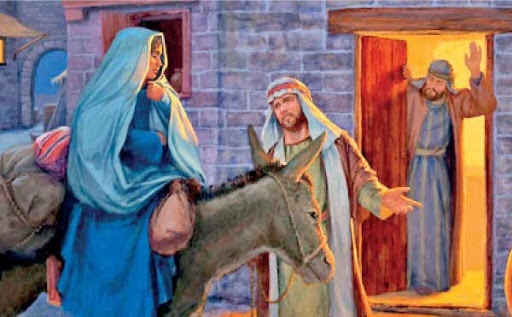
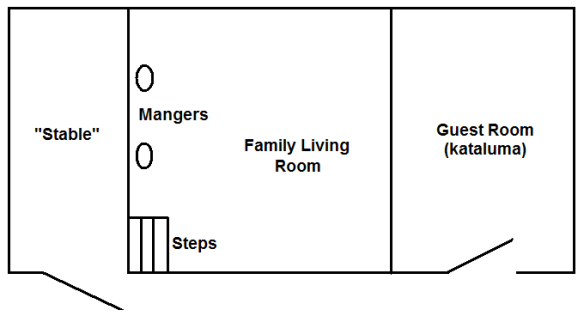
Why are we trying to make Joseph’s family and the entire neighbourhood look bad? Why are we assuming that literally nobody had the common sense to give their space to a pregnant woman? Except, of course, that it’s not true and only an assumption. The Bible never said that Joseph’s family house was full and that they were looking for another place. Just like the other assumptions, the misunderstanding comes from just one word; inn. The New Testament was originally written in Greek, and the Greek word translated as “inn” here is kataluma.
Typical architecture of 1st century Israel villages
This is better translated as “guest room” as the NIV does, and is different from pandokheion, also translated as “inn” – in the Good Samaritan story in Luke 10:34 – which rightly means hotel. What the Bible said is that the guest room was full. Simple! It’s like all your uncles travel home and one of them sleeps in the living room because the guest room is full. The place was full of people and wouldn’t be so comfortable for a woman to give birth there.
3. …That Jesus was Born the Very Night they Arrived
“While they were there [in Bethlehem], the time came for her to give birth,” Luke 2:6 AMP
They arrive and Mary is in labor. Joseph runs from place to place, asking insensitive hotel owners if they have any suites available. They don’t get any but one kind old man said he had a little stable he could rent out for free. Mary is rushed in, where she gives birth to a baby boy. Such a fast-breaking epic Hollywood scene! Read Luke 2:6 in a different version think about this whole scene again and watch it slowly fade away. Truth is, Mary was in Bethlehem for days, long before she gave birth.
4. …That Jesus was Born in a Stable
“And she brought forth her firstborn Son, and wrapped Him in swaddling cloths, and laid Him in a manger, because there was no room for them in the inn.” Luke 2:7 NKJV
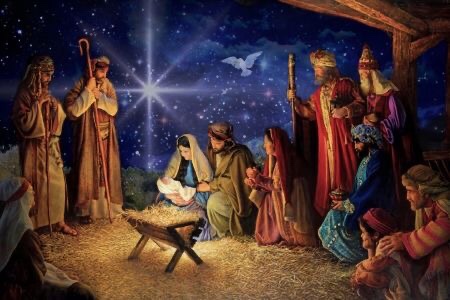
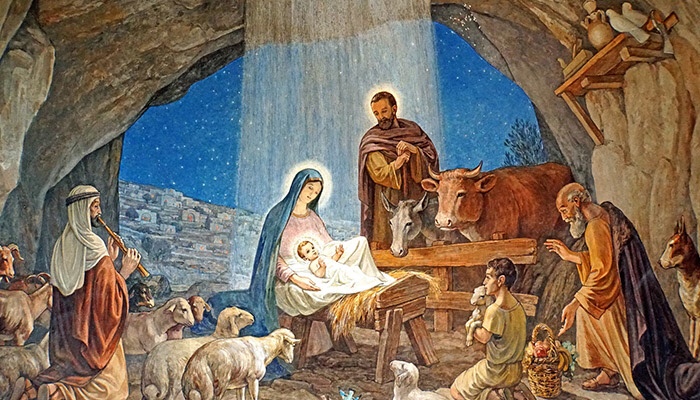
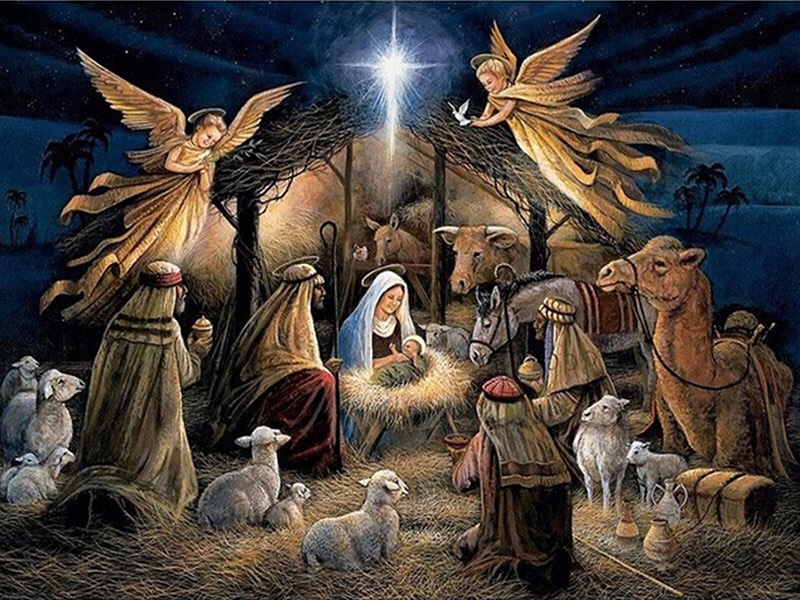
Pictures of Jesus’ birth are filled with animals staring at a baby in their manger. Yet no, no Bible version ever insinuates that it was a barn or a coup or a stable. The only word to suggest that is “manger”. A manger is not a place where animals are stored; it’s simply a long trough in which the food of livestock are put and they fed.
This is not to say that there weren’t animals around. I’m just saying that when someone says he put his books on a shelf, don’t be quick to assume that he has an entire library room. It could be a simple bookshelf in his living room.
5. …That There Were Only 3 Wise Men
“Now after Jesus was born in Bethlehem of Judea in the days of Herod the king, behold, wise men from the East came to Jerusalem,” Matthew 2:1 NKJV
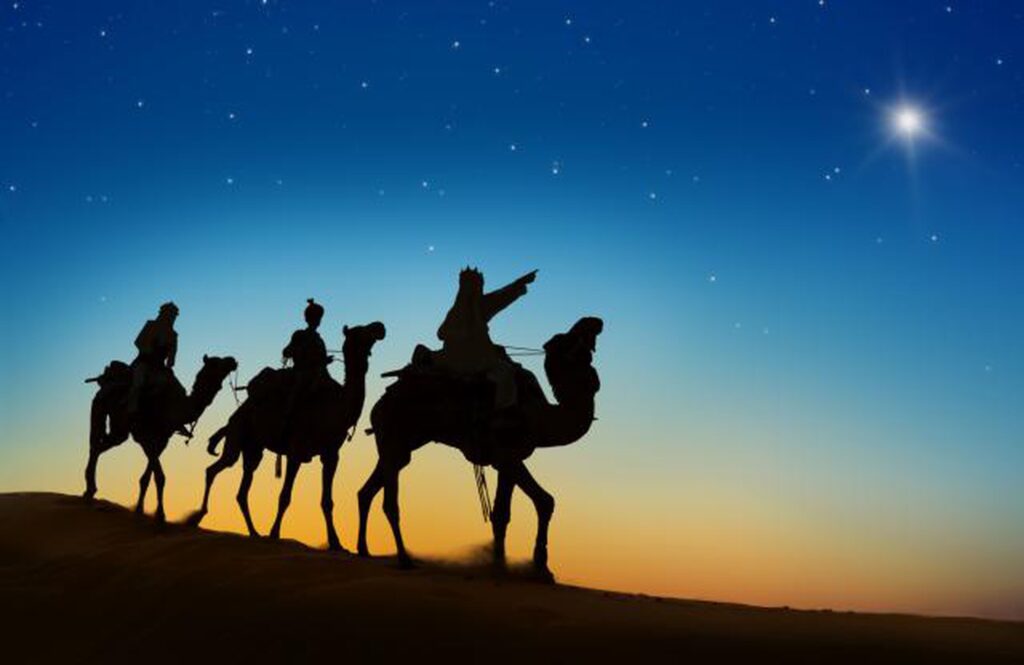
Because they presented three gifts and many movies, plays and pictures portray three old men dressed to kill, the most famous assumption in the Christmas story is that of the 3 wise men. If someone came to your house and presented you with a couple of gifts, you wouldn’t count the gifts to assume the number of people behind the gift, would you?
Matthew 2:1 simply says “Wise men”. In fact, with men of such calibre, they are probably travelling with an entire voyage. Plus, they presented gifts to Herod too – since it was the culture – when they went to inquire of him about Jesus’ birth. The three gifts they presented Jesus were mentioned in detail to draw our attention to their utmost significance to Jesus’ ministry.
Surely this doesn’t take an inch away from the humble birth of the King of Kings. What it certainly takes away is the vilification of Joseph’s home and the neighbourhood of Bethlehem. It also allows us to meticulously meditate on the story of the first Noël, instead of assuming every year.
Mind you, this wasn’t written so you could argue out your newfound knowledge with your paddies. Just like the Scriptures, this was written so you could appreciate the birth of Jesus; the greatest of kings, born in the humblest of places.
Every creator’s fingerprint is evidentially left on his creation. Everything God created manifests His Glory. Every living thing teaches one thing or another about God. God is seen in all He created. His creation was made in His likeness, but guess who is His best model? You guessed right! We are His masterpiece.
Jesus said you shall be witnesses unto me, not witnesses unto the world. Witnessing is not just evangelism. It is a legal term.
In the law court, when I choose a witness to support my stance, the person is a witness unto me. What does the witness do? He comes as an evidence that what I actually say is real and true. The world will believe if we live the life we promise they’d have if they believe in Christ.
We are a living evidence to the Kingdom of God. We are called to live the Kingdom life. You can only teach what you’ve experienced. You can give only what you have. You can impact what has been impacted on you. Walk the talk. Even children follow your example, not your advice. If you truly believe what you confess to be, then it must reflect in your life.
We’re a living epistle of Christ. This is the life. Let your light shine before others, that they may see your good deeds and glorify your Father in heaven. Let’s be true models to the world.
God’s first foolishness is seen in his outpour of free will to His creation. Why give all heavenly beings free will if it can bring about the possibility of a devil? What makes it an even harder pill to swallow is the fact God knew it would happen. And He literally sets up the stage for it then watches it happen.
God’s second foolishness is seen in His creation of man. If God ever had a weakness, it was us. That’s why the enemy spends all his time trying to destroy us. God literally said that “…whoever touches you touches the pupil of my eye”, and that’s exactly what the enemy wants to do. Human beings are so dumb in the eyes of the powers of darkness. To them, we look like a prince who doesn’t know he’s a prince and lives like a pauper. They’re literally always licking our brains to believe in the dumbest things.
God’s third foolishness is putting that tree in the garden. He put right in the middle, where it cannot be unseen. Then, He tells the man not to eat from it. It’s like telling a kid not to switch on the TV and putting the remote right next to him. It only sparks more curiosity. Did God actually expect Adam not to eat from the tree? If He didn’t, why did God put the tree in the garden?
God’s forth foolishness is dying for the sins of humanity and giving us grace. God must be pretty dumb to think we wouldn’t abuse Grace. Now instead of praying to God for a car for many years, I can steal one in a day then ask for forgiveness. The picture of God in our minds has moved from an always-angry, l-will-strike-you-with-thunder schizophrenic to the Mr Nice Guy literally everyone takes advantage of.
But here is the Truth; God doesn’t need anyone to defend Him. He doesn’t need anyone’s advice. He doesn’t need to explain Himself to anyone. We are too finite to understand His infinite picture. He knows exactly what He’s doing. His Love cannot be taken advantage of and His Grace cannot be abused. The fact that he gave all of us minds of our own and even the ability to argue with Him that he’s wrong doesn’t mean He sometimes doesn’t know what He’s doing.
There’s nothing that has happened; that is happening; that will happen that has taken, is taking and will take God by surprise. He cannot be blamed for our own demises because of His foreknowledge of all things. Sometimes our way of thinking actually equates God to the devil if we think about it carefully. He has the right to punish yet He chooses to admonish love. He allows our mistakes and gives us time to mature. He’s not accountable to anyone but everything is accountable to Him. Though we may be His weakness, He is our strength. Though He gives us the free will to push Him away, He will always hold us close.
“But this is what I have against you: you do not love me now as you did at first.” Rev 2:4 GNB
The most difficult thing to overcome in our walk with God is not the temptations of the devil, the world or the flesh. It’s not the weakness of our soul but the weakness of our spirit. The flesh is weak and cannot thrive in spiritual things unless the spirit is willing. But what if the spirit is no longer willing?
There’s a fiery passion in any strong believer who dwells in the secret place of the Most High. I’m not talking about a display of spiritual gifts, a good grasp of theology or being regularly part of church activities. If you’re not intimate with God, you’re not walking with Him.
There are three dark nights: testing of the flesh, soul and spirit by the Lord Himself. The test of the spirit is certainly the most difficult. The test of the spirit is when God asks us personally, “do you love me?”, a question that will bring you to tears.
What do you love more than God? Has that fire within you died out? Where’s that passion you had to obey His voice and do His will? Where’s that desire to seek God? Is that even your priority anymore? Are you indifferent toward God?
“Remember how far you have fallen; repent, and do the works you did at first”. Rev 2:5 CJB

 “Do I have to say it once and fight my mind from doubting?”. Jesus said, “if you have faith as a mustard seed, you can say…”
 I love you ❤