Category: Understanding

  • Stubborn For More: How to Channel your Energy to do Greater Things

    Our bodies were fashioned to protect us. Instinctively, all we do is towards survival. We eat, drink, sleep, walk, talk and go about our daily lives basically as a means of survival. However, there is little to no satisfaction in doing the usual stuff all the time. This is because we are more than our physiological makeup and deep within us, we want a challenge.

    The best of us never comes out without a challenge. Thus, we begin to desire greater things; greater things our brains register as a “threat” since it could ruin our survival. Our survival is our comfort zone and stepping out of our comfort zone is risky and a threat. Nonetheless, we are excited to push beyond our limits when we actually do. The more risk we take, the more excited we become.

    For instance, our fear of falling may not allow us to jump off a moving plane. When we finally do, there’s nothing compared to that kind of excitement. However, in a light of taking good risks, some of us will never jump off that plane. Never! The question now becomes, how do you break free from your comfort zone and survival mode and jump head-on into the unknown?

    Persistence is key


    Water has a very high surface tension. This is why some insects with low body mass can settle on the surface of water. In fact, that explains why some objects float on water. As humans, we can float on water if we relax our body mass on the water body. Our legs would hang and our arms would shield, keeping our torso afloat. Nonetheless, with a slight persistent application of pressure on the water body, we could swim deeper. The happy and sad part about persistence is that it is more difficult at the beginning. Good riddance. This means the beginning is the more difficult part. It also means when you become persistent in an area you shouldn’t – like drinking alcohol – since you have broken the “surface tension”, it become easier the next time to “dive deeper”. Persistence comes in two folds and that leads me to the next issue;

    Consistency over Intensity

    Consistency and Intensity are important ingredients in their own rights. As humans, we soon realize that there is no such thing as inconsistency. You’re either consistent or consistently inconsistent. Since you get to choose your pattern of consistency, why not stick to the ideal? Before you can be consistent for real, you need to understand how it doesn’t relate to intensity. Many of what we practice as consistency is intensity in disguise. Consistency is doing great things in little ways. Intensity is doing little things in great ways.

    Consistency is about the long-term. Intensity is about the short-term. No one can be consistently intensive without being intensively consistent from the start. It’s not brushing your teeth for 2 hours non-stop that will make a difference. It’s brushing it for just 2 minutes twice for about 2 years. If you focus on intensity as a beginner, you’ll break down even before the real journey begins. Long-term consistency will always triumph short-term intensity. Sadly, in the world of quick fix, consistency looks like a thing for losers.

    Just remind yourself that short-term intensity does not equal long-term results. If you get injured, if you burn out, or if you stop, all the progress up to that point does little good. The LONG-TERM success is what you’re after. Consistency is the vehicle that will help you achieve those long-term results.

    The “No Matter What” mindset

    If you’ve been around for long, you’d realize that there is always something. Something always comes up. Ironically, we think we don’t have time to do the things we deem important to us. Yet we all know that if something is important to you, you’ll make time for it. We wait forever for the right time to start when the actual reason we’ve not started is because what we want to do is really not a priority to us. On paper, it’s a priority. In practice, nothing shows that it is.

    There is a need to make firm decisions. Making decisions is the easy part. Standing by the decisions you made is the main deal. Are you going to make the main thing the main thing? Are you going to stick to plan when irrelevant matters arise? Trust me, almost everyone knows the right thing to do. Those who make the difference are those who take action and stick to it till it bears fruit.


    All things are difficult before they become easy. We get better with time. It doesn’t change the fact that it gets hard sometimes. If only you can be stubborn. Be unrelenting. Not intensely. You may break down. Practice makes perfect. Consistently, every dream becomes a reality. Are you going to keep on keeping on no matter what?

  • Who Am I? Understanding the 5 Dimensions of Personality Traits

    We all come with varying and complex personalities that can be classified for simpler understanding. No matter the decade of your life I meet you, there’s a part of you that would barely change although you keep on evolving as a person. It’s your personality; the fundamental root on which your core values and principles are based.

    There are five dimensions of personality traits, spelling out the acronym OCEAN; Openness to experiences, conscientiousness, extroversion, agreeableness and neuroticism. One must note that how a person is in any of the aspects to be discussed is not necessarily wrong or right in its self. There are good aspects and bad aspects of each of them.


    Openness / Closeness to Experience

    There are some people who dislike a particular experience for no reason but will never try it out for themselves to know for sure. Others will still be willing to try it out again although the previous experience was bad. It is more like a spectrum. Some on one extreme are very open-minded about new extreme experiences while others on the other side of the spectrum stick to familiar experiences and never try anything out of the blue. It’s in someone’s nature to quickly let go of old experiences in search of exclusively new ones. It’s also in another’s nature to stick conservatively to only what they know and what they came to meet, and have the tendency to paint black any new unfamiliar experience.

    Conscientiousness/Lackadaisicalness

    Ever come across a “serious” guy or girl? Always diligent. Give him a small task and he or she will go at it like the world depends on it. Usually such people have the enabling energy to keep them on their toes. Not everyone can keep such an energy at such a level for a long time. If you aren’t built for it, you’re likely to crumble or break down. Those who have a lackadaisical attitude rather care less. Their slogan is “why so serious?”. They don’t want to make anything – no matter how serious – look so serious. They believe that at the end of the day, the task will get done. They just don’t need to kill themselves for it.

    Extroversion/Introversion

    This is the most well-known and well-understood personality science. Virtually everyone can identify themselves as either of them or a blend of the two called an ambivert. Extroverts are simply people who prefer socially stimulating environments. Introverts rather feel drained after socializing for a long period and regain their energy by spending time alone. Introverts may sometimes act in pseudo-extrovert ways and may have to withdraw for a longer period after that. Extroverts can be out-of-character too but they’d need more stimulation to feel alright. They also communicate differently. Extroverts go straight to the point and can almost always say how they feel. Introverts let much slide but when they do communicate, it’s not as straightforward as it is in their thinking.

    Agreeableness / Disagreeableness

    Some people just don’t like it when we all seem to agree on one thing. They’d quickly pick up the counter side and argue it out. To them agreeableness is a sign that a few are thinking for a lot; People are not using their brains. Someone must disagree; we can’t all think alike. They can disagree with you even before they hear you out. There’s always the other side of the issue they can stand for. Some other people also easily agree with you. You may be totally wrong but they’ll still find a way to agree with how you’re thinking. They may not necessarily agree with you but they understand where you’re coming from. They don’t seem to have a problem with whatever you have to say on any given issue. After all, that’s your opinion.

    Neuroticism / Emotional Stability

    Ever met someone who’s so hard on himself or herself? She cried because she had A- and not A+. When he succeeds massively, he still needs someone to convince him that he did well. You can easily give him a bad day by ruining his mood. She’s insecure and asks too many irrelevant personal questions. “Do you think I’m pretty?”. “You haven’t said hi to me for the 34 days.” Their mood swings are the worst. Those on the other hand can keep a “perfect composure” regardless of how stressful their situation is. Never too happy or too sad. To them, life simply goes on, whether it gets smooth or gets rough. They are not easily angered or annoyed. Their large threshold to tolerate nonsense makes them patient and unperturbed.


    All of these personality traits are on a spectrum. It’s not necessarily fixed. One amazing thing about life is that our brain is highly neuroplastic, that is, you can evolve into anything you want to be. It all depends on your decisions and how you choose to make them. This change doesn’t permanently alter our personality. It modifies it. We are not only our “superpowers”. We are also our flaws. It’s about time you embraced them because they may not be bad after all. It’s all part of your idiosyncrasy.

    This doesn’t mean you shouldn’t work on yourself. We tend to act based on our thoughts. Our thoughts are based on our beliefs. We easily believe in values pertaining to how we are (introverts believe so much in peace of mind whereas extroverts believe in expressing yourself) and how we behave according to our personalities. But do work on becoming a better version of yourself, devoid of all the toxic traits associated with your personality.

    Who am I? I am Me, and I embrace it.

  • Who Am I? How Am I Really Like & Why Am I Like That?

    Who am I? A relevant question that anyone can ask themselves, no matter their age. It’s a question that can leave you frustrated, however, if you don’t search for the answer early on in life. Inasmuch as it’s an unending well of discovery, – some of your actions much later in life will still continue to shock you – understanding just an iota of solid truth concerning your identity can be life-fulfilling.

    Since You Are Who You Are and You Are Who You Are Not, removing the impurities of identity confusion is equally important. Who you are is not manufactured. It already exists. It is only discovered. Your identity unfolds before your eyes and resonates within you as you journey through life. What we fail to realize is that we are like all other people, like some other people and like no other person. Let’s dive in.

    We Are Like All Other People

    How am I like? I am like everyone else. Differences spring from similarities. Look around you, it’s the order of nature. Different children coming from the same womb, different rivers flowing from the same source, different plants sprouting from the same ground. In fact, everything can be traced all the way back to having the same source. Our identity is no different. We are first of all like everyone else before we can be like no one else. In the broader picture, we are like each other. We all have the same basic needs and instincts. There are several instances where human behaviour is so predictable that basically everyone will behave the same or in a similar manner in a given circumstance, given the same conditions.

    As individuals, we fancy the idea that we are special. There’s nobody like us. We are different, in our own world, in our own lane. Then we face a situation that makes us realize we are not that special. We are not as fanciful as we thought we were. The truth is, we are special, just like everybody else. “Special” doesn’t mean you’re different and everyone else is the same. Everyone is special. Everyone is unique, individually. How can you be special if everyone is also special? Doesn’t that put everyone on the same stage again and defy the meaning of the word? Well, only if you judged your uniqueness by comparing yourself to others.

    Scientifically, how we are like everyone else is our biogenic nature. Neurophysiologically, all humans are the same. We all want the same basic things in life, from the hardest criminal to the most innocent civilian; to minimize pain and maximize pleasure. Our choices and decisions towards this goal and what pain and pleasure means to us individually is what creates the differences. Metaphorically speaking, we all have the same book but we are all not on the same page. We all need love, attention, appreciation, affection, and everything else on Maslow’s hierarchy of needs. However, what it looks like to us and how we want it defers from one individual to the other.

    We Are Like Some Other People

    How am I like? I am like some other people. How we are like some other people is our sociogenic nature or second nature. It is more about how we relate with others. The socio-cultural aspect of ourselves. It’s about your habits, attitudes, temperaments, preferences and behaviors; how we are, where we live and how we were brought up. Whether we admit it or not, there’s a way females behave that cut across board. There’s a way blacks behave. A way evangelicals behave. You may not notice because you are a part of it, but others you’re observing from the outside see it clearly. It starts from a broader grouping like perhaps how an entire nation behaves, all the way down to how a family behaves.

    Your individuality and ability to conform cannot be separated. They go hand-in-hand, just like how your soul draws your body and spirit together. We are social beings. We were designed to belong. Our sense of belonging is so central to our wellbeing that feelings of belonging influence an individual’s identity and the extent to which they feel accepted, valued and able to take on a role in society. Once in a while, the universe brings us into contact with people who are likeminded, who share the same mindsets and have the same weird ideologies. These encounters can live us in shock. We thought we were the only ones who believe that or disbelieved that, liked or disliked that. But here we are, with a “stranger” who holds the same virtues, values and opinions emphatically.

    Have you ever met someone you instantly connected to? After meeting the person for one or two times, something clicks. You definitely know for sure that that’s the kind of person you need to be rolling with in your life. You can try this experiment. Go to a place where you don’t know anyone and stay there for a while – another country, another school, another city. After a considerable amount of time, your circle will still be a reflection of the kind of person you are. All your close friends are like you in some way. As a matter of fact, this is a well-known concept and I can’t stress enough on it. The people you have around you are a representation of who you are.

    This is a good enough reason to surround yourself with good people. Just like how you live an imprint of your DNA on anything you touch, our identities rub off on each other. Others are rubbed so hard that they pick up another’s identity as theirs. One terrible mistake people tend to make is that they pick the idiosyncratic nature of their role model or the person they look up to. See, you’re allowed to be like someone else, but not to the point of losing your unique nature. It’s natural to admire and aspire to be like how someone is like. But don’t lose your originality and try to be someone’s counterfeit copy.

    We Are Like No Other Person

    How am I like? I am like no one else. One funny thing about humans is how we so easily complicate simple matters. When it’s right side up, we tend to turn it upside down. This is no different. People can argue about how they are different from everyone else when you talk about they being like everyone else. When it finally comes to how they are different from everyone else, they tend to struggle to know their own unique style and lifestyle. I think this is because everything in life is intertwined and it’s difficult to separate conjoined things. Thus, not everyone discovers how they are different from everybody else. We don’t even know why we do the things we do, sociogenically.

    Your uniqueness is tied to the intention of your design. That is, we are not just a bunch of personality traits. There is that inner being that draws people to you. That makes people love you. Sooner or later, everything you need externally will find you. Destiny will find you. Your path will find you. Purpose will find you. Your circle will find you. But it’s up to you to realize that this is it. If you don’t know what you’re looking for, you wouldn’t know whether you’ve found it or not. Finding yourself and what resonates with you is a matter looking for the roots rather than the fruits. What is underneath what is underneath? It is about finding the source of the river, not the river itself. If you find the source, you can connect to the ecosystem of Life everlasting.

    Isn’t it amazing that for all people who have ever lived, are alive and will ever live, there is only one YOU? There is nobody like you and there’ll never be anyone like you. That’s true authenticity; a kind of perfection that can only be divinely orchestrated. Yes, you may have the same nose as your parents, the same handwriting as a stranger or even the same interest as a friend, but you’re unique and there’s none like you. No one comes close to being you. They can be like you, you can be like them, but you’re holy, consecrated, set apart, unique. There is none like you. None can be compared to you. There’s only one kind of you, beautifully and wonderfully made. Empathically, you have a unique fingerprint like everyone else does, and you leave an imprint like no one else can.

  • Who Am I? What Is My True Identity & Where Is It Found?

    From the gathering of Greek philosophers to the congregation of great theologians to the inscription on the Apollo temple, “know thyself”, identity remains the most unknown and/or the most “unsure of” subject in the history of studies. It is a subject academicians have debated about, musicians have moaned about, artists have abstracted about and wise men have hypothesized about. All their provided answers have an iota of the revelation of truth but none truly answers the simple question, “who am I?“. Indeed, it’s the simplest questions in life that has the most complex and hidden answers.

    Humanbeings have so many dimensions to the extent that some of the dimensions overlap and are still unknown. Therefore, knowing our identity in an unknown dimension becomes virtually impossible. We don’t even know for sure if the question, “Who am I?” is a philosophical one, a scientific one or even a theological one. Before you get to know yourself, you’re old enough to die. Such personal knowledge is of no or less use to a younger individual since he/she has to also go on a personal journey to “know thyself” exclusively. Thus, very little experiential knowledge of identity passes on from one generation to another.

    Growing up, I believed the earth was a living being in and of itself because humans were just like planets. I saw humans as entire planets. We have millions of living things dwelling on us and within us. Thousands of pathogens, microbes and microbiomes. There are also entire systems within us that function outside of our consciousness. They each have an identity of their own and function accordingly. Not just the systems or the tissues but even down to the cells. Within each cell is the DNA 🧬 that contains the code of our identity in various dimensions; our physical, mental, physiological, neurotical, psychological, emotional, material and fundamental makeup.

    Also, growing up, standing beside my mother brought about an outstanding revelation. My mother gave birth to me but my present body would be too big to carry in her womb and deliver. Nicodemus, a great theologian, said it well, “How can someone be born when they are old? Surely they cannot enter a second time into their mother’s womb to be born!” The body she gave birth to is not the same body I have now. Little by little, newer cells replaced each cell in the body I had as a baby until no cell in the body I had as a baby remained.

    Every 7 to 10 years, our body replaces itself with a largely new set of cells. More or less, we have a “new body” every 10 years. In humans, as many as 100,000,000,000 cells die in each adult each day and are replaced by new cells. (Indeed, the mass of cells we lose each year through normal cell death is close to our entire body weight!) The DNA code within the newer cells mostly remain the same as the old but some go through genetic mutation. So who am I? Am I the baby me, the present me or the granny me?

    According to the law of the Conservation of Mass, matter can neither be created nor destroyed. Since the beginning when everything was created out of nothing, everything that existed from then on continue to exist forever. Do you understand? Our bodies weren’t formed out of nothing in our mother’s womb. It’s the materials that exist that formed you. When you die, your material makeup doesn’t disappear into nothingness. It decays and forms the dust of the earth. It’s an entire cycle of matter changing forms. We are everlasting. Not eternal. Anything that has no beginning and no end is eternal. We have a beginning but we have no end, both physically and spiritually.

    The source of all identities is the only Eternal One. That ought to mean that our identity, though found within us literally, goes deeper and further than our material makeup. The source of our identity springs from an immaterial world. As answered in the previous post, Who You Are Who You Are, right now, right here. You’re the same yesterday, today and forever. Just like the Eternal One, who we are, though always present, is not static. It consistently expands into eternity. Since our identity is engrafted in Him, the more we know Him, the more we know who we truly really are. It is not just a theological, theoretical or spiritual understanding. It’s an all-round multi-dimensional encapsulation. It is where all false identities fall off us like flakes and our innermost reality awakes.

    “Beloved, now we are children of God; and it has not yet been revealed what we shall be, but we know that when He is revealed, we shall be like Him, for we shall see Him as He is.”
    ‭‭I John‬ ‭3:2‬ ‭NKJV‬‬

    Your journey of life into knowing yourself begins with a journey of walking into knowing Him.

  • Who Am I? Am I Who I Really Am or Who I Think I Am?

    Who am I? Who are you? What are you? Do you know?

    The bride gracefully walked down the aisle in absolute eloquence. There were tears in his eyes as he stole glances at his bride. He couldn’t believe that this day would ever come. Now it’s here. At the altar, they stared into each other’s eyes. They were so much in love: Everything felt so surreal. Nothing could possibly go wrong. It was an atmosphere of ecstatic love. Everyone could see two people getting married but in reality, they were six. Who the bridegroom is, who the bridegroom thinks he is, who the bride thinks the bridegroom is, who the bride is, who the bride thinks she is and who the bridegroom thinks she is.

    Who are you? No, I’m not asking of your name. Who are you? No, I’m not asking of your position. Who are you? No, I didn’t ask what your nationality was. Who are you? No, I didn’t ask what species you belong to. Who are you? No, I didn’t ask what your beliefs are. So you see? “Who am I?” is a question you should be in no hurry to answer. It’s a question that should leave you in deep thought.

    This is the reality of life. If who you are met who you think you are, the two wouldn’t recognize each other. Who others think you are is a different ballgame altogether. We know for sure that who others think we are is obviously different from who we are. But it will shock you to know that who you are is not even who you think you are. It takes a lifetime to fully discover who we really are. At a particular time where you think you’ve actually figured out who you are, you are going to do something that will shock you. It will shake the foundations of the built-up image you have of yourself. Then you’ll question yourself subconsciously for the one-millionth time, “so who am I?”

    Who you are is equally as important as who you think you are. If you know how the universe works, you’ll understand that you’re already who you are. Everything that makes you who you are meant to be is already inside you. Do you understand? Just like the I Am, you are. You Are Who You Are. Who you are is not in the future or in the past. It is yesterday, today and forever.

    Moreover, You Are also Who You Are Not. It is equally important. Not just in the sense that you’re not a liar, thief or murderer. Come to the understanding that you cannot be everything. Some things are just not meant for you. You can only be great in your lane. If you don’t find your lane, you can really struggle. As a matter of fact, Albert Einstein said it better, “Everyone is a genius. But if you judge a fish by its ability to climb a tree, it will live its whole life believing that it is stupid”.

    So if who I am never changes like the “I Am That I Am”, why am I different from who I was in the past? It’s because we live from who we think are, not who we are. That is why who we think we are is equally as important as who we are. It is who you think you are that keeps changing. If you think you’re a failure just because you failed a couple of times, don’t be surprised if you live the life of a failure. The fruit doesn’t fall far from the tree.

    Your goal is to make sure that “who you think you are” is as close to “who you really are” as much as possible. I’m not saying be narcissistic and overlook toxic areas of your life. Do not see yourself bigger than you really are. Rather see yourself become bigger than who you think you are. After all, who you think you are and who you really are will never be the same. We all have blind spots. Some aspects of our lives can be hidden from us for a very long time.

    This is one of the major reasons why people continue to live in the past; they’ve not been able to figure out their reactions and triggers. It’s like we can only understand ourselves when we look back. Our mind uses the past to understand the future. It looks like it’s the only way to understand yourself. Yet, it also means who you think you are is not up-to-date. It’s always stuck in the past. You are who you are right now.

    Even so, today I want you to sit down and write 25 sentences about what you think about yourself. Choose 5 people close to you who give you honest feedback and ask them to tell you 5 different ways of how you’re like. Compare it to who you think you are and see if you’re on the same page. This will give you a fair idea of how you portray yourself and how others perceive you. In addition, you can also ask them how you ought to be from their point of view. Sometimes we limit ourselves as a form of humility when it’s actually pride. Honest feedback can remove blind spots and break down those walls.

    How you live your life is not shaped by who you are, it is shaped by who you think you are. Embrace it and use it to your advantage.

    I love you ❤️

  • Reality vs Existence

    There is a difference between what it is and how we see it. What it is is purely its existence. Our perception of it is our reality. For instance, Greece is a place. It is what it is. Yet, our perception of Greece really differ. To some, it’s one of the most beautiful places in the world. To others, it’s actually a very racist country. So many factors come into play to shape our reality of the place. One is our very own experiences, another is other people’s experiences. In fact, we could both have the same experience and still have different perceptions. That’s because we get to choose our own reality.

    One understanding of existence is it being an objective reality. This means it is not a figment of our imagination or perception. In fact, given the same circumstances, everyone would testify to the same reality. I’ve never come across anyone on planet earth with a sound mind you thinks trees don’t exist.  Existence needs perception but it just doesn’t rely on perception as its evidence. Let me explain. If a tree falls flat in the middle of a forest and there was no animal to hear the sound, the sound was never perceived because the sound was never heard. Did the tree fall? Yes! It is what it is. Thus, the fact that it’s not part of your reality or the fact that you cannot perceive something does not mean it doesn’t exist. 

    With reality – in this context, I’m talking about subjective reality – we get to choose what is real to us and what is not. Thus, something can exist outside of our reality. In fact, so many things do. Oxygen was discovered in 1772 by Carl Wilhelm Scheele. Before then, humans still breathed in oxygen. It existed – it always has – but it just wasn’t part of man’s reality.  We can choose to believe ghosts don’t exist and have a good life without having to worry about them. We can also imagine they exist, but it will be part of only our reality, not everyone else’s. Ghosts can actually exist, don’t get me wrong. The truth is, when you shut something out of your reality, it continues to exist and does everything it does to exist. However, you will lack the ability to perceive it because it is not part of your reality. 

    Our mind is a very powerful tool. Inasmuch as we get to create our own customized realities, we don’t have the ability to determine what exists or what does not. Our mind does not possess the power to create existence. Our minds are powerful enough to create a reality of its own but not powerful enough to imagine something directly into existence. We cannot merely think any physical substance into existence. No! You can’t create a flat tummy with your mind. You have to put in the work to achieve the result. A good mindset is a good start and keeps you going but on its own, it’s just wishful thinking. 

    Imagination and our subjective reality is a good starting point to see yourself do the impossible. It can help you trick your mind into believing that you are limitless. But after all the chemical reactions in your body are done, you would have to face the objective reality. So don’t abuse the mindset issue. You can achieve anything you put your mind to, but if you don’t do anything about the situation, what exists will still continue to exist. It all starts from a good and positive mindset, but trust me it doesn’t end anywhere there. Nonetheless, create a good reality. It’s one of the few things in life you have control over. 

  • Brain vs Mind

    The brain weighs only about 3 pounds, yet it contains about 12 billion cells, each of which is connected to 10,000 other cells, making 120 trillion connections called neural pathways. It generates more electrical impulses in a single day than all of the world’s telephones put together. Yet it uses less energy than a refrigerator light.

    Brain neural pathways
    Neural pathways

    The brain and mind are words that can be used interchangeably and there is nothing wrong with that. A common understanding is that the brain is the physical matter while the mind is the superficial “invisible” component. However, there are certain behaviors we portray that shows that the mind and brain can be on two different pages.

    TRUTH vs FALSEHOOD

    Our brain doesn’t know the difference between truth and falsehood (I say this very loosely). We believe something based on frequency – how many times it is fed to the brain through the senses. Sometimes we convince ourselves that we know something for sure when in actual fact, we believe it because we kept hearing it while we were growing up. Don’t be too scared to doubt the things you thought you already know. It is a sure sign of intelligence. Think for yourself.

    Our brain also rejects new information that is contradictory to the old info that has already established entire neural pathways. Remember our brain works like a machine. It uses the shortest pathway in the thinking process so as to save energy. So it makes sense that it rejects new contradictory info or cause you to “hate” what you don’t understand in order to save energy. Unlearning can cause a chemical change called chemical neuroplasticity, that is why we “hate” it so much.

    Thus, something is true if it’s coherent with what we already know to be true, and something we already know to be true is what has registered in our brain because we kept hearing or seeing it. This is a very powerful yet dangerous understanding; we can be easily manipulated to believe anything to be true. We can also easily convince ourselves to believe anything to be true.

    IMAGINATION vs REALITY

    Our brain also doesn’t know the difference between reality and imagination. That’s why sometimes you think it’s actually happening till you wake up and it’s a dream. This explains why when you remember something, you feel the same emotions you felt back then. A horror movie is not real. Your mind knows but your brain doesn’t. Thus, your brain will release certain hormones – the exact same hormones it would release if it was really happening. Many have realized this and are using it in many ways. Monks can sit in a bowl of fire and not feel pain. Some even trick their brains into thinking they have exercised and the brain will build up the muscles as if they actually exercised.

    In some sense, the brain tricks us every day without us sometimes realizing. Have you ever felt tired to perform a task until you actually did it and outdid yourself? Sometimes getting up from bed can feel so heavy till we actually get up. There is absolutely nothing we can’t do. It’s just that our brain is bound to protect us and keep us in survival mode. In fact, we can bite off our fingers as easily as we bite a carrot but your brain won’t allow it. Due to mirror neurons, our brain can also cause us to feel someone’s pain like it’s actually happening to us. That is why we gush out when we watch someone cut their finger while chopping carrots.

    mirror neurons in your brain but your mind is more powerful

    Our brain causes our body to react to whatever reality we create in our minds. This is the secret of the universe, and I have given it to you for free. What are you going to do with it? Convince yourself that you are a loser or create an entire reality of a conqueror and watch yourself manifest. You can literally do anything you put your mind to. Or you prefer to let your brain dictate your actions? The power is in your mind.

    I love you

  • A Good Example of a Bad Example

    Life is a paradox and so is truth. The only person who can step on your feet is the one closest to you. The only constant is change. The truth is, we can’t avoid all the mishaps in life even if we made all the right choices. Every choice we make, regardless of the motive, has both good and bad repercussions.

    There IS right and wrong. But they are not necessarily at both extremes. There is actually a thin line between them. In our world today, it is increasingly becoming difficult for people to define right and wrong. What was generally considered to be wrong 50 years ago can easily become an acceptable norm 5 years from now. Maybe that’s the problem. Maybe right and wrong are not meant to be defined. Maybe they are meant to define themselves.

    We are not powerful enough to control the balance of ups and downs, highs and lows or even foreknow if the good will outweigh the bad in any decision we make. However, we are powerful enough to choose right over wrong and good over bad with our limited discretion.

    Most often than not, the decision is not necessarily between right and wrong. It’s between good and best. But wait, what if we make the wrong decisions because we cannot foretell which one would be a better decision in retrospect?

    Assuredly, the more bad decisions we make the better the chances of making the right decisions in future. We make good decisions from the experiences we gained, and we gained those experiences from making bad decisions. Failure can surely lead to success. Nothing and no one can be utterly useless. If anything at all, it can be used as a good example of a bad example.

    We are all not perfect, not because perfection doesn’t exist, but because we are too imperfect to understand how paradoxical true perfection is. Nature is perfect because of its many imperfections. Even bull shit fertilizes the soil.

    At the end of the day, we are well able to appreciate the effects of our decisions and know for sure if we made the right decisions or the wrong one in retrospect. But even with the wrong decisions we made, there is no need to regret. “For we know that all things work together for good to those who love God, to those who are the called according to His purpose.”

    Don’t be afraid to be wrong. Be rather cautious of thinking you’re always right, because you definitely shouldn’t be. So live life, being rest assured in the fact that God can take our mess and make it His masterpiece.

    I love you ❤️

  • The Revelation of Mystery: There Are More Questions than Answers

    The Revelation of Mystery: There Are More Questions than Answers

    It is the glory of God to conceal a matter, But the glory of kings is to search out a matter. Proverbs 25:2

    Mystery is not the opposite of revelation. It is the complement of it. What leaves us in awe of the God we serve is both the Revelation of Himself and the Mystery of Himself. God is an open secretive person. The more He reveals Himself to you, the more mysterious you’ll find Him. The hidden things of God in Christ are not hidden from us. They are hidden for us.

    It’s easy to have the notion that when we go to heaven, we’ll ask God a lot of questions. Because, yes, this realm limits our capacity to fully grasp anything of God although we have received the FULLNESS of the Spirit to know ALL truth. As Paul rightly said, we know in part and see but in a dim reflection as in a mirror (1 Cor 13:9,12).

    Going to Heaven will not automatically put in us the full knowledge of God. That is NOT the problem since this full knowledge of God, which is Christ, has been fully revealed and given. What it will do is increase our capacity to fully grasp, though we may never fully grasp.

    God is an unchanging dynamic God. Every day is a new day to understand something different about Him that He has always been and will always be. Heaven will not mark the end of Mystery, for there will always be more questions for more understanding. It’s an unending learning experience about a Mysterious God who loves to reveal Himself to us.

    The more God reveals Himself to us, the more we conform to His likeness. For when we see Him, we shall be like Him. It’s not just an eternal learning experience; it’s God’s Love story of how He draws His Lover into a matrimonial oneness.

    He’s intentional ❤️

  • Does God Still Speak Today? Hearing God’s Voice

    Does God Still Speak Today? Hearing God’s Voice

    Does God Still Speak Today? God will continue sending you the same messages over and over again, through many mediums and experiences. Endlessly will He send you His messages, until you have received them and held them close.Does God Still Speak Today?

    Does God Still Speak Today? You cannot miss them if you truly listen. You cannot ignore them once truly heard. God can just as easily work through your imagination as anything else.

    For God may speak in one way, or in another, Yet man does not perceive it.
    Job 33:14 NKJV

    God will bring you the exact right thoughts, words or feelings, at any given moment, suited precisely to the purpose at hand, using one device, or several.Does God Still Speak Today?

    You will know these words are from Him because you, of your own accord, have never spoken to your mind so clearly.

    God is always speaking! Did you know that Jesus died on the Cross not just to forgive your sins, but ultimately to bring you into a relationship with Himself? Communication is probably the single greatest vehicle of any relationship. Although some people have a problem believing that God wants to talk to everybody, most believers understand that true prayer is not just petitioning Heaven with a list of requests, but it is communicating with our Father in Heaven as a true friend.

  • Understanding Understanding

    Understanding Understanding

    In understanding something, we normally want to differentiate it from all others and see it’s uniqueness. It’s good. We begin our question with, “what’s the difference between…” and there we go. What’s the difference between faith and belief, courage and confidence, arrogance and pride…and the list goes on and on.

    Understanding
    What if I told you that full understanding is not in the differentiation but in the integration?

    Certainly, full understanding is not just in the differentiation but also in the integration. That is to say the deeper you go, the more integrated everything is.

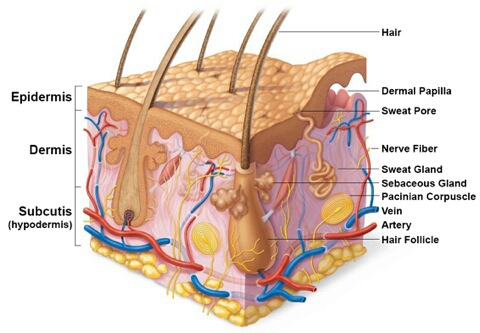
    Try dissecting the human skin. The deeper you go, the more integrated everything is.

    Try dissecting an onion, digging up a place or researching on human skin.

    Moreover, surgeons will tell you that though a part of the body can be understood when separated, a full understanding is when you see the part in the integral whole coordinating with all the other parts as one body.

    We can apply this understanding to the Body of Christ. Don’t go crying on God to know which mantle you carry or anointing you have or “office” you belong to. “Lord, am I a prophet or an evangelist?”. No! You would have missed the entire purpose of ministry.

    It is a whole new world of discovery out there. The technology industry has got this understanding and is integrating new stuff; your phone has a flashlight, radio, camera, notepad, tv, telephone and what not integrated into it.

    The technology industry is now integrating old inventions into new multi-purpose ones

    Full understanding is not the end in itself; It’s a means to a whole new beginning. It can be applied to virtually anything. Try it in your studies. For instance, when you’re reading the Bible, perceive the entire forest before identifying the individual trees. Therefore, understand the central theme, the bigger picture, before dissecting the details. In that way, your understanding is fruitful, confusion becomes an illusion; it will not be based on single verses pulled out of context.

    This is important in understanding every series on this blog. Are you ready for this?

    I love you ♥