Category: Understanding

  • Confirmation Bias

    “A person may think their own ways are right, but the Lord weighs the heart.”
    ‭‭Proverbs‬ ‭21:2‬ ‭NIV‬‬

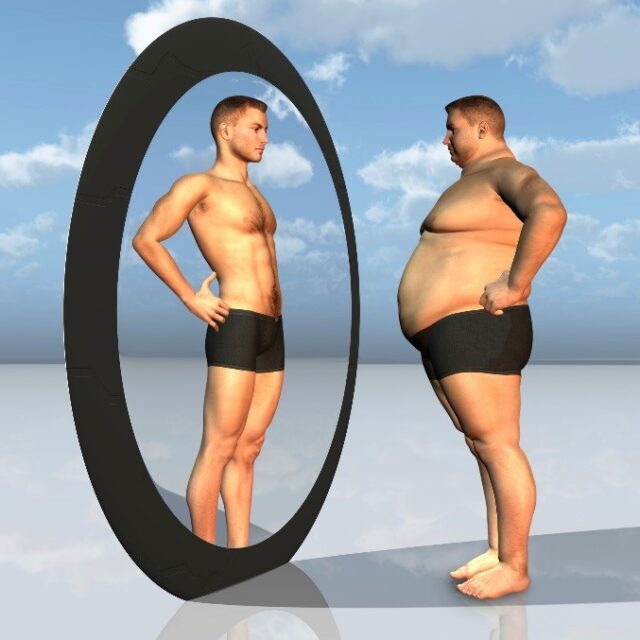
    Confirmation bias is the one of the leading reason why we do not grow. It blocks new ideas, new ways of doing things and better alternatives. It’s the container of lies, an illusion of truth and basically made up facts. We often see what we want to see because we see through our own biases.

    Confirmation bias is basically thinking “a” is so because of so-and-so and later finding situations and scenarios to back your point. The mind chooses to see what it wants to see. If you look for something long enough, you’d soon find it. In fact, conceptions are such that you can find a scenario to back it no matter how dumb it is.

    “Do you know the earth is flat?”

    “Ha! What makes you think so?”

    “I drive from Florida to California every week. Seems pretty flat to me. In fact, I just realized that no matter how high in elevation you are, the horizon is always eye level.”

    “Wow! Really?”

    “Yeah. See?”

    The moment we want to believe something, we suddenly see all the arguments for it, and become blind to the arguments against it. We see our own illusions. That’s why other people see our problems better; they don’t see through our filter of biases. This is also the major reason why people project their lies on us; because they see through their own biases.

    Don’t generalize your own experiences because you’re a sample of one. A sample of one is no damn good statistically. You can’t say anything in general as a fact based on one sample.

    In a world full of made-up facts, illusions, delusions and diversified opinions, truth can really look like an abstract concept. Never forget this though; the Truth is the Truth, even if it cannot be proven and no one believes it.

    I love you ❤️

  • How To Understand Women

    How To Understand Women

    Life without females would be a pain in the ass, literally! Though they make situations a bit more difficult than they’re supposed to be, they make life much more interesting than it would have been. They add a little more extra everywhere. They may be a little more extreme but definitely quite distinct and super amazing. To be very honest, understanding them is a hoax but hey, at least I made an effort – like the gazillion number of men before me who successfully failed to crack the code.

    Women love attention

    We each have the desire to be loved and accepted. Abraham Maslow recognized this in his Pyramid of needs and identified it as a social need. No matter who you are, you belong to something. Women do have a strong sense of belonging. Though not every lady wants to be in the spotlight, they would love to have your attention provided you treat them right. The more you make them feel special – like they are the centre of the universe, like there is no other person but them – the more they’d love your company.

    Women care 1000% about diction

    They say, “Men are moved by what they see, but women are moved by what they hear.” There is an iota of truth in that. No matter how a lady likes you, she’d still want you to initiate; you’d still have to “sweet talk” with her; you’d still have to treat her right. Whether the lady will become offended or feel the love, it all depends on your choice of words. Once you make the wrong choice of word in a conversation, she’d expect that you apologize. She may even understand what you’re trying to say, but you’d still have to say it.

    Women love to be right

    Women are very intuitive. They listen to their intuition more than men do. Sometimes they just know that something is wrong beyond all reasonable doubt. Women may not always be right, but they are never wrong. She has all the right in the world to tell you that they tried to tell you yet you wouldn’t listen, but don’t dare try to tell her that. A wise man once said, “As a man, when you’re wrong, apologize; when you’re right, shut up.” A man who loves to always be right is seen by women as proud and egotistic. A woman who loves to be always right is simply being a woman.

    Women are empathic

    No matter how hard a woman becomes, she still has a soft spot. Of course, at the beginning she may a very nut to crack but spending time with her alone softens her heart towards you. The average lady is very emotional. Funny enough, if a guy had the same amount of mood swings a lady had in a single day, he’d be seen as psychopathic and may be on medication for having split personality disorders. When offended, she doesn’t get pissed, she gets mad. The psychophysiology of males and females are distinct. Women have a different kind of logic. When you talk to her, she listens to what is not being said. That’s why good mothers are good listeners.

    Women know what they DON’T want but may not know what they want

    There is nothing that two people in love cannot do except – of course – deciding where to eat. In a relationship, barely would a woman make the vital decisions.

    She’d tell you what to do, but if it fails she’d blame you because you took the decision. Women seldom know what they want yet they may complain bitterly about what they have.

    Whether it’s a house design or sex life, they’d express how they dislike the current state and then expect you to know what to do. They have a strong desire for what they want. When they see what they want, they’d know. Confused? Don’t worry. Women themselves know it’s confusing because they don’t even understand themselves. How can you know what you don’t want and still not know what you really want?

    What exactly do they want? That is a puzzle that the guy has to solve.

    Ladies, is this true? Guys, do you agree with me? Let’s see your comments. Will deffo have to continue with this. Hope you enjoyed it! Don’t forget to like and share. By the way, this is all meant to be fun. Please don’t be mad at me, O woman in thine period. I know all these doesn’t necessarily apply to all women, of course! Please don’t insult me. Thanks 😂

    I love you

  • Unquestionable Answers vs Unanswerable Questions: A Philosophical Take on Knowledge

    There will always be more questions than answers. Certain questions do not need answers, because our answers are a failed attempt to express the inexpressible. Not everything needs to be explained; some simply need to be experienced.

    It is better to have unanswerable questions than to have unquestionable answers. Unanswerable questions lead us to wonder and curiosity. Unquestionable answers, however, usually have an underlying superstition and are a cover-up of ignorance.

    There are 4 types of knowledge; what you know that you know, what you know that you don’t know, what you don’t know that you know and what you don’t know that you don’t know. You know what you know but if you stop learning, you will not know what you know anymore. Proverbs 19:27 says “My child, when you stop learning, you will soon neglect what you already know”. If you stop seeking, you will not know what to know anymore. Everything will confuse you. You will move through life not knowing anymore, swayed by any strong wind.

    How to Not Know What You Know that You Don’t Know

    If you are proud, you will never know what you don’t know. You will think that you know, and you will miss opportunities to know what you don’t know. When you speak, you say what you already know. When you listen, you learn something new. Unfortunately, pride keeps one to oneself, making one refuse to listen, understand another person and agree to disagree; thus missing opportunities to learn and grow.

    How to Know What You Don’t Know that You Know

    If you’re not intuitive, you won’t get the opportunity to know what you already know. Deep within us is an eternal knowledge base. Great thinkers like Isaac Newton and Nikola Tesla got in touch with this reality. To know what you didn’t know that you knew, think from your heart and not your mind. If you’re humble, you’re probably wiser than you think you are. Use your discretion. 1 John 2:20 says “you have an anointing from the Holy One, and you know all things”.

    This is how prophets prophesy. They didn’t know that they knew what they said a few moments before they said it. However, know for sure that you’re not always right. That’s why you need to practice and build your capacity. Hebrews 5:14 says this is for people “who by reason of use have their senses exercised to discern…”. Once you train yourself to discern knowledge from your own thoughts and knowledge from God’s thoughts, it is simple to give a word of knowledge.

    You Don’t Know What You Don’t Know

    Know for sure that not all questions need answers. Some need acknowledgement of a lack of capacity to fully understand. Unanswerable questions make us acknowledge our knowledge of ignorance; knowing that we don’t know. Knowing that we don’t know humbles us enough to want to know more. Unquestionable answers often bar us from further inquiries, deeper experiences and tasting to see for ourselves.

    That notwithstanding, we even lack the capacity to not know that we don’t know in some matters. It’s a fact. You don’t know what you don’t know. Have you been in an exam and had absolutely no clue what the answer to a question was? In fact, you just want to write something wrong there but even with that, your mind is blank. If they left you there for 10 years, you still wouldn’t know the answer.

    It’s confusing that deep within us we know all things yet we lack simple knowledge when it comes to certain matters. I personally think this is to keep us from overcomplicating our lives and priding ourselves in what we know. Pride is the biggest impediment to knowledge. Once you’re your own source of knowledge, you seize to be a learner. The knowledge of not knowing that you don’t know ought to make you a seeker of knowledge within and without.


    Don’t just answer questions. Question answers. History wasn’t written by nature. Coincidences have significance. It’s not always about knowing the differences between similarities but finding the similarities between two seemingly dissimilar concepts. Yes, you may know the difference between jealousy and envy but do you know there are similarities between truth and love, logic and emotions, and justice and mercy? There are hidden correlations everywhere.

    It’s funny how we know much but sometimes we feel we’ve known enough. The day you think you know is the day you stop learning, searching and seeking. Knowledge is a treasure. It hides from the simpleton. That’s why common sense is uncommon to common people. If you’re always quick to regurgitate what you already know, you don’t discover anything new on your own.

    Before you assume, ask. Before you answer, question. Sometimes what we think we know stops us from finding out what we ought to know. Answers don’t come to those who guess, it comes to those who search. And though we can never know all there is to know about any particular thing, it shouldn’t stop the curiosity in us from digging deeper. Paul said it this way, “Yes, may you come to know…—although it can never be fully known…”.

    I love you ❤️

  • What Do You Resonate With?

    If you’ve lived long enough, you’d realize you could be getting the same messages along a certain line for a period of time. Some even say it’s the universe sending them that message over and over. You’d hear a particular word echo or even a certain conclusion is drawn in different conservations with different people. You could resonate with discipline, balance, mindset, personality, or working smart.

    Some words or ideas may resonate with us for days, weeks, months or years, even a lifetime. We may be inclined towards a certain philosophy, school of thought, system, concept, mindset or attitude. Not just us, a generation, a city, a building, an architecture, culture, even animals may be related to a certain form of resonance. It’s an endless list.

    LENS

    There’s a difference between what it is and how we see it. How we see things is based on our lens. If you’ve noticed, no matter what the conversation is about, people tune it to what they resonate with. People who resonate with discipline think everything is about discipline. People who incline to love think it will come down to love. Those who resonate with balance see the balance in everything.

    Others who resonate with mindset think the mindset is everything. Those who also resonate with wisdom believe it all goes back to wisdom. If you hang around people who resonate with hard work, you’d soon believe in it and work with it. That’s why it’s necessary to find what works for you because everything works but it just may not be for you.

    INFLUENCE

    For some people, what they resonate with is in their everyday vocabulary. Stick around for a while and you’d hear them use it often. For others, it’s simply embedded in their attitude. Walk with them for a while and you’d be influenced. We all individually have the potential to be anything. What we don’t have the potential to be is everything at the same time.

    Thus, different people bring out different sides of us. Ever worked with a consistent person before? You’ll always be on your toes. How about one who always gives new excuses? You’d relax. If one group thinks you’re funny, your funny side comes out when you’re around them. This is why the people you surround yourself with matters.

    NATURE & NURTURE

    Truth is, we all don’t resonate with just one thing. One person can resonate with different seemingly contradictory ideologies. Nonetheless, we have something we’ll completely resonate with for a lifetime. This is usually the virtues that go with our personality. Introverts obviously resonate with solitude, the choleric believes in being straightforward, and so on. It’s nature.

    However, there are others we pick up along the way that we come to resonate with it so much that no matter our environment, it still wouldn’t rob off. It’s nurture that becomes nature. This is usually the values that come with our upbringing.

    PERSPECTIVE

    There are good and bad sides to anything we resonate with. You call it laziness but it may be smartness. Call it consistent but it may be conservative. You call it hectic but it may be hard work. You call it slow but it may be meticulous. Call it patience but it may be indecisiveness. It all depends on the situation.

    A particular generation may hype hard work, another will hype laziness, especially this generation. It says lazy people find easy ways of doing things. So make sure what you resonate with is consistent with the world’s current.

    Since everything works as long as you keep resonating with it, it’s better that you simply hype what you resonate without defaming any other. For instance, being practical doesn’t mean being theoretical is wrong. Practicality only makes us experts in specific things but theory makes us understand the principles that can applied in several ingenious ways.

    Leonardo Da Vinci once said, “He who loves practice without theory is like the sailor who boards ship without a rudder and compass and never knows where he may cast”.

    So find what you resonate with, be intentional about it, and let it be synonymous to your name in your environment. Morgina Arku said it better; you can resonate with a lot of things but muster a few.

    I love you ❤️

  • Submission & Feminism

    Submission & Feminism

    Submit to one another out of reverence for Christ. Wives, submit yourselves to your own husbands as you do to the Lord.
    Ephesians 5:21‭-‬22 NIV

    It is outrightly said in many cultures including ours, that the man is the head. As to whether the woman is the tail or the neck by default, it undoubtedly relies on our understanding of “headship”. The word “head” is used 75 times in the New Testament, but never in the sense of overpowering domination. It similarly means Origin or Source. All Paul was saying in 1 Cor 11:3 is that the origin of the woman (not women) is the man. “If you Greeks think the woman is superior to the man because she was created first, you got the “created first” part even wrong.”

    Marriage is not ownership. It is a partnership. If the woman cannot sometimes lead for the man to support, then there’s no mutual submission. When God created a woman as a helpmate to man, He wasn’t creating a slave, subordinate, “lesser vessel”, or someone inferior to the man. The word “helpmate” is used 16 times in the Bible, 3 referring to woman and 13 referring to God. So wherein lies that proposition?

    In such a Greek culture where women were generally idolized, it was important that Paul stresses on the importance of the woman submitting to the man. In our culture where our “foremothers” simply endured emotional, physical and mental abuse in marriage in the name of “submission” – which is just a nicer word for sublime slavery – and sacrificed for the man to the detriment of their goals; dreams; aspirations; basically their life, I don’t think “women, submit to your husbands” should be the emphasis.

    It’s a shock that “wives, submit to your husbands” is such a famous verse and barely anybody took their time to notice the previous verse. “Submit to one another out of reverence for Christ.” It is important to realise that a win-win situation is possible. If women empowerment is to the detriment of men rights, we’re tearing each other down instead of building each other up. It is also important for men to realise that feminism is not a threat to their authority. Fighting for women and fighting against men are two totally different things. It’s about time matriarchs were placed beside patriarchs.

    I love you ❤

  • Balance: The Essential Universal Principle that Holds Life Together

    Art and science. Logic and emotions. Work and play. These words are not opposites but having the two creates a design principle of the universe: balance. This principle is not that everything should be balanced but that everything IS balanced. This is because balance is not a matter of choice or preference. Where there is no balance, there is destruction; a break in the cycle of resurgence where everything just swirls into depletion and nothingness. It is the basic ingredient of existence.

    Balance: Perfection’s Best Kept Secret

    Balance: Perfection’s Best Kept Secret

    Perfection is a scary word for many, really. Use it three or four times in a sentence and someone will definitely give you a lecture of how things can’t be perfect. True! We are not powerful enough to control the balance of ups and downs, highs and lows or even foreknow if the good will outweigh the bad in any decision we make. The power to make things perfect is not even 5% in our hands. There will always be a margin of error.

    However, perfection simply means complete. Have you seen how the earth revolves around the sun using the sun’s gravity? That’s perfect! If it were slightly lower by even an inch raised to the power of an inch, our earth will rotate slowly away into the “nothingness” of space. If it were slightly higher by the same margin, the earth will rotate slowly towards the sun until it was completely burned up by the sun’s harmful radiations. Do you see that balance?

    That’s not the only example in nature. I could talk about reproduction and childbirth, atmospheric pressure, the human brain, the cycle of nitrogen, the food chain, and so on. The good part about all this is; we haven’t discovered a tenth of all there is to know about the universe. Yet, we see it clearly. A lot of what we call perfection is balance at work. Perfection can choose not to exist and we’ll be perfectly fine. The day balance leaves office, hell will break lose. Balance is literally what’s holding hell from breaking lose.

    Balance: the Shortcut to Consistency

    Balance: the Shortcut to Consistency

    Life is so unpredictable, and all we feed our brains from social media is how inconsistent and messed up one thing or another is. It was only a matter of time until someone popularizes the idea that there’s no such thing as consistency. To be honest, consistency really sounds like a cool word for perfection. It would have been easy to sell the idea that it’s as unrealistic as perfection.

    Guess what makes consistency possible? It’s not sheer will power or motivation or even knowledge. We all can know what to do and still watch ourselves not do it. We ride our consistency on the shoulders of motivation till it exhausts, then we’re more inconsistent than we were before. Consistency is more about holding something together, keeping it going like a cycle. You can’t force it.

    Of course, there are no shortcuts to consistency. However, what makes consistency consistent in the long-term is balance. If you keep your hands up for like forever, it’s called punishment. If you keep your hands up for 2 minutes and bring it down for about 45 seconds so you could keep it up again for 2 minutes, it’s called exercise. Creating that balance is what makes you consistent. You don’t have to beat yourself up.

    balance

    Work, but don’t kill yourself working. Rest, but don’t be lazy. Have some days off. Resurgence, remember? If you don’t balance exertion and rest, either of them is bound to destroy you. As aforementioned, where there is no balance there is destruction. Balance keeps you in a cycle to keep on keeping on.

    So keep on keeping on, baby ❤️

  • Transparency vs Honesty II

    Transparency vs Honesty II

    Understanding “understanding” is knowing the similarities between two seemingly dissimilar word meanings. The opposite is equally true. There is such an in-depth understanding and enlightenment when we realize the difference between two words with similar meanings. Inasmuch as it’s important to know how honesty and transparency must co-exist in our relationships, in some context these words take sides and it becomes very important to choose one over the other. Let’s dive in.

    What does it really mean to be transparent?

    Transparency is spilling out what someone will need to know about you – because it directly concerns them – without being asked to, so as to let them know what they are getting their heads into.

    The closer we are to someone, the more open we are to them. Very close yet very open. That is what transparency is really about. The difficulty that comes with Transparency is knowing what to keep private and for how long it should remain private

    As to what to keep private;

    Our level of relationship with someone determines what they have earned the right to know. They may never ask because they may have no clue. There are many things we keep to ourselves, where no one deserves to know because it doesn’t affect them directly. But once you’re sharing your life with someone else other than you, those things will eventually be exposed. The more vulnerable we are, the more we expose what we are.

    Letting them know beforehand creates a bond of trust right at the start. You are saying I’m worthy of being in your circle because you have exposed something to me that not just anybody can know. Hiding it from them and they later finding out creates a bond of distrust. The longer the relationship has been and the longer you’ve kept it a secret, the stronger the bond of distrust.

    As to how long it should remain private;

    Being an introvert myself, I find it really weird when I get to know someone for a short while and they trust me with such vital information about themselves. In my mind, I’m like, “TMI..TMI”. This is the principle; start from the known to the unknown. There are things someone can easily get to know about you by asking a few friends, studying the way you go about things and checking out your profile online. Start from there. Allow the other person to earn the right to know certain not-so-obvious stuff. Don’t be an open book.

    When the mutual interest to get to know each other is identified, begin to tell them things only a few would know as time goes by. When it dawns on you that they should probably get to know something about you, tell them right away. Trust your intuition! It tells you what to share when to share it and to the degree it should be shared at a time.

    This is where the line between Transparency and Honesty is drawn. Honesty is telling the truth when I’m asked. Transparency is telling the truth because it deserves to be known. Honesty comes with a condition; you have to ask first. Transparency requires no permission. It is necessary to be honest and much more important to be transparent. Once I’m not questioned, there’s no accountability for my honesty or dishonesty.

    If you have a medical condition, it’s important that your new friend gets to know at the early stages. If you’re single-divorced, your new catch might wanna know. And if you skipped to read only the last paragraph, I might wanna know lol.

    I love you ❤️

  • What At All is the Meaning of Life? I Need Answers!

    The first time someone really close to me died was in 2005. I had lost my grandad. I wasn’t particularly sad. I was alarmed. “So I won’t see him physically again?, So that’s it? He’s gone? Is that all?”. 19th August, 2005. My grandad was gone. After the final funeral rites and all, life went on as if my grandpa never existed. All his stuff was quickly sent out the house. His favorite radio was no longer valuable to any of us. All the things he treasured meant little to us. Even his bed was taken away.

    You see me now, but not for long. You will look for me, but I will be gone. Just as a cloud dissipates and vanishes, those who die will not come back. They are gone forever from their home— never to be seen again.ò

    Job 7:8‭-‬10 NLT

    The next set of questions came running through my mind. I did realize that my Dad, Mom, siblings and friends were not going to here forever. Everyone is the last person in their lifetime to die. Each death causes so much pain, so much disdain, so much havoc to so many families no matter how peaceful the death was. They rest in peace and leave the rest in pieces. Soon we too will be gone. Will our life be meaningful to those we leave behind?

    What really is the essence of life? Have you ever asked yourself that? What is the essence of life? Is this all there is to life? The sad part about asking this question is that it only comes to mind when we are down, aggravated, tired, weary, dry, suffering, contemplating and reminiscing.

    Life is simple yet very complicated. Life is short yet it lasts for eternity. Life is hard though we smile easily. Life is tough yet it is so tender. Life is dear and priceless yet it demands a lot of sacrifices. Life is unfair yet it serves karma on a hot plate. Life is unpredictable yet we catch glimpse of the future.

    There is no life without death and there’s no death without a life. What makes me alive? Aside the heartbeat and breath, what makes our heart beat faster and takes our breath away? What do we give our life to? What kills us within? What do we do with our lives? What do we live for? What will we die for?


    “Everything is meaningless,” says the Teacher, “completely meaningless.” Keep this in mind: The Teacher was considered wise, and he taught the people everything he knew. He listened carefully to many proverbs, studying and classifying them.

    Ecclesiastes 12:8‭-‬9 NLT

    Is living worth dying for? Is dying worth living for? How long till our bones are weak and our strength is gone? How long till I die at the hands of that unforeseen circumstance? How much time do I have left? How long till I’m long gone? How long is too long?

    Life is but a breath. Life is breath. What gives me oxygen? What deoxygenates me? What drains me? What have I drained myself into? What have I given myself to? What am I doing? What am I? Am I my own life? Or I’m living my own life? Or my life is not my own?

    What really is the essence of life?

  • Self-Deception & Assumptions: How You Lie to Yourself without Realising

    Self-Deception & Assumptions: How You Lie to Yourself without Realising

    The brain was primarily designed to create, not store. Our thought stream is so amazing that we can think about and come up with assumptions on any random thing at any time at all. The speed of thought is so fast that I can travel to Jupiter and back in just 7 seconds. However, our brain has the power to focus our line of thinking. In order words, despite all the random thoughts, we choose which thought to pick and ponder on. Since our brain is not primarily for storing, we forget some thoughts as fast as we get them.

    See your stream of thoughts like search results. Our brain draws thoughts to our attention based on what we have previously fed it. Everything is mathematical in nature. Without self-consciousness, our brain picks data, derives meaning, makes analysis and draws potential conclusions without us even voicing it out. However, most of these “mathematical equations” in our brain don’t always draw the right conclusions.

    It’s like solving an MSQ math question, seeing our answer in the options and still getting it wrong. Our brain had all the needed data to put in but still produced a misconception. This is so dangerous to the extent that most of what we know to be true could just be lies assumed to be true. Let’s dive in.

    The first influences the rest

    One’s first thought concerning a particular and specific matter, aspect, facet, situation, field or even circumstance – be it truth or deceit – will affect the build-up of ideas that comes afterwards pertaining to that area. A foundation of truth is, therefore, essential. Building incorruptible on the corrupt results in deception. That is why it is very important to renew our minds in our new life in Christ.

    We don’t have the luxury of hitting the reset button for our minds. How you were brought up to perceive something and how you were conditioned to think about any particular thing will always influence your thoughts, opinions, ideas, concepts, philosophy and mindset. Since you initially didn’t know anything concerning let’s say thermodynamics, your very first knowledge of it is likely to become your absolute truth. You’ll swallow it hook, link and sinker.

    Any further knowledge you have about it will be believed only if it’s in line with prior knowledge or any already believed knowledge in another field. Speaking of the latter, let’s talk about our ability to believe something we know nothing about when it’s related well with something we already know;

    It is easy to agree with opinions in line with our thinking

    If you have no clue in a particular area of study, one can relate it with an area of study you are already conversant with so as to make you understand better. Thus, you now understand because it’s in line with your thinking. This is brilliant and dangerous at the same time. Transfer of knowledge is not always accurate. In many cases, it’s not.

    Having had the wrong conception as a foundation, any deception in line with it will easily be treated as truth. Any simple logic that may be true in a particular context can be transferred to fit into another unrelated context just to add up to our made-up fact. This is one concept of deception. Another concept is adding a pinch of lie to a wholemeal truth. When deception is built on a misconception that is already in line with one’s stream of thought, it is difficult to convince the person otherwise.

    Sometimes we don’t need a third party to deceive us. Our minds can draw its own conclusions and conceive lies based on truth. This is the concept of misconception. For instance, some whites think it’s the scorching sun that burnt our skin black. You’ll find some blacks who think this way. No one told them. It’s just their own theory they came up with based on the truth of skin burn, the hot sun around the equator and black skin. Their brain took the right equation and still came up with a misconception. Our skin actually produces melanin to protect us against the sun, not that the sun burnt it black.


    So how do we avoid making unnecessary assumptions that make us look paranoid when our weird assumptions turn out to be untrue?

    1. Ask

    Stop wasting energy that could be used for a productive thought process on an area where you can simply ask to confirm and affirm. If you don’t know, ask. You may realize that the issue is not in the direction of your assumptions at all. If it is, hallelujah. That leads me to my next point;

    2. Being right is not a trophy

    The reason why we may like assuming is that we find pleasure in being right. We have lots of theories and make baseless assumptions which could still come to pass due to the unpredictability of life. Okay, your assumptions were right. Now what? Should we carry you on our shoulders?

    3. Keep your assumptions to yourself

    Truth is, we can’t stop our brain from analyzing and coming up with possible explanations for issues we experience. We don’t even need to stop our brain. We need that drive, that curiosity. When there’s a problem, we need to come up with possible solutions. We need to make decisions based on predictions. So don’t stop assuming. It’s not something bad. Rather, keep most of your assumptions to yourself.

    This is a good read. I know you just read only the words in the pictures. Please go back to the top and read every word. You’ve probably heard this idea of cognitive biases before. I’ve articulated into words, so read and understand. This last paragraph is intentionally full of assumptions so you’d have a good laugh. Now where’s my “my assumptions were right” trophy? 😂

  • Finding Your Path, Your Place & Your People

    Finding Your Path, Your Place & Your People

    Life

    Life promises you so much beyond your imagination on the day of your arrival. Literally everyone has a clean sheet and a bright future. However, we stepped in blind from a dark womb. Our own cry puzzles us. Aren’t we supposed to be happy to be born? And this one that I’ve caused such extreme pain, why is she pretending to be happy? Will it cause similar pain to leave this realm?

    It didn’t take me long to know that life is a driver, who has no idea where he’s taking me. Or perhaps, he makes me the driver, having no experience and bumping into situations and circumstances beyond my control well enough before figuring out there are no brakes. To add insult to injury, the steering wheel is as stiff as my thinking. Unable to see the road, my vision is shortsighted. Can’t see the bigger picture, ’cause there are so many details in the little I can see.

    After being able to figure out how to drive after so many mistakes, pain and hurt, I realise I’m in the middle of one gigantic labyrinth with so many drivers as reckless and clueless as me. When you do not know where you’re going, any road will take you there. I try to find my path. Once in a while, I take a hit from other vehicles. Some leave a permanent scar on my skin. Some, just a bruise. All take so long to heal.

    What we all have in common is brokenness. No matter how careful or reckless you are, it’s indubitably inevitable.

    Many begin to follow my tracks. Little do they know that U have no idea where I’m headed. With time we each began to find our path. Some, much earlier; others, a little later. And oh, the joy of riding in my own lane, competing with no one as no one in their path competes with me. I ask you to take your time to look all around you. What life once promised comes to mind,

    Find your path & know your place, the right people will eventually come along

    Life is not meant to be figured out. Life is meant to be lived. In the end, it will all make sense. For the time being, life is not entitled to make sense to you. God has His own way of connecting dots that we thought weren’t part of the story. So live. Live to the fullest. Live life more abundantly. For when we have life, we can have everything else. But when we lose the Life, we lose everything.

  • The Matter of the Truth and the Truth of the Matter

    Truth carries weight. It occupies space. It is important in every matter. The fundamentals of understanding boils down to truth. Where there is no truth, there is no trust. In fact, it connects the dots of seemingly unrelated ideas and sits at the core of things known and unknown.

    Subjective Truth & Objective Truth

    Subjective truth puts us in a box and in bondage; objective truth sets us free. Sometimes what you think you know stops you from knowing what you need to know. When it’s subjective, it blocks our minds from understanding the full picture. We tend to fill in the potholes of our false ideologies because it is frustrating to not know the truth. Truth is complex. Assumptions make it all simple though assumptions are not entirely true.

    Sometimes the lie sounds more truthful and the truth sounds like a lie. Those are instances where we choose to lie to make another party understand because the truth is too complicated. Let us be honest; sometimes it is easier to believe a lie because the truth is too hurtful. Thus, we choose to not accept it. Does the truth hurt? Truths hurt in the short-run and brings healing in the long-run. Lies bring a false sense of understanding in the beginning and hurt in the long-run. Yes, the truth may hurt but not as deadly as the lies can.

    The Validity of Truth

    The truth is true, no matter who says it, believes in it and/or knows it. Majority will always carry the vote but barely will it carry the truth. This is so because truth does not need external validation. Truth is its own validation. 2×2=4, not because the entire world decided to believe it to be so. Mathematics, for instance, was not invented. It was discovered. The numbers and signs were invented and popularly accepted so as to make our understanding of Mathematics easier. However, 2×2=4 no matter where you are in the universe.

    As a result, you cannot invent an objective truth. You can only discover it. Once it is invented, it becomes subjective. Truth can neither be created nor destroyed; it is only interpreted in one way or the other. The truth is not about what everyone believes. It is not about what everyone thinks it’s true. If you believe the earth is flat, it does not change the fact that it is not flat. You can’t invent it based on what you believe. If you believe trees don’t exist, trees don’t all of a sudden disappear in thin air because you believe it to be true. The same applies to the person of God.

    If anyone asked me what Truth is, I’d say, “the Truth is true, no matter who believes it to be false or true”. Are you searching for Truth or you’re settling for assumptions and lies because it is less complex?

    I love you ❤️

  • What is Truth? A Philosophical Uptake on the Fundamental of All

    There are simple concepts in life that are so beautifully complex. To define them as concepts is even controversial. To call them the fundamental is widely accepted but does it even need wide acceptance to validate its identity? Love, Truth, Light; these are everyday words spelt with just a few words. Yet, in them lies an endless depth of meaning lying to be discovered though they can never be ever fully discovered.

    No wonder these “concepts” are tantamount to God. To search for them is to search for God, and to discover them is to encounter the person of God. To define them to the point where it halts you from searching deeper into them is an error in itself that leads to further errors. It’s embedded in our innermost most innate self to search eternally for these.

    truth

    Everything exists in truth. It is not a subset of it, it’s the identity of any real entity. Thus, for something to be real, it must derive its source from Truth, including lies. Confused? Darkness only exists because light exists. Darkness is not the presence of nothing, it is the absence of Light. Coldness is the absence of heat. Coldness has no S.I. unit because it derives its identity from heat or – put in a better way – the absence of heat.

    If truth did not exist, there would be no need for lies. Within every lie is an iota of truth, because a lie must be based on a certain truth. The Truth is One, and based on that, an infinite number of lies can be derived from it. Therefore, there is a surety in the former, and endless opportunities in devising the latter.

    truth

    In an enlightened world full of devising lies based on already existing truths, the concept of truth being absolute and having that surety is easily becoming an archaic mindset. “Everyone has their own truth. This is mine and that is yours. This is what works for me and that is what works for you.” Is that always even true?

    There are no absolute lies. Every lie is true in some sense. Yet this is not true for Truth, in which there is no lie. Are all truths absolute? No, but all Truths are absolutely true. There are no “buts”. There are absolute truths. These truths are true in every universe, dimension, realm and reality. This is why truth is fundamental; because it cuts across every concept, thinking, analogy, dimension and reality.

    This has been a mouthful. Reading it over and over will help, trust me. I hope you follow this new True series. I love you ❤️