Category: Christianity

  • How the Christianisation of Continents Preceded the Booming of its Civilization

    “…Righteousness exalts a nation, but sin is a reproach to any people.” — Proverbs 14:34

    When Christianity reaches a land, something begins to shift—not just in the souls of men, but in the structures of nations. History proves, time and again, that where the Gospel takes root, civilisation begins to blossom. This is not a poetic coincidence. It is a spiritual law made manifest in natural outcomes. The Light of Christ not only illumines the hearts of men, but the systems they build and the societies they form.

    Europe: From Barbarism to the Birthplace of Science and Art
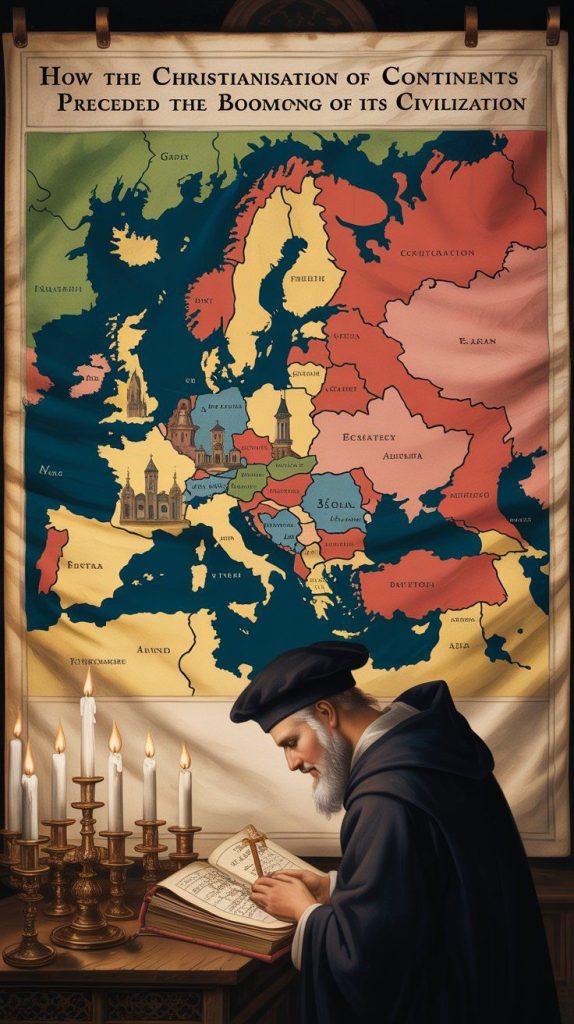


    Before the Gospel swept through the European continent, much of its population existed in tribal paganism, blood rituals, and brutal conquests. But the early Christian missionaries—men like St. Patrick, Boniface, and Augustine—planted the seeds of biblical thought across the continent. The Bible introduced the concepts of dignity, order, stewardship, and purpose. The monasteries preserved literacy. Cathedrals became centres of learning. The Reformation reclaimed biblical truth, and with it came the explosion of literacy, printing, democracy, and conscience.

    The Christian worldview gave birth to modern science—because if God created the universe with order, then it could be studied with reason. Isaac Newton, Blaise Pascal, Galileo—all confessed faith in the God of the Bible. Europe became the wellspring of philosophy, music, architecture, and industry, all birthed from a people discipled in the ways of Christ. It is of no wonder that Vatican City is saturated with so much artistic beauty inspired by divinity, birthing unusual ability to renaissance.

    The Americas: Liberty Rooted in Revelation


    The foundation of the American experiment was not merely political—it was deeply theological. The Puritans and Pilgrims did not cross the Atlantic for gold; they came for God. They believed in covenant. That a nation could be in covenant with God was their vision, and they built that nation on biblical principles. The Declaration of Independence echoes the truth that all men are created equal, endowed by their Creator with rights—not given by kings, but by God.

    With the spread of Christian ethics came the sanctity of life, freedom of conscience, human rights, and the abolishment of slavery. The Great Awakenings revitalized not just souls but the entire moral framework of the young republic. Hospitals, schools, charities—almost all were pioneered by the Church.

    It is no wonder that the nation rose to become a world power. Where Christ is exalted, people flourish.

    Africa: The Blossoming After the Gospel


    Africa was not new to Christianity—Ethiopia had the Gospel before many parts of Europe did. But in much of sub-Saharan Africa, ancestral worship, animism, and tribal conflict prevailed for centuries. The arrival of Christianity did not bring chains as revisionists argue—it brought books, hospitals, and the abolition of human sacrifice and twin killings.

    For a very long time in human history, Africa was called the dark continent. Though very rich in natural resources, poverty and darkness ruled the land for so long. Perhaps, that explains why most of our resources are still intact after so many years of human history. Wherever the Gospel took root—Ghana, Nigeria, Uganda, Kenya—education began to rise. The first schools were started by missionaries. Some of Africa’s greatest leaders were products of missionary education. Wherever Christ was honoured, society began to heal and move forward.

    Even today, some of the most peaceful, progressing parts of Africa are those saturated with churches and the preaching of the Gospel. Africa only saw development after the Gospel infested the land. On the other hand, some of the poorest places with no infrastructural development whatsoever are places The Gospel hasn’t been preached yet. The presence of Christ restrains corruption, dignifies womanhood, uplifts the poor, and strengthens the family.

    Asia: The Hidden Blossoms of the Gospel


    Though often unacknowledged, the seeds of Christianity planted in parts of Asia have produced quiet revolutions. South Korea is a prime example: in less than a century since Christianity became widespread, it moved from war-torn poverty to a leading technological and economic power. Why? Because the Gospel transformed the moral fabric. It made honesty, education, and compassion the pillars of society. In underground churches in China, revival burns—even under intense persecution. And wherever Christianity spreads, so too does a culture of innovation, human dignity, and national awakening.

    Countries like Singapore present striking examples of how Christianisation—though not dominant—played a foundational role in shaping modern civilization through educational, legal, and institutional transformation. In Singapore, Christian missionaries established some of the nation’s top schools, such as Raffles Institution and St. Andrew’s, which later became instrumental in producing visionary leaders and thinkers. The influence of Christian values—such as integrity, diligence, and compassion—found expression in public service and social development, contributing to the country’s rapid rise into a first-world economy.

    Christianisation: the Bedrock of the Industrial Revolutions
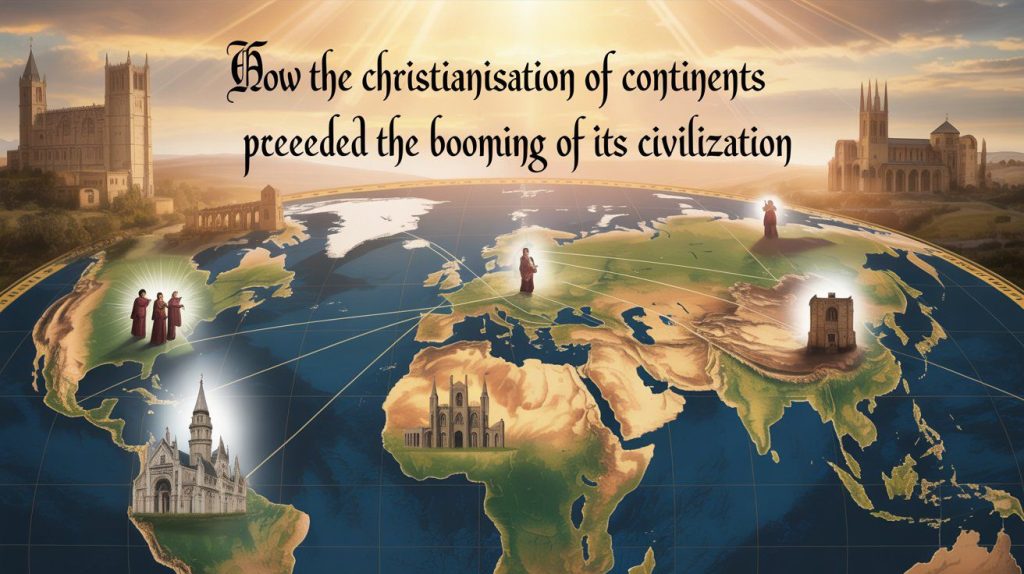

    When you trace the timeline of history, it becomes clear that the Christianisation of Europe laid the fertile soil from which the major industrial revolutions would later spring forth. The First Industrial Revolution, which began in Britain in the late 18th century, was not birthed in a vacuum. It was preceded by centuries of Christian influence — the Reformation, the spread of biblical literacy, the establishment of ethical labor principles, and a culture that valued human dignity and creativity under God. Christianized nations had already built educational institutions, codified moral laws, and encouraged innovation as a means of stewarding God’s creation. The Protestant work ethic, rooted deeply in Christian teachings, inspired diligence, honesty, and a sense of calling in one’s vocation, all of which became the backbone of the industrial and technological advancements that changed the world. Thus, the booming civilization that history celebrates did not rise despite Christianity — it rose because of it.


    The pattern continued with the Second and Third Industrial Revolutions. The Second Industrial Revolution, spanning the late 19th and early 20th centuries, saw a rapid acceleration in steel production, electricity, railways, and industrial manufacturing. Yet, these advancements did not happen in a vacuum. They were born in societies already saturated by the Christian worldview — a worldview that taught the dignity of labor, the stewardship of resources, and the moral imperative to improve life for the glory of God and the service of others. As for the Third Industrial Revolution — the digital and information age of the late 20th century — it thrived in environments where biblical principles like personal responsibility, freedom of thought, and stewardship were deeply ingrained.

    Interestingly, as technology and economic growth skyrocketed, a distortion crept into the Christian faith: the extremities of the prosperity gospel. It promised material blessing without the cross of self-denial and stewardship. Yet, even this distortion indirectly testified to the fact that Christianity had become so deeply associated with advancement and success that people began twisting its message to seek the fruit without the root. The truth is, every major boom in civilization sat on the foundation of a biblical ethic — a high regard for work, innovation, justice, and human value. Strip away these roots, and the towering tree of prosperity would eventually collapse under its own weight, just as we are beginning to see in modern post-Christian societies.

    Nations as Inheritance
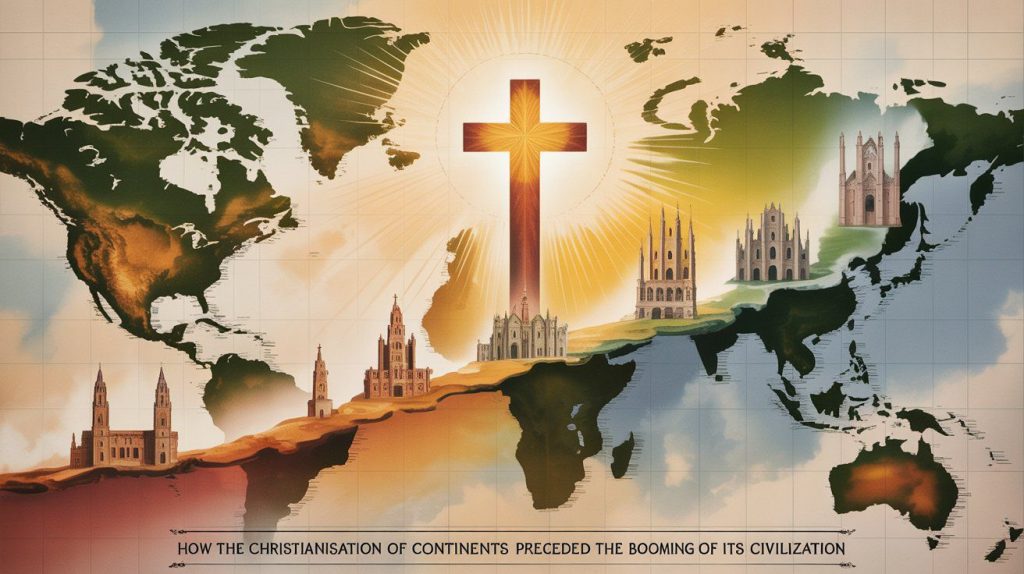


    Nations do not rise by accident. They rise when their foundations are righteous. Although it doesn’t usually happen suddenly, it’s only a matter of time until an unrighteous nation tumbles, never to rise again. It happened to Babylon. It happened to the Roman Empire. It happened to Medo-Persia. There’s only one way to build a lasting foundation, even at the national level. The Gospel does not only save souls—it builds nations. When Scripture becomes the blueprint, civilisation follows. The Church must not withdraw from culture; it must shape it. The Christianisation of continents is not merely history—it is prophecy being fulfilled. Jesus said, “Go and disciple nations.” Not just individuals. Nations.

    So as we look ahead, let us not separate evangelism from transformation. Where Christ is Lord, society is blessed.

    “Blessed is the nation whose God is the Lord.” — Psalm 33:12
  • 30 Prophecies Jesus Fulfilled in 3 Days

    The death, burial, and resurrection of Jesus Christ are not just events. They are the very foundation upon which the entirety of the Christian faith stands. In just three days, over 30 ancient prophecies, spoken hundreds of years before Jesus was born, were fulfilled with breathtaking precision. In total, Jesus fulfilled 300+ prophecies. These fulfillments are what ensure the validity, entirety, and authenticity of Christianity.

    Every law, every symbol, every prophecy pointed to Him. Every festival, every sacrifice, every Psalm whispered His name.The years it took for each prophecy to be fulfilled (noted in brackets) reveal the incredible thread of divine authorship woven throughout Scripture (circa; c). These three days did not happen by chance. Jesus really did it all just as it was written.

    1. Betrayed by a Close Friend (c. 1000 years)

    Prophecy: “Even my close friend, whom I trusted, who ate my bread, has lifted up his heel against me.” — Psalm 41:9

    Fulfillment: “After he had said this, Jesus was troubled in spirit and testified, “Very truly I tell you, one of you is going to betray me. Jesus answered, “It is the one to whom I will give this piece of bread when I have dipped it in the dish.” Then, dipping the piece of bread, he gave it to Judas, the son of Simon Iscariot. — John 13:21,26


    2. Betrayed for 30 Pieces of Silver (c. 500 years)

    Prophecy: “So they weighed for my price thirty pieces of silver.” — Zechariah 11:12

    Fulfillment: “And they counted out to him thirty pieces of silver.” — Matthew 26:15


    3. The Silver Thrown in the Temple and Used for a Potter’s Field (c. 500 years)

    Prophecy: “So I took the thirty pieces of silver and threw them into the house of the Lord… to the potter.” — Zechariah 11:13

    Fulfillment: “So Judas threw the money into the temple and left. Then he went away and hanged himself. They took the thirty silver pieces… and bought the potter’s field.” — Matthew 27:5-7


    4. Silent Before His Accusers (c. 700 years)

    Prophecy: “He was oppressed and afflicted, yet He did not open His mouth.” — Isaiah 53:7

    Fulfillment: “When he was accused by the chief priests and the elders, he gave no answer. Then Pilate asked him, “Don’t you hear the testimony they are bringing against you?” But Jesus made no reply, not even to a single charge, to the great amazement of the governor.” — Matthew 27:12-14


    5. Spat Upon and Beaten (c. 700 years)

    Prophecy: “I offered my back to those who beat me, my cheeks to those who pulled out my beard; I did not hide my face from mocking and spitting.” — Isaiah 50:6

    Fulfillment: “Then they spat in His face and struck Him. Others slapped Him” — Matthew 26:67


    6. Mocked by Soldiers (c. 1000 years)

    Prophecy: “They open their mouths wide against me, like ravening and roaring lions.” — Psalm 22:13

    Fulfillment: “The soldiers twisted a crown of thorns and put it on His head… they mocked Him.” — Matthew 27:29-31


    7. Pierced Hands and Feet (c. 1000 years)

    Prophecy: “They have pierced my hands and my feet.” — Psalm 22:16

    Fulfillment: “When they had crucified Him…” — John 19:18


    8. Crucified with Criminals (c. 700 years)

    Prophecy: “He was numbered with the transgressors.” — Isaiah 53:12

    Fulfillment: “Two rebels were crucified with Him.” — Matthew 27:38


    9. Prayed for His Enemies (c. 1000 years)

    Prophecy: “He made intercession for the transgressors.” — Isaiah 53:12

    Fulfillment: “Father, forgive them, for they know not what they do.” — Luke 23:34


    10. Cast Lots for His Clothing (c. 1000 years)

    Prophecy: “They divide my clothes among them and cast lots for my garment.” — Psalm 22:18

    Fulfillment: “They divided His clothes by casting lots.” — John 19:23-24


    11. Gall and Vinegar Given to Drink (c. 1000 years)

    Prophecy: “They also gave me gall for my food, And for my thirst they gave me vinegar to drink. — Psalm 69:21

    Fulfillment: “They gave him to drink vinegar mixed with gall, and having tasted, he would not drink. — Matthew 27:34


    12. Darkness Over the Land (c. 700 years)

    Prophecy: “On that day…I will make the sun go down at noon and darken the earth.” — Amos 8:9

    Fulfillment: “From noon until three in the afternoon, darkness came over all the land.” — Matthew 27:45


    13. No Bones Broken (c. 1000 years)

    Prophecy: “He protects all His bones, not one of them will be broken.” — Psalm 34:20

    Fulfillment: “But when they came to Jesus and found that He was already dead, they did not break His legs.” — John 19:33


    14. Pierced Side (c. 500 years)

    Prophecy: “They will look on Me whom they have pierced.” — Zechariah 12:10

    Fulfillment: “One of the soldiers pierced Jesus’ side with a spear.” — John 19:34


    15. Buried with the Rich (c. 700 years)

    Prophecy: “He was assigned a grave with the wicked, and with the rich in His death.” — Isaiah 53:9

    Fulfillment: “A rich man…Joseph of Arimathea…placed it in his own new tomb.” — Matthew 27:57-60


    16. Resurrected from the Dead (c. 1000 years)

    Prophecy: “You will not abandon me to the realm of the dead.” — Psalm 16:10

    Fulfillment: “God raised Him from the dead.” — Acts 2:31


    17. His Betrayer Replaced (c. 1000 years)

    Prophecy: “May another take his place of leadership.” — Psalm 109:8

    Fulfillment: “They cast lots, and the lot fell to Matthias. And he was numbered with the Eleven Apostles” — Acts 1:20-26


    18. The Price of Betrayal’s Field (c. 500 years)

    Prophecy: “And they will call it the field of blood.” — Zechariah 11:13

    Fulfillment: “That is why it has been called the Field of Blood to this day.” — Matthew 27:8


    19. They Mocked Him, Shaking Their Heads (c. 1000 years)

    Prophecy:
    “All who see me mock me; they hurl insults, shaking their heads: ‘He trusts in the LORD,’ they say, ‘let the LORD rescue him. Let him deliver him, since he delights in him.’” — Psalm 22:7-8

    Fulfillment:
    “Those who passed by hurled insults at him, shaking their heads and saying, ‘You who are going to destroy the temple and build it in three days, save yourself! Come down from the cross, if you are the Son of God!’” — Matthew 27:39-40


    20. The Passover Lamb Without Blemish (c. 1400 years)

    Prophecy:
    “Your lamb shall be without blemish, a male of the first year… You shall keep it until the fourteenth day of the same month. Then the whole assembly of the congregation of Israel shall kill it at twilight.” — Exodus 12:5-6

    Fulfillment:
    “For indeed Christ, our Passover, was sacrificed for us.” — 1 Corinthians 5:7
    “And it was about the sixth hour, and He said to the Jews, ‘Behold your King!’… and they crucified Him.” — John 19:14-18


    21. His Cry of Forsakenness (c. 1000 years)

    Prophecy: “My God, my God, why have You forsaken me?” — Psalm 22:1

    Fulfillment: “About three in the afternoon Jesus cried out…‘My God, my God, why have You forsaken me?” — Matthew 27:46


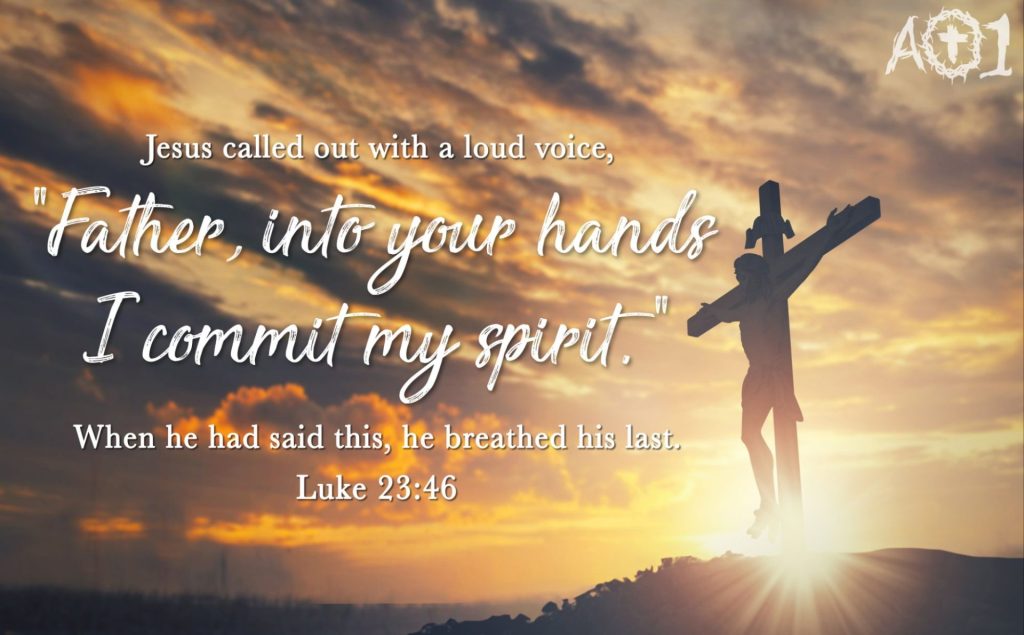
    22. Commending His Spirit (c. 1000 years)

    Prophecy: “Into Your hands I commit my spirit.” — Psalm 31:5

    Fulfillment: “Jesus called out…‘Father, into Your hands I commit my spirit.’” — Luke 23:46


    23. Died on a Tree (c. 1400 years)

    Prophecy:
    “His body shall not remain overnight on the tree, but you shall surely bury him that day, so that you do not defile the land which the Lord your God is giving you as an inheritance; for he who is hanged is accursed of God.” — Deuteronomy 21:23

    Fulfillment:
    “Christ has redeemed us from the curse of the law, having become a curse for us (for it is written, ‘Cursed is everyone who hangs on a tree’).” — Galatians 3:13


    24. He Became Sin for Us (c. 700 years)

    Prophecy: “The Lord has laid on Him the iniquity of us all.” — Isaiah 53:6

    Fulfillment: “He bore our sins in His body on the tree.” — 1 Peter 2:24


    25. The Temple Curtain Torn (c. 500 years)

    Prophecy: Symbolic prophecy of God’s presence being opened (Exodus 26:31-33)

    Fulfillment: “The curtain of the temple was torn in two.” — Matthew 27:51


    26. Raised on the Third Day (c. 700 years)

    Prophecy: “On the third day He will raise us up.” — Hosea 6:2

    “Now the Lord had prepared a great fish to swallow Jonah. And Jonah was in the belly of the fish three days and three nights.” — Jonah 1:17


    Fulfillment: “He was raised on the third day.” — Luke 24:7

    “For as Jonas was three days and three nights in the whale’s belly; so shall the Son of man be three days and three nights in the heart of the earth”. — Matthew 12:40


    27. His Body Would Not Decay (c. 1000 years)

    Prophecy: “You will not let Your Holy One see decay.” — Psalm 16:10

    Fulfillment: “God raised Him up…His body did not decay.” — Acts 13:35-37


    28. Declared the Son of God in Power (c. 1000 years)

    Prophecy: “You are my Son; today I have begotten You.” — Psalm 2:7

    Fulfillment: “Declared to be the Son of God with power by the resurrection.” — Romans 1:4


    29. Ascended on High (c. 1000 years)

    Prophecy: “You have ascended on high.” — Psalm 68:18

    Fulfillment: “He was taken up before their very eyes.” — Acts 1:9


    30. Took Captivity Captive (c. 1000 years)

    Prophecy: “You led captivity captive.” — Psalm 68:18

    Fulfillment: “When He ascended…He led captives in His train.” — Ephesians 4:8


    So you see…every little detail concerning Jesus’ death and resurrection in the Gospel was fulfilling Scripture. This is where the astonishing coherence of Scripture shines. Written by over 40 different authors, across a span of 1500 years, from shepherds and kings to prophets and fishermen, yet these scattered voices converge with pinpoint accuracy to tell one unified story — Jesus.

  • Was Jesus Separated from the Father on the Cross?

    At the very heart of the Christian faith lies the death of Jesus Christ — the greatest act of sacrifice, love, and justice history has ever known. However, one statement Jesus made on the Cross has been tremendously misunderstood and misinterpreted because of lack of doctrine. After this study, you will realise why the emphasis of the Spirit this Easter is on doctrine. When we don’t know the voice of Scripture, we will pick a detail and ignorantly misinterpret it out of the bigger picture and not know how dangerous it is. Was Jesus separated from the Father on the Cross? This question is often provoked by Jesus’ harrowing cry:

    “My God, My God, why have you forsaken me?”
    Matthew 27:46 / Mark 15:34

    Some have taught that in that moment, the Father turned away from the Son. The Father could not look at His Son because He was so filthy from carrying the sins of the whole world. He separated from Him temporarily, especially the humanity aspect of Jesus. For the first time in history, Jesus suffered rejection from the Father. From forsook to abandon to separated, but is that what Scripture really reveals? Let’s carefully journey through this question under three clearly established biblical doctrines.

    God is One

    Before facing the brutality of the Cross, Jesus made this unshakable statement:

    “Indeed the hour is coming, yes, has now come, that you will be scattered, each to his own, and will leave Me alone. And yet I am not alone, because the Father is with Me.” — John 16:32

    Even as betrayal loomed and death approached, Christ affirmed His confidence in the Father’s ever-present oneness. This unity wasn’t temporary — it was, and is, eternal and indivisible.


    If Jesus cannot be separated from God, why did He say that His God has forsaken Him? Jesus was pointing out by Himself that His sufferings and pain were not random; it was prophesied that the Messiah will have to go through it all to fulfil all righteousness. He was quoting Psalm 22:1, “My God, my God, why have you forsaken me?” He was not declaring a divine divorce — Before 1227, there were no chapters and verses in Scriptures. Because the Bible was memorized in Jewish custom, immediately you mentioned the first verse, you were reminding them of the entire chapter. Jesus was showing them that Psalm 22 is a Messianic Psalm whose biblical details pertained to Him right now on the Cross. Read Psalm 22. Inasmuch as the first verse was asking why God has forsaken him, it clearly shows severally that He wasn’t forsaken at all:

    “For He has not despised nor abhorred the affliction of the afflicted; nor has He hidden His face from him; but when he cried to Him, He heard.” — Psalm 22:24

    But Daniel, this explanation you are giving is too long and sounds too technical. Biblical doctrine has established without fail that God is One. Thus, all Scripture ought to be interpreted from that light. Besides, if God the Son could be separated from God the Father, why will the Son now commit His Spirit to Him while still on the Cross? The final moments affirm this:

    The Triune Work of Redemption

    Just like in creation, redemption was also the work of the Triune God. God the Father, God the Son and God the Spirit had distinct roles to play. Thus, the Cross was not a moment of divine division — it was the greatest demonstration of the Trinity of the Godhead at work to redeem humanity and reconcile them into divinity.

    “Christ, who through the eternal Spirit offered Himself without blemish to God…” — Hebrews 9:14

    The Son, through the Holy Spirit, offered Himself to the Father. Notice — Father, Son, and Spirit — all actively and harmoniously involved in the work of redemption.

    Even as Jesus bore the full weight of sin, “In Him all the fullness of Deity dwells in bodily form (Colossians 2:9). God was not absent. In fact:

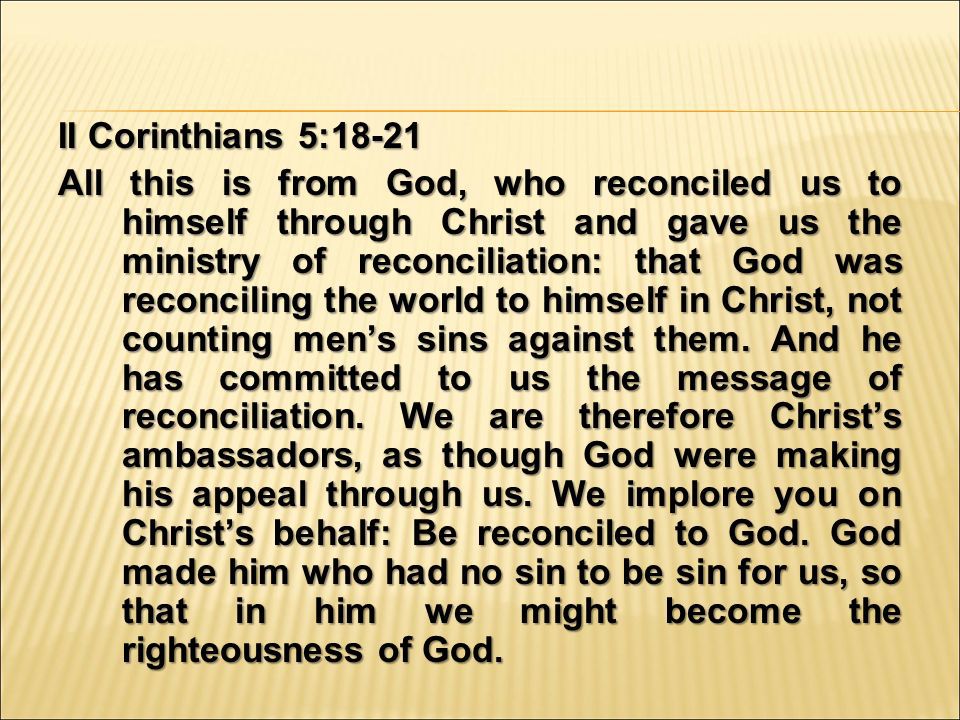
    “God was in Christ, reconciling the world to Himself, not counting their trespasses against them.” — 2 Corinthians 5:19

    Notice — not “God was separated from Christ,” but God was in Christ. It cannot get clearer than this. The Father didn’t abandon the Son; He was actively present in Him, reconciling humanity to Himself. The Son was not alone on the Cross. The Spirit strengthened Him, the Father was with Him, and redemption was fully accomplished through perfect divine harmony.

    Why is it Important to Know This?

    The idea that the Father turned His face away from Jesus is not only unsupported by Scripture — it is theologically dangerous. We just took one harmless verse out of context and read exaggerated meanings into it, not knowing how harmful it is to the overall framework of Scripture. Notice how i didn’t explain intellectually; I used Scripture to explain Scripture. Now, show me just one verse that says that Jesus was separated from the Father on the Cross? So you see how false doctrines are innocently yet dangerously formed?

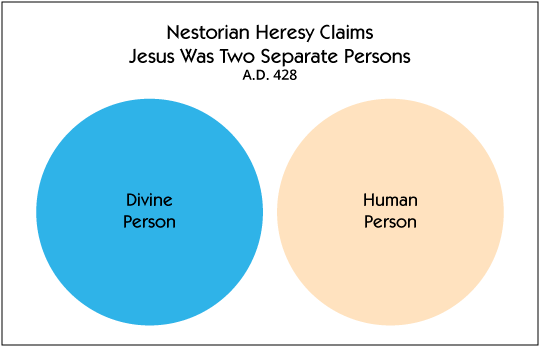
    This false doctrine is actually not new at all. It leans toward Nestorianism, an early heresy condemned by the Church, which dangerously divided Jesus’ humanity from His divinity. If the Father forsook the Son, it implies a fracture in the eternal Trinity — something that cannot happen.
    God is eternally one, indivisible in essence, nature, and being. To say there was separation is to say Jesus stopped being God for a moment. To say there’s a separation is to say there’s a difference between the human Jesus who suffered separation and the Christ who is God. All are doctrinally wrong and dangerous. Have you seen how one exaggerated explanation of one verse can cause a serious doctrinal error condemned and contrary to Scripture?

    This is one of the heresies the devil perpetuates in literally every generation because it affects two fundamental aspects of Christianity; the humanity of Jesus and the divinity of Jesus. This forms part of the essentials of biblical doctrine and if you don’t believe rightly, you are not to be even considered a believer. You ought to believe that Jesus is both fully human and fully God, that there is one God, and that there is no separation between Jesus (the human) and Christ (the Lord). We should never in any way try to separate Jesus and Christ. He is literally the same person, fully human and fully God.

    Believing in a moment of separation also dangerously portrays a God divided at the hour of salvation. Yet He said “I will never leave you nor forsake you.” (Hebrews 13:5). If this is His promise to us, how much more was it true for His only begotten Son, who He is eternally one with? The Cross was not God punishing an innocent Jesus while turning away — it was God in Christ, fully present, bearing our sins, conquering death, and reconciling us to Himself. Let us not use the Cross, the place of reconciliation of divinity with humanity as a place where divinity was separated. That’s heresy.

    The Cross : The Altar of Reconciliation

    The Cross was not a moment of abandonment — it was the climax of eternal unity. Yes, Jesus felt the crushing weight of sin.Yes, He endured the agony of death that humanity deserved. Yet, He was never separated from the Father. The Father was in Him.
    The Spirit upheld Him, and God accomplished the greatest act of love and justice ever witnessed in history. As believers, we rest confidently in this unbroken truth: “God was in Christ reconciling the world to Himself.” — 2 Corinthians 5:19

    We have been given this same ministry of reconciliation, for those who were far have been brought near by the Blood. I have been committed with the Word of Reconciliation. I implore you: be reconciled with God!

  • Line Upon Line, Precept Upon Precept


    Proverbs 23:10 CEV says “Don’t move a boundary marker…”.Just like in Proverbs 22:28, we are advised not to remove an old boundary marker set up by our ancestors. It is also given in the Law of Moses as a commandment. Let’s look for the precept.

    Precept Upon Precept


    One difference between a commandment and a precept is that a commandment tells what to do and not do while a precept tells you why. There’s an underlying precept behind every commandment God has ever given. Once you understand the precept, you will understand perfectly why God placed such a commandment there to protect us.

    This verse can easily be misunderstood to support African Traditional Religious beliefs. “We don’t throw away the traditions of our fathers”, they say. However, this precept obviously refers to the ones our ancestors set via the counsel of God; line upon line, precept upon precept.

    Every other foundation stone that wasn’t set up by God needs to be uprooted. That includes the traditions of men and obviously the structures of evil. However, the things of God are built from generation to generation. It is a huge error for a new generation to show up and condemn everything the older generations have done. They will fail miserably.

    For instance, offerings to God have been done since the days of Abel. It has undergone various practices but the principle has always remained the same; “when you come before the King, come with an offering”. A young pastor cannot now say he has cancelled offerings in his church. You don’t know what you are talking about. Yet, these things happen because the newer generation don’t know why, metaphorically speaking, an old boundary marker was set up.

    Line Upon Line

    Truth is One, but not all truths are the same. Some truths are weightier than others. Therefore, it is necessary what we emphasize. The truth is One, but within Truth, there’s an order. This order of Truth is as important as the entire Truth. For example, material prosperity is important but not as important as salvation. Therefore, if prosperity becomes the foundation upon which salvation is built, the essence of the Truth of both salvation and prosperity is lost.


    Always remember that there’s no bigger revelation than the Cross, for every new revelation emanates from there. The Truth must be laid brick by brick, precept upon precept; built on the right solid foundation. Otherwise, any higher revelation would rather destroy us and lead us astray rather than take us deeper. Sometimes the deceit is in making the minor a major. When we stick with the Spirit of Truth, He will help us to keep the main thing the main thing. Line Upon Line; there is a structure to these things.

    Doctrinal Foundations


    There is no need to invent the wheel. All the fundamentals in every field have been established, even in science. Yet, in all Christian history, the Charismatic movement has the weakest grab of doctrines. We’ll rather invent new dance moves. This is sad. The LORD will never build beyond the height our foundations can support. A doctrine like the Trinity took the church about 600 years to fully solidify. Study it. Don’t come and destroy it by trying to set up a new foundation.

    Every generation builds upon what God made available and possible to the previous. That means what is possible today wouldn’t have been possible without the fathers who came before you. Add your line to the previous lines. Keep the story going. It didn’t start with you. Are you telling us that 2000 years of Christians missed it and you are now discovering a new way? You are on the path of an antichrist if you begin to host such an idea. Don’t allow the devil to use you. There is not going to be a new Gospel. Every new revelation is based on the foundation that has already been laid. It will never be something totally new altogether.

    This is the Easter; the Death, Burial and Resurrection of Jesus. This is the foundation of it all. Make sure that such a season as this, you have a Bible Study concerning these matters. This is literally the foundation upon which everything else was built. Take this advice from an architect; the deeper the depth, the higher the height. If we keep on exploring the foundation set by Jesus with the Spirit of Truth, He will lead us into all Truth. Once you are building on a solid foundation, our house will stand firm against every foreign wind of doctrine.

    Selah!

  • Gideon: Taking Back Territories for the Kingdom of God

    Has the enemy encroached on your land? Has evil taken over a territory? Has your nation become morally bankrupt? The United States moved from having global evangelical ministries and being the centrepiece of God’s endtime movement to not being able to define what a woman is when the woke virus infested the nation. The UK and many other European countries are now suffering from this moral decadence. It’s like Psalm 12 all over again. In countries like Ghana, inasmuch as there is still sin, the people involved in sin at least acknowledge their sinfulness and hide it from the public eye as much as possible. You know a territory is terrible when their definitions of moral objectivism is blurry and absurd. How do we take back territory for the Kingdom of God?

    Gideon was the fifth of the 12 Judges of Israel. It’s amazing that we have discussed 4 people so far; David, Nehemiah, Esther, Jehoshaphat (the fourth king of Judah) and we are now on the 5th Judge of Israel; Gideon, under the Warfare Strategies of the Kingdom of God series. You can follow by reading Judges 6 alongside this post for a better understanding. Let’s delve in!

    Legal Governance of Territories

    Just like in government, every territory has a ruler/governor who rules the place legally. By “legally”, I mean the powers are vested in that entity by the people themselves. It’s the same in the realms of the spirit. Every territory is ruled legally by whom the people choose as a cooperate body. Judges 6:1 shows that the people chose evil and did not want God to rule over them. Thus, there was a change in government; a handing over. The Bible is intentional about the choice of words. It clearly emphasizes that God delivered them into the hands of the Midianites. There was a change of hands. See, there are territories legally ruled by poverty (many places in Africa). There are those legally ruled by lust, like Vegas. Others are legally ruled by greed while others are ruled by filth. Note the word “legally”. God will not force Himself on anyone. It’s the will of the people that determines their ruler.

    The enemy now had an upper hand after the handing over, and decided to only attack their substance at the time of harvest. Every altar is powered by the sacrifices offered on it. Once a nation gives themselves to evil, there will be a rise in a particular vice as an offering to service that national altar. A rise in abortion, huh? Or a rise in suicide rates? A rise in obesity and health-related problems? Or a rise in political corruption? Sometimes, it’s a waste of time to try to solve symptoms when the underlying problem hasn’t been dealt with. The nation of Israel became greatly impoverished.

    Recognizing Patterns

    I have noticed that when the enemy gets the upper hand in a territory, people are not quick to realize. Perhaps, he kills an aunt by elephantiasis and no one realises it was him. Then two years later, he kills another aunt with the same disease but people brush it off as a coincidence. By the time it happens the third time, too much damage has already been done. The Midianites did not invade Israel randomly—they showed up only during harvest time. This was no coincidence; it was a diabolically calculated move to keep Israel impoverished. Judges 6:3-6 describes how the enemy would swoop in and take everything, leaving Israel with nothing.

    Israel, can’t you see that for the past 7 years, the Midianites only show up at harvest time? Can’t you see the negative pattern? Aren’t you aware of the diabolical trend? That is the “offerings” that the enemy comes to legally take as his dues for ruling over you. The enemy is wicked o. Meanwhile, if God asked for 10%, we will be grumbling. The enemy is taking 100% of all the produce. Sometimes the “dues” are that it doesn’t matter how much money anyone makes in the family, they will be poor; all their money will keep being used to pay for some strange unplanned expenses from time to time.

    The enemy is a thief but he makes sure that he steals from you by consent. He deceives you to get your consent and steals what rightfully belongs to you. How does a territory/family/community/nation break free? They must cry out to the LORD. I have seen people blame God for the problems the enemy caused because of their own decisions. Proverbs 19:3 says “there are some people who ruin their own lives and then blame it all on God”. Stop blaming God. Cry out to Him.

    How merciful God is; He heard their cry right away. However, here is the issue. It didn’t happen in a day when we chose evil instead of God and yet, we expect God to do magic in a day. God is all-Powerful and will deliver you the same day you call on Him. For sure! However, you have been masturbating or drinking or smoking half of your life; you have to go through an entire mental deliverance session. Your spirit is free but your mind needs to unlearn your old ways and that must take time. This is why the first thing He did was send forth His Word through prophet. Selah!

    The Gideon Strategy: A Sustainable Victory

    All this is part of the Gideon strategy. We want a quick fix but God wants a sustainable victory. God is about to take the least of this greatly impoverished nation and make him into a warrior who will rule the land for the Kingdom of God as long as he is alive. He will take the foolish things to always confound the wisdom of darkness. Surely, you are not more zealous than God to see your territory sane again. Trust His recovery plan. Your territory has to be transformed by the renewing of the mind because it conformed to the system of the world for long.

    Even Gideon himself was filled with bitterness and mediocrity when God encountered him. He was so greatly affected by the great impoverishment of the nation. How many people in corrupt countries think their countries will always be corrupt? Even the good people start to believe the lies. He called Gideon a mighty warrior, even though he saw himself as weak. God does not define us by our past or present circumstances—He defines us by His purpose for us.

    When you cried out to the LORD, He heard you immediately and work began behind the scenes. He sent a prophet with a message of God’s verdict and the hope of restoration. God told them that He has delivered them from the hands of Egypt before. Believe 100% in His track record and watch Him restore the territory to its former glory. God also made it clear that they brought this upon themselves because they didn’t obey His voice.

    God is justified in whatever decision He chooses to make but He decides to show them mercy by raising a Judge, and that is where He encountered Gideon in a winepress threshing wheat. Where you have a personal encounter with the LORD gives a clue about what He is about to do; He is about to thresh His people and consecrate their gain to Himself again. Also, never forget God’s choice of words in your encounter with Him.

    What we have discussed so far in 12 verses;
    1. Recognize the enemy’s legal hold over your territory. Evil gains power through the people’s choices.

    2. Understand the enemy’s strategy. Here, he attacked during harvest time to greatly impoverish the nation.

    3. Break the cycle by crying out to God. Stop blaming Him and start repenting.

    4. Trust in God’s track record. He has done it before and He will do it again.

    5. Embrace the Gideon Strategy. God’s plan is not a quick fix but a lasting transformation.

    If your family, community, or nation is under demonic oppression, God is looking for a Gideon. He is searching for someone He will raise up to tear down demonic altars and establish the Kingdom of God in that territory. Will you answer the call and let His Kingdom come on the territory as it is in Heaven?

    ….to be continued


  • The Jehoshaphat Strategy: Warfare Strategies of the Kingdom of God

    One of the things that brings utmost confusion to the camp of the enemy is when they surround you with problems and yet you praise God. Our worship is a weapon. Our praise affirms victory. It is a pattern throughout Scriptures; Joshua, Gideon, Jehoshaphat. Who would have thought that a trumpet 🎺 is an instrument of warfare? Yet, 7 trumpets are blown in the book of Revelations to release the wrath of God. Let us particularly discuss this as a Jehoshaphat strategy so that we learn to stand still and see the salvation of the LORD.

    The Jehoshaphat Strategy

    King Jehoshaphat was the fourth king of Judah when King Ahab and Jezebel ruled Israel. He lived at the time of Prophet Elisha as well. One day he woke up to hear that the Ammonites, Moabites and those at Mount Seir had joined forces and were about to launch a huge attack on Judah. To picture how devastating this is, their enemy was more than all the people in Judah, including women and children. They can wipe out this lineage of the Messiah, just as the devil tried through Haman during the time of Esther. It will shock you to know how many times the devil tried to prevent Jesus from being born.

    We are always at war but there are particular heightened seasons of spiritual warfare. During those seasons, the enemy will mobilize substantial attacks against you. What do you do?  That’s the time people complain to God for failing to protect them enough. That’s not what Jehoshaphat did.  He sought the LORD. He fasted and asked all those involved (the people of Judah) to fast and seek the face of God. He gathered the people of Judah to seek help from God. No threats to God. No murmuring. No complains. No accusations towards God. It is senseless to blame the One you seek help from. The prayer of Jehosaphat was to remind God of His promise and purpose.

    God is only obliged to answer prayers aligned to His promises, plans and purposes. One of such promises is that He doesn’t forsake those who seek Him (Psalm 9:10) and that we will seek Him and find Him if we seek Him with all our heart (Jer 29:13). Jehosaphat’s petition was to remind God that the present circumstances do not match His promised outcome. Therefore, God responded. The Spirit of God came upon Jahaziel and he prophesied. The Word of God came to remind His people that the battle is not against you; it is against Me. My friend, allow God to fight your battles. You are the apple of God’s eye. When the enemy touches you, He has touched God’s pupil.

    God gave them a sign by revealing what the enemy had planned. Then God told them something very absurd to the human brain; “you don’t need to fight in this battle. Position yourself, stand still and see the salvation of the LORD, who is with you…”. We are more than conquerors because we are fighting in a war that God has won for us. Do you believe God’s Word? Put yourself in their shoes and see. If you believed in God’s Word, you wouldn’t have been so anxious about your problems. All you need is one Word from the LORD; you will understand that He is with you. The battle is yours to fight and His to win, and He already won. Fight from victory.

    It is so easy to trust God after He has done it. What He wants you to do is to trust Him even before you see any sign of victory. Jehosaphat and the people of Judah rose up early the following day and Jehoshaphat encouraged the people in some of the most famous words from Scripture;

    II Chronicles 20:20
    “…Jehoshaphat stood and said, “Hear me, O Judah and you inhabitants of Jerusalem: Believe in the Lord your God, and you shall be established; believe His prophets, and you shall prosper.”

    Now this is where the Jehoshaphat Strategy comes in. After consulting with the people, the strategy was to sing to the LORD en route to the battlefield. Mind you, it wasn’t a direct command from God like in the case of Joshua; it was an act of faith based on the Word of God.

    Things are not going as planned? Praise God. It looks like your prayers are not being answered? Praise God! It seems the prophecy is delaying? Praise God! You don’t know what to do anymore? Praise God! God has promised you victory? Praise God en route to your victory. The Bible tells us to give thanks to God in all things because it is the Will of God. The circumstances may not be God’s Will but your response should always be. One thing the kingdom of darkness is incapable of is praising God. Praise is the antidote for pride. Stop complaining. Stop murmuring. Stop threatening God. Stop threatening Him to prove Himself otherwise you will stop believing in Him. Who are you? He was God before you existed and will be God regardless of your outcome. Stop talking to God like He is the problem.

    When the spirit of anxiety, fear, dismay and disdain attack you long before the real battle begins, lift up your praise. Praise actually confuses the enemy. Remember that the devil started complaining in Heaven where there is only Glory but you are praising God where there is gloom. It doesn’t make sense but do it anyway. Show up on the battlefield with your weapon of praise. Let your Judah go first. The enemy will be so confused by your response, and that is when you will see the salvation of the LORD. He will fight your battles for you. Praise God as if He has already done it before He actually does it. That shows that you actually believe in God. We live in time and He is eternal, all-knowing and all-powerful. If He says He has taken care of it, believe Him. Praise God! This is how you enter rest on all sides.

  • The Esther Strategy: Warfare Strategies of the Kingdom of God

    In spiritual warfare, the battle is often deeper than the enemy we see—it is embedded in systems, decrees, and structures that outlive individuals. The Esther Strategy is not just about overcoming visible enemies; it is about dismantling the very systems that empower them and ensuring that righteousness is firmly established in places of influence.

    It is easy to make the mistake of focusing on personalities rather than the systems that make those personalities powerful. Haman was an individual, but his decree remained in force even after his death. King Xerxes was not the enemy—he was the gatekeeper, the one with the legal authority to make binding decisions. Understanding the role of gatekeepers is crucial. Let’s delve in!

    Influence Is a Responsibility, Not a Luxury

    When trouble arises in a territory where you have influence, you cannot afford to sit back and assume it will not affect you. If a problem keeps burdening you, it is a sign that you are part of its solution. You have more responsibility than you think. Mordecai’s warning to Esther was clear:

    “Do not think that because you are in the king’s house you alone of all the Jews will escape. For if you remain silent at this time, relief and deliverance for the Jews will arise from another place, but you and your father’s family will perish.” (Esther 4:13-14)

    We should not assume that because the battle is not directed at us personally, we have no role to play. But when God gives you access to power, it is not for self-preservation—it is for kingdom advancement. Esther understood this and acted. At first, she may have been embarrassed by Mordecai but when she understood that she was in that position for such a time, she rose in the power of God’s might. She did not pray against the king. She did not see King Xerxes as the enemy. She understood that the real enemy was Haman, and more importantly, it is the decree that gave him power.

    God has placed you in a strategic position to take action to solve a problem, so are you complaining that someone else should do something about it? Stop giving excuses. Stand in the gap and intercede. Mordecai saw that what Esther said as an excuse although she could literally die by the action she was about to take. “Go to the king, Esther. You were born for such a time as this”. Another thing to note; don’t just go in your intellect. Seek the face of God in fervent prayers before showing up at the round table of decisions. Selah!

    Gatekeepers Are Not the Enemy

    One of the mistakes we can make is praying against kings, rulers, and people in authority without understanding their role as gatekeepers. Unless otherwise instructed by God, don’t pray against leaders. No! Don’t pray against the one who is meant to promote you and show you favour.

    • Nehemiah did not pray against the king—he sought the king’s favour.
    • Joseph did not pray against Pharaoh—he became indispensable to him.
    • Daniel did not pray against Nebuchadnezzar—he influenced him to acknowledge the Most High God.

    It was the same in Esther’s case. King Xerxes was neither a godly man nor an enemy. He was simply a legal authority recognized by both the Kingdom of God and the kingdom of darkness. Whoever influenced him could determine the fate of God’s people. This is why believers in positions of influence must be wise. If God has given you access to the ear of a leader, it is not for your personal gain. You are positioned to exert godly influence on the decision-making process of that leader.

    Haman May Be Dead, but His Decree Still Lives

    We rejoice when an evil ruler falls but we fail to realize that systems outlive people. The assassination of Osama Bin Laden did not automatically end terrorism. Killing witches in your family does not automatically break generational curses. Evil is systemic, and systems operate through laws, decrees, and structures that persist beyond individuals. The evil the enemy is perpetuating is mostly on a legal basis.

    Haman was executed, but his decree to exterminate the Jews remained in force. Esther had to return to the king, not just to celebrate Haman’s downfall, but to reverse his decree by passing a new one. This is where many fail. We fight battles halfway. We pray against the overthrow of enemies but do not establish righteous systems in their place. If you only remove an evil leader but do not raise righteous ones to replace them, you have done nothing. It is like casting out a demon from someone who is demon-possessed and not filling the person with the Holy Spirit. The situation will get worse soon.

    This is the danger in spiritual warfare. Don’t just fight what Haman created; fight what created Haman. The LGBTQ agenda, for example, is currently being stripped away in some places but if believers do not relentlessly ensure that righteousness is firmly established, the enemy will come back with greater force when the next administration takes power. This is called the retaliation of the enemy, which is often seven times more severe.

    The Esther Strategy demands that we dismantle evil, reverse its decrees, and establish righteousness so that evil cannot rise again immediately or permanently.

    Promote Mordecai

    Victory is not complete until:

    1. Haman is removed – The immediate threat is neutralized.
    2. Haman’s decree is revoked – The legal basis for oppression is overturned.
    3. Mordecai is promoted – Righteousness is established to secure the future.

    This is how spiritual and political victories are sustained. It is not enough to fight battles; we must build structures that prevent the enemy’s swift return. In modern governance, we see the same principle. When an ungodly leader is removed from power, the work is not finished. We must ensure that righteous policies, laws, and people take their place—otherwise, we are only delaying a greater crisis.

    Believers who have access to influence must be bold in their demands. Esther was hesitant at first but when she realized the urgency, she used her full authority. She did not ask for small favours. She demanded the complete dismantling of Haman’s plans and the establishment of new laws that favoured her people. This is what we must do today. The battle is not just about personal survival but about ensuring that righteousness is deeply rooted in the system.


    The Call to Strategic Warfare

    The Esther Strategy is a call to wisdom, boldness, and completeness in warfare. It is not about emotional reactions but strategic action.

    ✔ If you are in a position of any form of influence, do not be passive. Use your influence to reverse evil and establish righteousness.
    ✔ If an evil system exists, do not stop at bringing down individuals. Overturn the decrees that empower them.
    ✔ If victory is won, do not celebrate too early. Raise godly successors who will ensure lasting change.

    This is what Esther did, and this is what every believer must learn. Warfare is not just about winning battles—it is about establishing dominion. Dominion comes when we do not just eliminate evil, but ensure that righteousness takes its place. This is what it means to truly subdue the enemy.

  • The Nehemiah Strategy: Warfare Strategies of the Kingdom of God

    In the days of Nehemiah, when the walls of Jerusalem lay in ruins, the task was clear: to rebuild what had been lost. Nehemiah understood something that many in our time may have forgotten; You cannot build without waging warfare. This strategy we are about to learn helps to rebuild where we once lost and build in such a way that we don’t lose again.

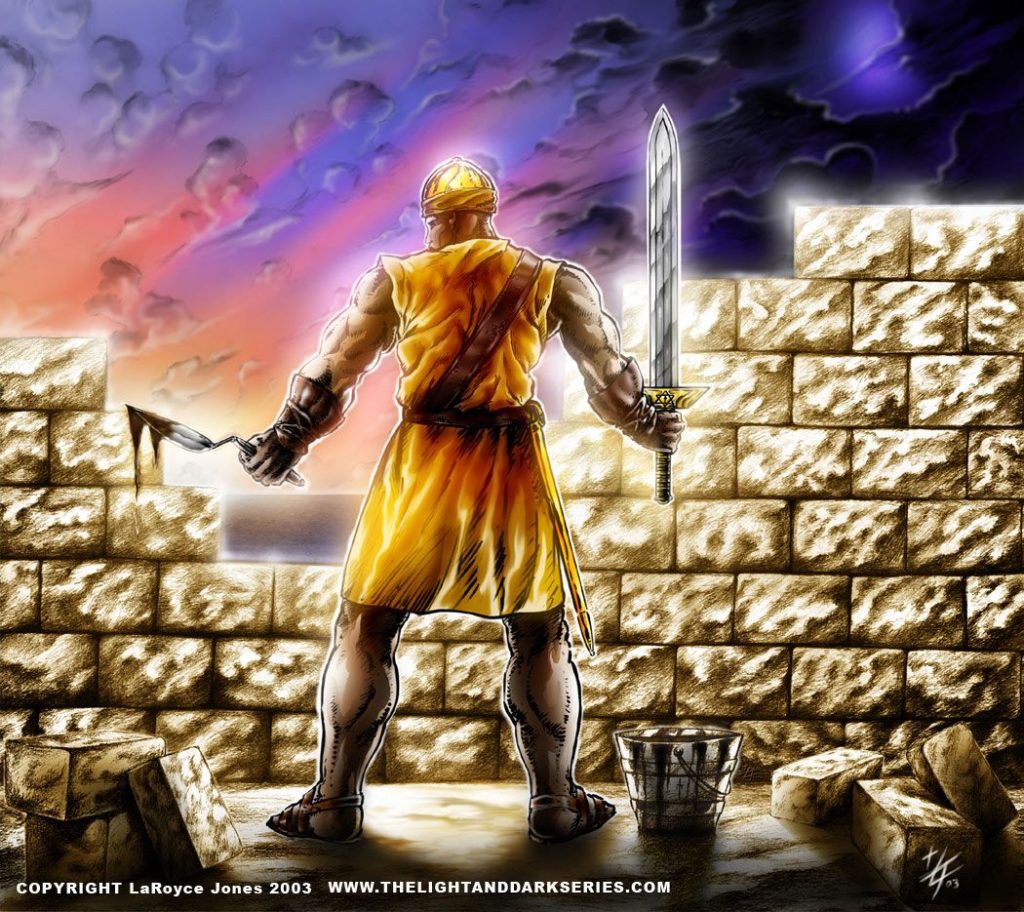
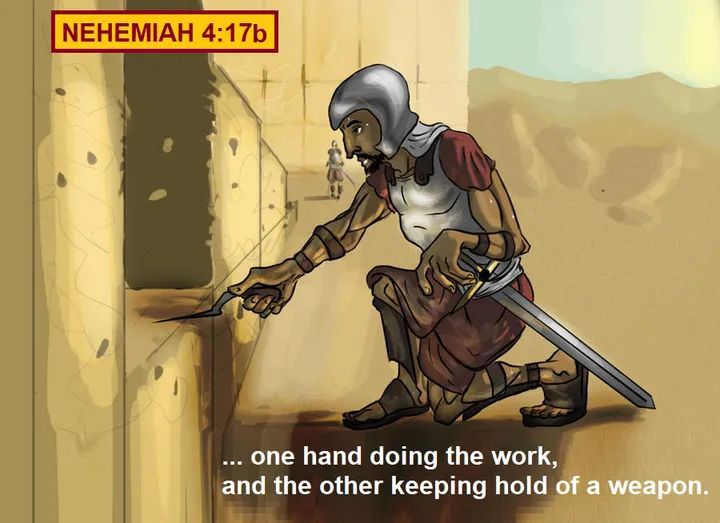
    “Those who built on the wall, and those who carried burdens, loaded themselves so that with one hand they worked at construction, and with the other held a weapon.” (Nehemiah 4:17). 

    Nehemiah Strategy

    The Nehemiah Strategy—where one hand builds, and the other fights. Where character is formed, and power is wielded. Where the walls of righteousness rise, while the weapons of warfare are drawn. The days of imbalance must come to an end. 


    Many have fallen into error by embracing one truth while rejecting another. Why do we have men with such good character and no power? The devil has deceived us into thinking it is either we build or we fight. They have sought to build, but they have refused to war. They have laid the foundation of doctrine, but left the enemy to roam freely. They do good but don’t fight evil. They have pursued knowledge, but abandoned the power that enforces it.  They have a form of godliness, but lack the power thereof. This is still a state of sleep. While men watch on without acting, the enemy walks unchallenged in territories that should belong to the saints. Yet, there is another error, just as destructive. 

    Some have gone into battle with swords drawn, but have built nothing to defend. They have fought, but have not been established. They have casted out devils, but have not formed character.  They prophesy in God’s name but God does not know them. They have performed miracles, but have not built the walls of righteousness. They are workers of lawlessness, and on that day, Jesus will tell them to depart from Him. A man may fight the enemy for years, but if he never builds, he is being distracted. This is why Nehemiah built and defended. This is why the builders carried weapons.

    There are two things every believer must carry: 

    1. Tool – Character of doing Good 

    “God anointed Jesus of Nazareth with the Holy Spirit and with power, who went about doing good and healing all who were oppressed by the devil, for God was with Him.” (Acts 10:38). 

    To build is to do good; character, integrity, faithfulness, holiness, love; maturing in the fruits of the Spirit and conforming to the image of Christ. Without this, power is dangerous. A man with a sword but no wisdom will destroy everything in his path. 

    2. The Weapon – The Power to War 

    “For this purpose the Son of God was manifested, that He might destroy the works of the devil.” (1 John 3:8). 


    It is not enough to be good. You must be powerful. If you build but do not fight, the enemy will take everything you construct. If you create but do not defend, your work will be plundered before it is finished. A man with wisdom but no manifest power? Don’t allow the devil to bully you. Even if he never penetrates your walls because you are consistently faithful to God, you are not actively taking new territories for the Kingdom of God. Healings, miracles, signs and wonders MUST follow you. Stop saying it is not necessary. You were made for signs and wonders. What is the essence of lighting up a lamp and putting it under a basket to accommodate the darkness around it?

     
    The Nehemiah Strategy does not merely defend—it takes back what has been stolen. Building character is how you secure what God has given you. It prevents the enemy from finding access. It ensures that new territories, once taken, remain in the hands of the righteous.  Carrying power is how you reclaim what the enemy has taken. It drives out darkness. It establishes dominion where wickedness once ruled. If you do not fight, the enemy will still hold what had rightfully belonged to you. This is the balance we must walk in; a tool in one hand and a sword in the other.

    The Lion & the Lamb

    .Jesus did not come only as a builder, nor only as a warrior. He came as both. He lays down His life for us and defends the life He gave us so He does not lose His own, lest His ultimate sacrifice on the Cross becomes vain.  As the Lamb, He built—He taught, He healed, He loved. As the Lion, He warred—He cast out devils, He overturned tables, He conquered death. To carry one without the other is to misrepresent Him. There are those who emphasize only one side, and they are only defending on the battlefield as the enemy only attacks. There are also those on the other side; Those who emphasize only power, and they have fought without establishing anything; fighting for new territories while they keep losing the old to lack of character building. God is raising men who will carry both. 

    Final Charge

    For too long, many has been divided between those who build and those who fight but the time of imbalance has come to an end. The days of division are over. We must take up both the tool and the weapon. This generation cannot afford to choose one and reject the other. We will build and we will also fight.  We will walk in character and we will also walk in power.  We will establish righteousness and we will also overthrow darkness. If you desire to walk in the fullness of the Kingdom, hear this: Do not build without a weapon and do not fight without a foundation.  Take up the tool in one hand and the sword in the other and let the Kingdom of God be established in its fullness. 

  • Warfare Strategies of the Kingdom of God

    Last year, I wrote extensively on a few of the many strategies the kingdom of darkness. By the Grace of God, we now get to go into the strategies of the Kingdom of God. I realized that the people of darkness are more aware about the strategies to perpetuate their kingdom agenda. However, the people of light have the power to shine in the darkness to bring incomprehension to their kingdom. I pray that in this light, you receive Light.

    David Strategy

    David had a natural God-given gift for music and poetry right from childhood. As a teenager, he used to play the harp in the fields as angels danced. His anointing in this area was so strong that it was the first to open a door for him to the palace. This young man could play the harp to shine light into the darkness on King Saul. You would think God wanted him to operate in this area only for the rest of His life but no.

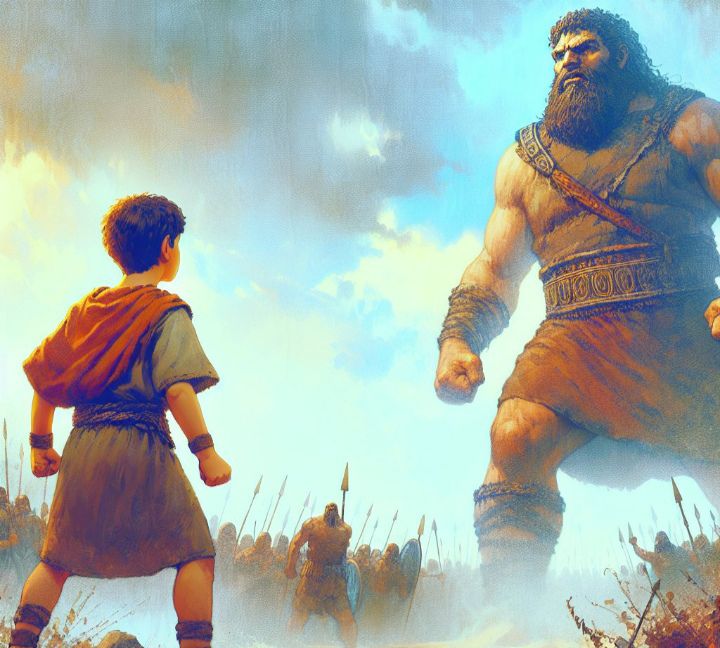
    If any of us saw how David looked, we would be shocked to know that he never lost a battle. His stature was naturally not compatible with battle. Yet we get to see that God taught his hands to war. If we are going to take territories for the kingdom of God, we need to know and apply what I call the David strategy. Let us see how he defeated Goliath and caused his lineage to destroy the rest of the giants.

    GOLIATH: the Devil’s Fortified Weapon

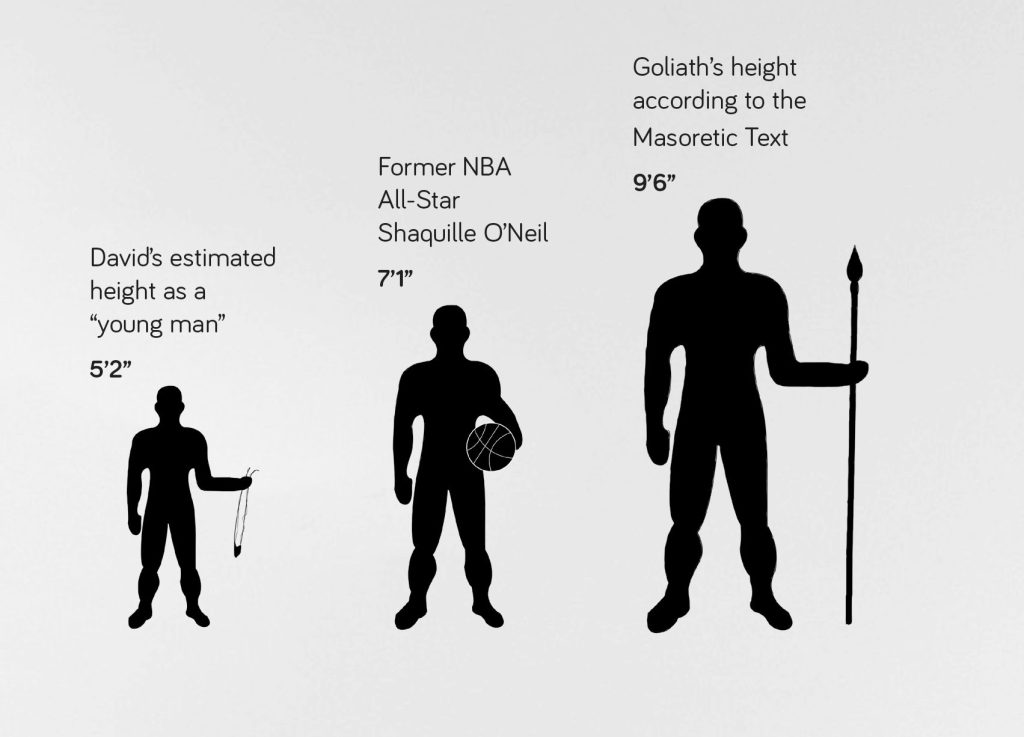
    David’s best height at the peak of his life was 5’2. As a teenager, Goliath would be twice as tall as David and 20 times well-trained at war

    Many of us don’t realise that the enemy prepares for battle beforehand. He waited, observed, and preplanned how to get Adam and Eve to fall. His questions and timing for Jesus’ temptation were very intentional and well thought through. Goliath was the enemy’s strategy that he had planned for decades. Goliath was one of the devil’s most prepared weapons ever. As he was training Goliath with the sword, he made sure there was a lack of blacksmiths (and therefore a lack of swords) in Israel. By the time of the battle, only Saul and Jonathan had a sword in the entire army. Very strategic!

    What is the church lacking in this season? Resources? Character? It may be a sinkhole orchestrated by the enemy for a more drastic warfare in the future. Israel’s loss of this battle would kick start their perpetual enslavement on their own land. God was looking for a man but found none in the military. King Saul, who for this very reason had become king, could not muster courage as he still thought little of himself. After 40 days of spiritual warfare of threats from the frontline demons of anxiety and fear, just as it seemed there was no hope, David showed up.

    Mind you, the enemy had soaked the people of God with threats, breeding fear in their hearts. It would take a miracle to save them. Meanwhile, God made sure David didn’t show up until the time was right. 2 years ago, he had been anointed king (something he won’t become until 15 years later). It was for this very purpose of warfare. This anointing was responsible for his courage to face the lion and the bear. Goliath trained for 20+ years. God only needed 2 years. How did David go from being a musician to a warrior? He shows us how God trained him in Psalm 18. Let’s dive in;

    1 Courage

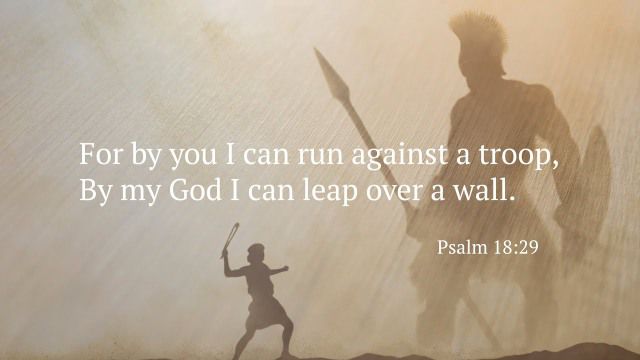
    “For by You, I can run against a troop..”. A troop is, at least, a 100 soldiers. Goliath needed to have fought with a troop but the enemy had an upper hand and dictated the rules of engagement; a one-on-one showdown. First of all, don’t play the devil’s game. You will lose. Don’t play by his rules. When the enemy employed his best wisdom, God deployed His foolishness to confound him. Instead of God using a giant, he used a teenager at puberty. David did not use the weapons of Saul. The weapons of the enemy are carnal (they appeal to the flesh and are based in the soul). “The weapons of our warfare are not carnal but mighty through God…”. See, it takes courage to obey the foolishness of God. Running against a troop is suicide. A whole nation sending a teenager to represent them against a giant is complete nonsense. Yet, David had courage. He told Goliath that he will cut off his head and yet, he had no sword. “Be strong and courageous…”

    2 Agility

    “…by my God I can leap over a wall.”. The average height of an ancient wall is 4 metres. It does not have our slender 150mm thickness. Most walls had people living in them, and soldiers could stand on the war during battle to shoot arrows. The walls were cuboids. Yet, David could leap high and wide over such a wall. He further explains in Psalm 18:33 that the LORD makes his feet like the feet of the deer. Asahel had this kind of feet (2 Samuel 2:18). The deer can run, turn sharply and jump. Do you know David run towards Goliath? Instead of always reacting to the kingdom of darkness, we ought to be proactive. Jesus went into the wilderness and had fasted before the devil showed up. Meanwhile, Adam was not around when the devil showed up. When the enemy builds a wall to isolate you, may you leap over the wall.

    3 Strength

    “It is God who arms me with strength…”. David slung the stone and struck Goliath so hard that the stone sank into his forehead. David’s arm strength was so much that Goliath fell on his face. The strength of the enemy is in his deceit. He is an already foe, and that’s exactly how David saw this uncircumcised Philistine. Our strength is in the name of the LORD, and that is what David came at Goliath with. Never fight the enemy with your own strength. “By human strength shall no man prevail”. God’s way is perfect as Psalm 18:30 says. Yet, verse 32 says God makes MY way perfect. That only happens when I personalise God’s way. His way of gaining strength is very different because in the realms of the Spirit, David had far more strength than Goliath had. The fight ended in less than a minute.

    Perhaps, you keep losing because you fight in your strength.  Are you trying to fight lust with your own strength? Are you trying to fight the perpetuation of evil with your own strength? Are you trying to fight the flesh, the world and the devil with your own strength? That’s not God’s perfect way. Come and wait upon the Lord as He arms you with renewed strength. ….to be continued


  • Understanding Structures and Systems of the Kingdom of God

    I just realised I have been writing on Kingdom, strategies and systems for about 6 months now. I have used the word “system” in the past 7 posts and yet, I never gave an introductory post on what systems really are, and its fundamental importance to our living. Let us learn how God builds systems for everything He does and why setting up structures and building systems is the most sustainable.

    From the very beginning, the Bible reveals that God is a God of order (1 Corinthians 14:33). Creation itself is a testament to divine structure and systems where everything has its place, purpose, and function. Creation declare His glory, not just in beauty but in the perfect alignment of systems that govern—seasons, times, ecosystems, and even human relationships. To fully grasp how God’s design operates in both the spiritual and physical realms, we must understand structures and systems through the lens of Scripture.

    What is a Structure? (The Framework of God’s Design)

    A structure is more than just a physical framework; it’s the divine arrangement that provides stability, support and purpose. In Scripture, structures are often represented through temples, altars, families, and even covenants. They represent the foundational design upon which God builds His purposes. Therefore, if God gives you a purpose, set up structures to tend it continually until it is fully accomplished.

    Biblical Characteristics of a Structure:

    Stability: Just like the rock on which the wise man builds his house (Matthew 7:24-25), a godly structure withstands storms because it’s rooted in divine principles.

    Organization: God instructed Noah to build the ark with specific dimensions (Genesis 6:14-16) and gave Moses detailed blueprints for the Tabernacle (Exodus 25). Divine structures aren’t random—they are intentional. Look at the family structure. Look at your body structure.


    Support: Structures hold things together. The family, for instance, is a God-ordained structure designed to nurture, protect, and reflect His nature (Genesis 2:24). Every humanbeing is born into a family.


    Example: In the Tabernacle of Moses, there was a specific lineage of priests that set up specific details (including curtains) in the Tabernacle and were anointed to dismantle the Tabernacle as they travelled in the wilderness. In this way, the structure is kept in place for the system to work. God asked the people of Israel to be numbered and structured into tribes, clans and families. The heads of the family were the ones responsible for even picking up the manna for their families every morning. Structures make systems work because systems make structures necessary. The most magnificent structure is lifeless without the system that brings it to life.

    What is a System? (The Breath of God in Motion)

    A system in the biblical context is the living, dynamic process through which God’s purposes are carried out. While structures provide stability, systems represent function, consistency and growth. Think of the body of Christ—we are many parts, but we function as one body (1 Corinthians 12:12-27).

    Biblical Characteristics of a System:

    1. Components: Just as the human body has many parts, each believer has an individual role in the body of Christ (Romans 12:4-5).


    2. Interconnections: “If one part suffers, every part suffers with it” (1 Corinthians 12:26). Systems in Scripture are defined by how components work together, not in isolation. It ceases to be a system if individual components are not coming together to work as a unit to achieve one purpose.


    3. Purpose: Every system has an assignment. You may have a stomach and an oesophagus that play distinct roles but all the parts come together as the digestive system to achieve a particular purpose.


    4. Inputs and Outputs: If you sow into the Spirit, that is what you will reap. Just like how the factory system works. That’s how even our brains work. We get to determine outputs by the kind of inputs we make. It has not been hidden from us.


    5. Feedback Mechanisms: A priest with an active altar will get feedback from the Supervising Spirit of his altar. Every system gives feedback. When you are hungry, your body sends you feedback. Doesn’t it? Once you feed the system, you will get feedback sooner or later.


    6. Boundaries: Every system has divine boundaries. Adam and Eve were given dominion but within the boundary of obedience to God (Genesis 2:16-17). Boundaries are not limitations. Once there is an organisation and purpose, there are definitely boundaries.


    7. Structure: The old covenant made way for the new through Christ, not by abolishing the system but fulfilling it (Matthew 5:17). The law gave a structure to all the requirements of God’s justice system, and Jesus fulfilled them all. Systems give structure to new systems built upon it. This is why God sets up replica systems (man and woman marrying) to give structure to the main system He set up (Christ and the Church marrying).


    Example: The early church is the perfect example of God’s Kingdom come. Acts 2:42-47 shows how they functioned—devoted to teaching, fellowship, breaking bread, and prayer. The system wasn’t about rituals but about relationships, purpose, and growth.

    The Relationship Between Structures and Systems in the Bible


    You cannot separate structure from systems in God’s design. They are like the ark of the covenant and the Shekinah Glory of God dwelling within. The Law of Moses (structure) provided guidelines, but it was the system of faith that justified Abraham even before the law (Romans 4:3). Without structure, systems have no foundation. Without systems, structures are empty shells.


    Final Thoughts: Why This Matters

    In the Kingdom of God:
    ✔ Structure = Divine Order (families, churches, covenants)
    ✔ System = Kingdom Functionality (faith, grace, justice)
    ✔ Together = Purpose Fulfilled

    We are called to build our lives, ministries, and communities with the wisdom of both. Jesus didn’t just come to establish a new structure; He brought a new system—the Kingdom of God, where righteousness, peace, and joy in the Holy Spirit reign supreme (Romans 14:17). So, whether you’re an architect designing a building, a leader building a ministry, or a believer shaping your life, remember: Without structure, systems collapse. Without systems, structures are lifeless. But when you have both, you carry the blueprint of Heaven.

  • The Financial Distribution System of the Kingdom of God

    As Elon Musk said recently, money is just an abstract representation of what an economy really is. An economy is actually about goods and services. Buying and selling ensures distribution. Without distribution, every economy will collapse. As a result, different economic systems have been designed across history to regulate financial distribution, seeking to establish equity, prosperity, and order. Yet, despite their varying philosophies, they all fail to create a truly sustainable and just society.

    The Failure of Man-Made Economic Systems

    1. Anarchism – The Illusion of Self-Regulation

    Anarchism proposes a world without structured governance, where individuals or small communities regulate themselves without external control. In theory, this promotes freedom, equality, and decentralized wealth distribution. In reality, it collapses into chaos, as the strongest and most aggressive take control, leading to the exploitation of the weak. Without structure, wealth becomes concentrated in the hands of those willing to dominate, and society spirals into lawlessness.

    2. Marxism – The Dream of a Classless Society

    Karl Marx envisioned a world where the means of production are owned collectively, eliminating class struggle. In practice, however, Marxist economies often end in tyranny. The state, instead of dissolving as Marx predicted, becomes a controlling force that suppresses individual enterprise, leading to stagnation. Equality of outcomes, which was the goal of DEI, shifts governance from the hands of the capable into the hands of incapable for the sake of equity. Results: resources are poorly managed, incentives to innovate are stripped away, and instead of achieving equality, Marxism produces widespread poverty.

    Socialism promotes wealth redistribution through state intervention, ensuring that resources are shared among the population. While it seeks fairness, it often results in heavy taxation, bureaucratic inefficiencies, and an overdependence on the government. Over time, productivity declines as individuals lose motivation to work harder when their wealth is forcibly redistributed. Ultimately, socialism demands an idealistic government that rarely exists in reality.

    4. Communism – Forced Equality, Inevitable Oppression

    Communism takes socialism to an extreme, removing private property and dictating complete state control over all financial and economic activities. The problem is simple: power corrupts. The ruling elite—those in charge of redistribution—accumulate privilege, while the masses endure uniform poverty. The dream of fairness quickly turns into an oppressive nightmare, where citizens have neither freedom nor prosperity. Because of modern-day China, many have started to admire communism. Nonetheless, history has too many examples of its dehumanising failure.

    5. Fascism – The Domination of the Few

    Fascism centralizes financial power in the hands of a nationalist state, promoting strict control over industry and commerce. Though it encourages economic strength, it does so by crushing individual freedoms. Fascism leads to exploitation, as the ruling party prioritizes its agenda over economic justice. Instead of wealth being distributed fairly, it is concentrated among a select few, and opposition is violently suppressed.

    6. Capitalism – The Illusion of Unlimited Growth


    Capitalism thrives on competition, rewarding those who are innovative, hardworking, and risk-taking. It has lifted many out of poverty and has driven technological advancements. However, unchecked capitalism breeds greed, inequality, and corruption. The rich accumulate more wealth while the poor struggle, creating a cycle of financial disparity. Capitalism benefits those who already have resources, often leaving the underprivileged with little opportunity to rise. This is the best economic system man has ever come up with. However, all it ensures is the rich getting richer and the poor getting poorer.

    Each of these systems, despite their promises, ultimately fails to bring justice, fairness, and sustainability. They are all built on human wisdom, ambition, pride and selfishness. God’s Kingdom operates differently. It looks like an upside down Kingdom but truly, it’s the rightside-up Kingdom.

    The Kingdom of God’s Financial Distribution System

    The Kingdom of God does not function like the economies of men. It is based on divine principles led by the Holy Spirit, ensuring that wealth is used to sustain, empower, and build rather than to oppress or hoard.

    The Church in Acts – Holy Spirit-Led Economics

    The early church operated on a divine financial system that transcended capitalism, socialism, and communism. Their model was not based on coercion but on the leading of the Holy Spirit.

    Acts 2:45 – “They sold their property and possessions and distributed the proceeds to anyone who had need.”

    Acts 4:34 – “There was not a needy person among them, for those who owned lands or houses sold them, brought the proceeds of what was sold, and laid them at the apostles’ feet.”

    Acts 6:1 – “In those days, as the disciples were increasing in number, there arose a complaint by the Hellenistic Jews that their widows were being overlooked in the daily distribution.”


    This system did not rely on taxation, forced equality, or state control. It was a voluntary, Spirit-led movement where those with abundance willingly gave, ensuring that no one in the community was left behind, even the widows and orphans. The key difference between the Kingdom’s economy and human economies is motive. In man-made systems, financial distribution is driven by self-interest, power, or political control.

    In God’s system, financial distribution is driven by love and stewardship. The day the church will be rich is not the day we will all park V8s in the parking lots. It’s the day we will quickly respond to a need the Holy Spirit prompts us without doubt, second thought, pride or showoff. Once the advancement of God’s Kingdom has more than enough like in the days of Moses or Josiah, that is the Spirit’s vision of a prosperous church.

    The church’s responsibility is to yield to the Spirit to ascertain what everyone needs, not through force but through willing generosity and divine wisdom. Sometimes, you may have a need but the Holy Spirit will lead you to give willingly to another person. If, indeed, we all yielded to the work of the Holy Spirit to financially distribute, none of us will lack. We will all have what we need (note that it is not what you want but what you need). If our first desire is to fill a need prompted by the Spirit rather than identify all our unsatisfied wants, there will be an abundance of gratitude.

    The Natural Food Chain – God’s Design for Financial Balance

    God’s economic system is mirrored in nature. The way God designed the food chain reflects how resources should be distributed. Predators (lions, wolves, tigers) have forward-facing eyes, symbolizing focus and strategy. Prey (deer, rabbits, gazelles) have eyes on the sides of their heads, allowing them to remain watchful and aware. This balance ensures that one species does not overpower the other completely.

    Reproduction in nature maintains an equilibrium.
    Prey reproduce at a much higher rate than predators. If prey species (e.g., rabbits, antelope) reproduced at the same rate as lions or wolves, their populations would be wiped out. If predators multiplied at the rate of prey, they would consume all their food sources and starve. In fact, in this dynamic equilibrium, once there is too much prey, the predators will multiply to curb their population.


    If He feeds the birds that eat the worms and feeds the worms that are eaten by birds, rest assured; He is the only Wise God. This system, designed by God, keeps nature in harmony. Similarly, financial distribution in the Kingdom is designed to prevent the extinction of the weak and the unchecked dominance of the strong.

    Humans Are Meant to Follow This Pattern

    The principles of provision and balance are not just found in nature but are commanded by God.

    Leviticus 22:28 – “Do not slaughter a cow or a sheep and its young on the same day.”


    Why would God give such a law? Because it ensures sustainability. If you kill both the parent and the offspring, you eliminate the future supply. This is a divine economic principle: never consume everything; always leave room for replenishment. Many people, businesses, and even churches fail financially because they consume without replenishing. They kill both the “parent” (present resources) and the “offspring” (future investments), leaving nothing for the next generation.


    Man’s financial systems—whether capitalism, socialism, communism, or fascism—all fail because they are built on human ambition, greed, and control. The Kingdom’s financial system is based on love, generosity, and divine wisdom.

    God’s distribution system is:

    ✔ Spirit-led – Directed by the Holy Spirit, not by human control.
    ✔ Sustainable – Ensures provision for both present and future generations.
    ✔ Balanced – Keeps wealth circulating so no one is left in need.
    ✔ Voluntary – Rooted in love, not in forced redistribution.

    When the Church operates under this divine financial system, there is no lack. Needs are met, wealth is used for Kingdom purposes as society flourishes. The question is: Are we willing to shift from man’s broken systems and embrace God’s perfect economy?

  • Financial Systems of the Kingdom of God | Tests & Tenets

    Last week, I promised to talk about the tests when we were discussing some of the principles and protocols of the financial system of the Kingdom of God. Let’s delve in!

    The Test of Management

    All things are available to you and all things can be given to you. You have access to an abounding all-sufficiency in all things. However, YOU are the one who determines how much you can have. As for God, He is willing. How much you can have is determined by how well you manage what you have already been given. Since God does not waste, He will provide according to your capacity. Remember the parable of the talents; they were given talents each according to their ability. Therefore, how well you manage what you were given will determine how much more you will be given. If you are faithful with 5 talents, you will be a ruler over 10 cities. To whom much is given, much is expected.

    I have a very good friend who received a lot of money in salary out of nowhere. Because I understand the principles of God, I am continually checking up so the money is not squandered. If you can’t handle 10,000 cedis, who will give you 10,000 dollars? Jesus said if you can’t handle someone’s business, who will give you a business of your own? Whenever you begin to feel that you can’t handle what God has placed in your hands, realise it’s not true. God wouldn’t have placed it in your hands in the first place if you couldn’t handle it. The average person wants a miracle and the lazy person wants magic. Meanwhile, the key to receiving more constantly from God is management. Jesus said “whoever has, more will be given and he will have an abundance. Whoever does not have, even what he has will be taken away from him”.

    This is a trustworthy saying; if you are able to handle a few given to you, more will be given to you. This is how you keep the door of financial favour always open in your life. If you can kill the lion and the bear to shepherd your father’s flock, the Father will give you His flock for you to shepherd. If you can prosper in the prison and in Potiphar’s house, you can prosper in the palace. It is rightfully yours but what will be given you depends on how well you managed what was given you. So you see? Even though it is in your destiny to do all these great things, you don’t start with great things first. If you manage the little things in a great way, you usher yourself into handling the great things in a great way.

    The Test of Education

    Study to show yourself approved. If God has called you to be a doctor, it’s not against spirituality to attend Medical School. Learning is actually part of God’s principles. There is a certain knowledge that God teaches us through others. Sir Isaac Newton says “if I have been able to see further, it is because I stood on the shoulders of giants”. God is not against seeking knowledge and acquiring experience. The Holy Spirit teaches what cannot be taught so no one would have to teach you what only He can teach you. The rest is learnable. Go and learn o. Learn Business Management. Go and get your Master’s degree. Learn how to speak in public. He will give you utterance but oratory is learnt. There is balance; a spiritual person who has an apt mental capacity instead of an intellectual person with low spiritual understanding or a spiritually intelligent person with mental slothfulness.

    If God has said you will be a leader of nations, study to show yourself approved. If God has said you will write books, study. You will realise the Holy Spirit will begin to show you what you study in each season. Don’t be part of those who despise education. You need tutors and governors. You need mentors. You need those you frequently listen to, and those who personally know you to train you. Apostle Joshua Selman cannot be your spiritual father when he doesn’t personally know you. There should be someone who also knows you and can train and groom you personally. It does not increase the task God gives you but it prepares you to adequately complete your full assignment in all seasons. The more you enter certain doors of your destiny, the more you wish you were taught. Learn from the mistakes of those who have gone ahead of you so you can redeem the time.

    What you refuse to learn can become the cholesterol that blocks the flow of blood from the heart of God through your ventricle to the rest of the body. Even as a prophet, you can see a lot but what to share, when to share it, how to share it and where to share is practical wisdom you learn. A knife, designed to cut food into chewable bits, can become a tool to cause hurt and pain. Learning how to use the knife is important to God. Selah! Experience will teach you. Mentors will teach you. Situations will teach you. Learning will teach you. Listen to the people who are where you want to go.  Be open to learning in order to maximise God’s potential in your life. Have you received a prophecy that you will be rich? As you wait, learn financial accountability. Learn budgeting. Learn financial literacy. Study to show yourself approved!

    Test of Abounding

    There are seasons where prosperity will fall on you and you will begin to make unusual profits off your charts. That is God testing your heart to reveal yourself to you. In your life, you have never imagined having $1m. Then, you make $120m within a very short period. Will you join those at the top calling those hustling at the bottom lazy? This is also the test of pride, which is a test one faces in every season of a person’s life. You can be overwhelmed by how rich you have become; it will shock you. A lot of Christians pass the test of abasing; living poor while maintaining a strong Christian life. It is prosperity that rather causes them to fall short. God cares more about your salvation than your prosperity, although your prosperity is captured in His salvation plan. That notwithstanding, it is better to lose your eye than for your whole body to be thrown into hell.

    Usually, this test is for a season. Foolish enough, this is the period where some people desert God. Meanwhile, it was a taste of prosperity of far greater things to come. You cannot use God o. This is how God sieves anyone who came to seek him because of prosperity. If more money can change how to relate with people, you have failed. A lot of people are worried that Christians are poor. It’s true that the Body of Christ, generally, has been poor for a long time although it is far better than it used to be in the 19th century. The question is, if God brings the entire church into this short season of abounding, will we fail?

    Prosperity has now been seen as God’s sign of approval for one’s character. Meanwhile, you can comfortably live in sin and still prosper for a season. Until we place prosperity in its rightful place in the lines and precepts of Biblical emphasis, we can fail as a church in such a season. For one, individuals are still concerned about their prosperity rather than the prosperity of the collective body. For another, we have forgotten several values that are far more important than money; honour, good character, honesty and the likes. I will still continue to be hopeful, though. Once we pass this test, we undergo the test of abasing until we break into an abounding flow of His exceeding riches.

    Test of Abasing

    This is also the test of patience. It will kill all the expectations you have for God so that His expectations become your expectations. It will kill all the carnal desires so that the desires of your heart becomes His heart desires for you. Immediately you receive a prophecy that you are about to get rich, this is the first test that will come your way. In your mind, the prophecy should take 12 seconds to manifest. Meanwhile, the premise of the Promises of God is His Purpose. His purposes are according to His set times, not your calculations. If a woman is pregnant, she will carry the promise for 9 months. No amount of prayers can make her carry the child for only 9 days. Selah!

    For Heaven to know that you can carry God’s resources and put it to good use for the sake of His body, you will need to make sacrifices. Sacrifices that will cause you to die to self perpetually. Sometimes, after the prophecy, you will begin to experience poverty. Vitamin M will run dry. You will be sold into slavery and thrown into prison, figuratively speaking. Why? The Word of God must test you. If you don’t curse God and die, you will receive a double portion of everything you lost and more. You may be going through this season right now. If you don’t give up, you will receive your reward. It’s not about having. It’s about being. It’s easy to get to the top. It’s harder to stay there. That’s what this season is for. It’s for the best version of you to emerge; one that can sustain the resources of God. If you can prosper in prison, you can prosper in the palace.

    Once you have learnt how to abound and abase, you can now say you can do all things through Christ who strengthens you. Of course, these aren’t all the tests. There’s your works being tested and all. We have to end here anyways because these words of truth are deep and need meditation. I will meditate on these myself. I hope you were blessed.