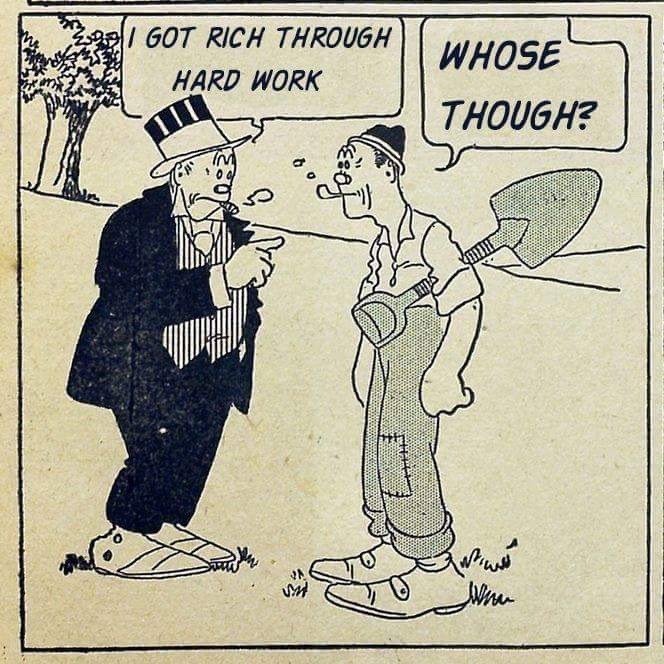
Tag: money

  • The Financial Distribution System of the Kingdom of God

    As Elon Musk said recently, money is just an abstract representation of what an economy really is. An economy is actually about goods and services. Buying and selling ensures distribution. Without distribution, every economy will collapse. As a result, different economic systems have been designed across history to regulate financial distribution, seeking to establish equity, prosperity, and order. Yet, despite their varying philosophies, they all fail to create a truly sustainable and just society.

    The Failure of Man-Made Economic Systems

    1. Anarchism – The Illusion of Self-Regulation

    Anarchism proposes a world without structured governance, where individuals or small communities regulate themselves without external control. In theory, this promotes freedom, equality, and decentralized wealth distribution. In reality, it collapses into chaos, as the strongest and most aggressive take control, leading to the exploitation of the weak. Without structure, wealth becomes concentrated in the hands of those willing to dominate, and society spirals into lawlessness.

    2. Marxism – The Dream of a Classless Society

    Karl Marx envisioned a world where the means of production are owned collectively, eliminating class struggle. In practice, however, Marxist economies often end in tyranny. The state, instead of dissolving as Marx predicted, becomes a controlling force that suppresses individual enterprise, leading to stagnation. Equality of outcomes, which was the goal of DEI, shifts governance from the hands of the capable into the hands of incapable for the sake of equity. Results: resources are poorly managed, incentives to innovate are stripped away, and instead of achieving equality, Marxism produces widespread poverty.

    Socialism promotes wealth redistribution through state intervention, ensuring that resources are shared among the population. While it seeks fairness, it often results in heavy taxation, bureaucratic inefficiencies, and an overdependence on the government. Over time, productivity declines as individuals lose motivation to work harder when their wealth is forcibly redistributed. Ultimately, socialism demands an idealistic government that rarely exists in reality.

    4. Communism – Forced Equality, Inevitable Oppression

    Communism takes socialism to an extreme, removing private property and dictating complete state control over all financial and economic activities. The problem is simple: power corrupts. The ruling elite—those in charge of redistribution—accumulate privilege, while the masses endure uniform poverty. The dream of fairness quickly turns into an oppressive nightmare, where citizens have neither freedom nor prosperity. Because of modern-day China, many have started to admire communism. Nonetheless, history has too many examples of its dehumanising failure.

    5. Fascism – The Domination of the Few

    Fascism centralizes financial power in the hands of a nationalist state, promoting strict control over industry and commerce. Though it encourages economic strength, it does so by crushing individual freedoms. Fascism leads to exploitation, as the ruling party prioritizes its agenda over economic justice. Instead of wealth being distributed fairly, it is concentrated among a select few, and opposition is violently suppressed.

    6. Capitalism – The Illusion of Unlimited Growth


    Capitalism thrives on competition, rewarding those who are innovative, hardworking, and risk-taking. It has lifted many out of poverty and has driven technological advancements. However, unchecked capitalism breeds greed, inequality, and corruption. The rich accumulate more wealth while the poor struggle, creating a cycle of financial disparity. Capitalism benefits those who already have resources, often leaving the underprivileged with little opportunity to rise. This is the best economic system man has ever come up with. However, all it ensures is the rich getting richer and the poor getting poorer.

    Each of these systems, despite their promises, ultimately fails to bring justice, fairness, and sustainability. They are all built on human wisdom, ambition, pride and selfishness. God’s Kingdom operates differently. It looks like an upside down Kingdom but truly, it’s the rightside-up Kingdom.

    The Kingdom of God’s Financial Distribution System

    The Kingdom of God does not function like the economies of men. It is based on divine principles led by the Holy Spirit, ensuring that wealth is used to sustain, empower, and build rather than to oppress or hoard.

    The Church in Acts – Holy Spirit-Led Economics

    The early church operated on a divine financial system that transcended capitalism, socialism, and communism. Their model was not based on coercion but on the leading of the Holy Spirit.

    Acts 2:45 – “They sold their property and possessions and distributed the proceeds to anyone who had need.”

    Acts 4:34 – “There was not a needy person among them, for those who owned lands or houses sold them, brought the proceeds of what was sold, and laid them at the apostles’ feet.”

    Acts 6:1 – “In those days, as the disciples were increasing in number, there arose a complaint by the Hellenistic Jews that their widows were being overlooked in the daily distribution.”


    This system did not rely on taxation, forced equality, or state control. It was a voluntary, Spirit-led movement where those with abundance willingly gave, ensuring that no one in the community was left behind, even the widows and orphans. The key difference between the Kingdom’s economy and human economies is motive. In man-made systems, financial distribution is driven by self-interest, power, or political control.

    In God’s system, financial distribution is driven by love and stewardship. The day the church will be rich is not the day we will all park V8s in the parking lots. It’s the day we will quickly respond to a need the Holy Spirit prompts us without doubt, second thought, pride or showoff. Once the advancement of God’s Kingdom has more than enough like in the days of Moses or Josiah, that is the Spirit’s vision of a prosperous church.

    The church’s responsibility is to yield to the Spirit to ascertain what everyone needs, not through force but through willing generosity and divine wisdom. Sometimes, you may have a need but the Holy Spirit will lead you to give willingly to another person. If, indeed, we all yielded to the work of the Holy Spirit to financially distribute, none of us will lack. We will all have what we need (note that it is not what you want but what you need). If our first desire is to fill a need prompted by the Spirit rather than identify all our unsatisfied wants, there will be an abundance of gratitude.

    The Natural Food Chain – God’s Design for Financial Balance

    God’s economic system is mirrored in nature. The way God designed the food chain reflects how resources should be distributed. Predators (lions, wolves, tigers) have forward-facing eyes, symbolizing focus and strategy. Prey (deer, rabbits, gazelles) have eyes on the sides of their heads, allowing them to remain watchful and aware. This balance ensures that one species does not overpower the other completely.

    Reproduction in nature maintains an equilibrium.
    Prey reproduce at a much higher rate than predators. If prey species (e.g., rabbits, antelope) reproduced at the same rate as lions or wolves, their populations would be wiped out. If predators multiplied at the rate of prey, they would consume all their food sources and starve. In fact, in this dynamic equilibrium, once there is too much prey, the predators will multiply to curb their population.


    If He feeds the birds that eat the worms and feeds the worms that are eaten by birds, rest assured; He is the only Wise God. This system, designed by God, keeps nature in harmony. Similarly, financial distribution in the Kingdom is designed to prevent the extinction of the weak and the unchecked dominance of the strong.

    Humans Are Meant to Follow This Pattern

    The principles of provision and balance are not just found in nature but are commanded by God.

    Leviticus 22:28 – “Do not slaughter a cow or a sheep and its young on the same day.”


    Why would God give such a law? Because it ensures sustainability. If you kill both the parent and the offspring, you eliminate the future supply. This is a divine economic principle: never consume everything; always leave room for replenishment. Many people, businesses, and even churches fail financially because they consume without replenishing. They kill both the “parent” (present resources) and the “offspring” (future investments), leaving nothing for the next generation.


    Man’s financial systems—whether capitalism, socialism, communism, or fascism—all fail because they are built on human ambition, greed, and control. The Kingdom’s financial system is based on love, generosity, and divine wisdom.

    God’s distribution system is:

    ✔ Spirit-led – Directed by the Holy Spirit, not by human control.
    ✔ Sustainable – Ensures provision for both present and future generations.
    ✔ Balanced – Keeps wealth circulating so no one is left in need.
    ✔ Voluntary – Rooted in love, not in forced redistribution.

    When the Church operates under this divine financial system, there is no lack. Needs are met, wealth is used for Kingdom purposes as society flourishes. The question is: Are we willing to shift from man’s broken systems and embrace God’s perfect economy?

  • Identifying Your Non-Negotiables: 5 Things More Important than Money

    In the hustle and bustle of our daily lives, the pursuit of financial success often takes centre stage. However, there are aspects of life that transcend money, shaping our well-being and overall happiness. Let’s delve into the concept of non-negotiables—those fundamental elements that should take precedence over the allure of wealth.

    1.  Health and Well-being: The True Wealth

    Amidst the quest for financial stability, it’s easy to overlook the foundation of our existence—health. Your physical and mental well-being should top the list of non-negotiables. No amount of money can replace the vitality that comes from a healthy body and a sound mind. Prioritize self-care, adopt a balanced lifestyle, and invest time in activities that nourish your overall well-being.

    2.  Authentic Relationships: The Currency of the Heart

    As social beings, our connections with others contribute significantly to our happiness. Meaningful relationships built on trust, love, and shared experiences are invaluable. No amount of wealth can substitute for the warmth of genuine human connections. Nurture your relationships, invest time in your loved ones, and cherish the bonds that make life richer.

    3.  Personal Growth: Investing in Your Potential

    While financial investments are crucial, don’t forget to invest in your personal growth. Acquiring knowledge, honing skills, and pursuing passions contribute to a fulfilling life. The pursuit of self-improvement transcends monetary gains, allowing you to unlock your true potential and lead a purpose-driven life.

    4.  Quality Time: The Precious Commodity

    Time is a finite resource, and once spent, it can never be regained. In the pursuit of money, it’s essential to allocate time wisely. Allocate moments for leisure, self-reflection, and quality time with loved ones. The memories created during these moments far surpass any material possessions.

    5.  Peace of Mind: The Ultimate Wealth

    The relentless pursuit of financial success can often lead to stress and anxiety. True wealth includes the peace of mind that comes from living authentically and in alignment with your values. Prioritize your mental health, practice mindfulness, and seek a harmonious balance between ambition and serenity.

    In conclusion, while money is undoubtedly a powerful tool, it should not overshadow the things that truly matter in life. Identifying your non-negotiables and giving them the prominence they deserve can lead to a more fulfilling and balanced life. Remember, there are things more important than money, and true wealth lies in the richness of experiences, relationships, and personal well-being.

  • 7 Keys to Unlocking the Mystery of Time & Money


    In the grand tapestry of life, one philosophy serves as a compass, guiding us through the delicate dance between our fleeting hours and the allure of wealth. It reads; “Time is Money”. Time is spent. Money is spent. However, while money can be earned and spent, time is a currency that once spent, cannot be regained. For lack of space, I’m not able to fully explain how I could. The reader will only fully benefit if they meditate on each key to understand these deep mysteries. Let’s explore the mysterious relationship between time and money.

    Key 1: True Riches is How You Spend Time

    Poor people see time as an insignia of wishful hope for better days. The rich see time as a ticking clock and envision it as a treasure chest, brimming with golden opportunities waiting to be seized. By observing the rich, you’d realize what they CAN’T afford to give out just like that is their time. Wealthy people have spare money but even for them, there is no spare time. Therefore, the mindset of a rich person – even if he/she has no money yet – is a wise expenditure of time.

    Key 2: Spending and Saving

    “Don’t spend time to save money; spend money to save time.” It’s akin to stepping into a magical portal where each money spent becomes a ticket to reclaim stolen moments. Imagine outsourcing mundane tasks to free up your schedule, transforming the mundane into moments of joy. Money becomes the key to unlocking the door to a more enriched existence. This should be one of your utmost reasons for becoming rich. Outsource tasks that are a sheer accumulation of time wastage in the long run.

    Key 3: Renewable & Non-Renewable Resources

    And here’s the paradox: “You can always get more money, but you can’t get more time.” As we chase the elusive currency of life, let’s not forget that time, once slipped away, is a phantom we can never recapture. The art lies in realizing that every penny earned should be an investment in the currency of experience, memories, and fulfilment, for these are the treasures that make time/life meaningful.

    Key 4: Chasing Money = Wasting Time

    “Don’t let a money-making deal cause you to waste time”. Picture a bustling marketplace where deals abound, promising riches beyond measure. Yet, hidden amidst the glittering gems are deals that, though showering us with gold, stealthily steal away the pearls of our time. A sage piece of advice echoes through the crowd: be wise, for not all that glitters is worth the ticking seconds of your life.

    Key 5: Both Money and Time Are Tools

    Young people care more about money because they feel they have more time. They should rather care about purpose. Envision a vibrant carnival where the young revel in the belief that time is an endless carousel. Yet, amidst the laughter and bright lights, a call rings out—focus not solely on the glittering prizes of wealth, but on the purpose that propels you forward. Purpose, like a magnetic force, attracts not just provision but a wealth of experiences that money alone cannot buy.

    Key 6: Priority is Key

    In the timeless words, “Seek ye first…and all others shall be added,” envision a guiding star illuminating the path to a richer existence. It’s not about accumulating wealth for its sake but about pursuing purpose. Purpose, like a skilled alchemist, has the power to transmute the ordinary into the extraordinary, turning the mundane into gold and laying the foundation for a life truly well-lived.

    Key 7: Provision is Only Made for Purpose

    And so, the grand crescendo of this symphony of philosophy reaches its pinnacle: “Anyone fulfilling purpose eventually becomes rich until they become wealthy.” There is no single wealthy person who isn’t solving a problem. Imagine a garden where purpose blooms into a lush landscape, each blossom a testament to a life well-lived. The paradox is unveiled — chasing purpose and time becomes not an adversary but a steadfast ally, ushering in riches beyond the narrow confines of monetary wealth.

    You don’t need more time to fulfil your purpose. Many did it in the very few years they lived. You don’t need more money to fulfil your purpose. In many cases, you just need to start and provision will soon be in your favour. In this grand narrative of time and money, let the melody of purpose guide our steps, as we waltz through the ephemeral beauty of existence, realizing that true wealth is woven into the fabric of a purposeful life.

  • Financial Literacy, the Difference between the Rich and the Poor

    In the post about the God that maketh rich, we talked about the fact that a wealthy man is not one who has a lot of money. It is the one who has the ability to create wealth. This is why people who win the lottery never sustain their wealth. They go back to being broke. Welcome to Financial Literacy 101!

    If you took all the money in the world and shared it equally, eventually those who were rich will become rich again. This is because the rich understand some things that poor people think are automatic. Poor people never understand the monetary system, the stock market, market values and what causes the appreciation and depreciation of products. They think there are no determinants, that it is by nature or that such systems cannot be controlled. In light of that, let’s talk about 3 things that separate the rich from the poor.

    Assets & Liabilities

    When rich people have money, they buy assets. When poor people get money, they buy Liabilities. Why? Rich people know what assets and Liabilities are, but poor people don’t. If a poor guy wins the lottery right now, he will buy things just to look rich. For the rich, the goal is not to look rich. The goal is to be rich. If this is the mindset, the person will look for ways to sustain wealth.

    Financial Literacy

    Let’s be practical. A car is a liability. Owning land is an asset. If you buy a car, you need to fuel it occasionally. You need to wash the car, service it with time and repair its broken parts. This is what makes the car a liability. Liability requires future sacrifices due to ownership of such entities. All these responsibilities would not exist if one didn’t own a car. So it’s not just about having the money to buy the car, but the ability to manage the financial responsibilities of owning one.

    When a poor person gets money, he will buy Liabilities that will require regular future expenditure to maintain them. The rich will buy assets. Assets produce positive economic value. The value of Liabilities seldom appreciates upon ownership. However, rather than spending more to maintain their value, assets can rather appreciate bringing more value to their owner. You can buy a piece of land in a good location today and you can gain 10 times the monetary value of its initial market value. It’s not rocket science.

    Supply & Demand

    Supply and demand is the most fundamental feature of every market. When the demand is higher than the supply, prices become expensive. The product or service becomes scarce and the few who can render that service or have that product have multiple buyers who can be willing to buy at a very high cost. Owning such products comes with prestige. This is why car manufacturers can make a car model that is only owned by 10 people in the whole world.

    When supply is higher than demand, prices become cheap. Anyone can buy the product. Also, the manufacturer sells at a lower price to reduce the supply of the product. This explains why buying in bulk comes with a reduction in prices. It is up to sellers to regulate the demand for their products to stabilise their market value. When supply exceeds demand, manufacturers hoard goods to spark demand among consumers. By creating scarcity, one can increase the market value of any product.

    Financial Literacy

    One thing rich people create and/or invest in is a product that has a high demand. They never create a product and wait to see if there will be demand for it. They understand the nature of goods and their demands. If you’re a seller, don’t bombard the market with your goods. Start with one customer. This is financial Literacy 101. Once you create a high demand for your goods, then you increase your supply. Don’t supply first.

    Savings & Investments

    Poor people save. Rich people invest. Sometimes, people lose the value of their saved money without realising it. The value of a currency is not stagnant, although it’s necessary that it’s stabilised. When you save $100 in January and what $100 could afford in January is less than what it could afford in December by 10%, you have lost $10 in monetary value. If savings reaped any good outcome, people would have been burying their money in the ground to retrieve it 10 years later.

    However, in 10 years’ time, the monetary value of that amount could be about 300% less. Don’t get me wrong! I’m not saying it’s bad or wrong to save. All I’m saying is, the focus of the rich is to invest. The purpose of savings should be an investment. Invest in something you believe would have a higher monetary value in future than it has now. Education is an investment. Financial literacy is an investment. Physical and mental health is an investment. Don’t just save, invest. This is why real estate is the biggest investment in the world.

    Financial Literacy

    Rich people usually buy assets. Poor people usually buy Liabilities. The poor usually save only, rich people save to invest. Poor people think the market is unpredictable. Wealthy people control the market. Financial Literacy, not money, is what separates the rich from the Poor.

  • Why is The World System All About Money?

    Is the world system all about money? Well, from the beginning of time, humans worked for sustenance. The wife stayed in the house and kept the home because it was dangerous outside. The man went out and brought back food for the household. With time, there was a need for transactions. A group of people seem to have an abundance of some goods and a complete lack of others. Both parties agreed on the value of goods being exchanged. This began the concept of the monetary system.

    As civilizations began to take permanent shape and populations became denser, governing bodies created a legal tender to cater for commerce. I’m not here to tell you the history of money. Long story short, humans now work basically for survival. Both man and woman step out the door in search of monetary gain. Yet, families barely take three square meals daily. What has happened to society?

    Mom and Dad wake up early in the morning for work and come back late at night. This doesn’t make sense. We work for the money we don’t have to gain a life we lose in the search for money. You will find kids who grow up with parents in the same house but they barely know each other on a personal level. The kid must learn hard to find a good job in future. Dad must work hard to get promoted and earn more. Some fathers measure their worth by their ability to cater for their family financially, yet they don’t have time to build a personal relationship with their children.

    Kids are not allowed to chase their dreams and goals because apparently, that industry does not guarantee financial stability. We are even choosing courses for people based on income, wow. There are some who are simply religious because they don’t have enough. Once they have enough money to rely on, that’s their release clause from religion. People would rather marry a rich guy they don’t like than a poor guy they like as if we can determine who will still be rich in future. In some countries, old people can’t even afford to die, literally. Funeral bills are so high that they will crush the family expenses. Some pulled the plug for their mother and father to die because it was eating up all their financial gains.

    We say rich people have rich weird diseases but that’s not really the case. When your family cannot afford the healthcare for your illness, it’s bye-bye for you. It’s the rich people who can continue living on medication. Go to hospitals and see desperate mothers negotiating with doctors who cannot possibly do anything about the situation. More people die due to lack of financial aid but no one takes note of such statistics. Imagine doctors and nurses who aren’t paid their worth. Now they look inhuman when they go on strike or refuse to cater for patients who can’t afford the bills.

    As aforementioned, people on the brink of survival act instinctively. We are slowly losing our humanity because of monetary gain? Not necessarily. At the instinctive level, human behaviour and animal behaviour are very similar. When you reduce people to survival, they become instinctive. There won’t be enough room for compassion for others. Many are equally dying due to medical negligence because medical practitioners are not comfortable consistently looking with compassion at dying patients.

    In urban design, we don’t mix the community of the rich with the poor. The poor will build more resentment toward the rich. As a result, rich neighbourhoods keep on looking “fly” while poor neighbourhoods look like slums. See, when you’re always broke there are very few things in life you care about. Sanitation is definitely not one of them. This explains why poor countries always look filthy and vice versa. With comfort comes the luxury of thinking. Imagine telling a man with a nagging wife and three kids in the university not to walk on the lawn. There are more important things in his life to worry about.

    Whenever I walk through town, I see it on every face. It’s the face of survival. It’s not about chasing after money, but about surviving for the day. It makes almost everyone slightly irritated, a consistent complainer and a little insensitive to strangers. That tomato seller has two kids in Nursing Training School. Don’t let the iPhones of the kids fool you. You are annoyed because she is selling in the middle of the street? Don’t you think she knows that it’s dangerous? Don’t even talk about the beautification of the streets because she doesn’t care. All she cares about is making it through the day for another day.

    When you’re poor, it is easy to blame the system on rich folks. Poor people believe so much in progressive tax. They don’t see why we should all be taxed the same. The richer you are, the more taxes you ought to pay. In reality, it is more difficult to stay rich than to stay poor. To stay poor, do nothing. To stay rich, you need to beat the system. The system is tougher on rich people than on poor folks. As such, rich people lose more of their humanity in trying to stay rich.

    It will shock you to know what you will be willing to do to survive. It will shock you, even more, to know what you will be willing to do to become rich and stay rich. To me, this is one of the major reasons why this life is hard. Not just because it’s all about money. It’s because if you don’t run, the system will overtake you and you’ll become miserable. The monetary value of goods and services inflate and deflate but the standard of living is always increasing. It’s almost like the system is forcing everyone to chase after money. If you don’t run, you can’t even survive.

    I throw the question to you? Why is the world system all about money? Is the world system all about money in the first place? Is it a good thing or a bad thing? Can something be done about it? Let me know your thoughts.

  • El-Dosted: The God that Maketh Rich

    So last week, we started a profound conversation about what actually makes one wealthy. Initially, I didn’t want to conclude anything, especially on the three sides I chose; God, Hard Work or Wisdom. From the comments I got, I realized how everyone agreed that it’s pretty much complicated.

    After careful contemplation, I came to the conclusion that the 21st-century person is more unlikely to believe in God for wealth. Perhaps, the lifestyle of the Christian pertaining to riches has been such a poor example to the simpleton that people would rather believe in anything else other than God to make them rich.

    In fact, the average Christian believes in God but not in the money aspect. That part is none other than theory to all of us, I guess. Practically, we shout amen to all the declarations and go back to our poor miserable lives the next day. So why don’t we talk about that? Does wealth have anything to do with God at all?

    I’m case you missed it, click on the thumbnail below to catch up on what we are talking about. Then, you can jump back in again.

    The Provision of God

    For he makes his sun to shine on bad and good people alike, and gives rain to those who do good and to those who do evil.

    Matthew 5:45

    Christians think they are so special. Just like any other religious group, they think their God will only be kind to them and be rude to everyone else. God is not like that. Even though the sins of the wicked will not go unpunished, He is still gracious to everybody. We are all God’s creation. We are God’s handiwork.

    Remember that it is the LORD your God who gives you the power to become rich.

    Deuteronomy 8:18

    We are made in His image. When it comes to ability, potential, purpose, and provision, He gives each and everyone that. Whether you believe it or not. Whether you know Him or not. Whether you are a Christian or not. That provision of God is still made available to you. This provision includes the potential to be prosperous and the ability to make wealth. God shows favour, not favouritism.

    The Propensity of God

    The LORD makes some poor and others rich; he brings some down and lifts others up.

    1 Samuel 2:7

    Oh yeah….one thing about God; He does what He likes. He can make you poor. Always remember this; prosperity is for a purpose. Forget about the person not being a Christian. God has the Propensity to make someone rich and lay it on the person’s heart to solve a world problem. When God gives you wealth and you think it’s for only you but it was up to only you to become rich, God can take it away.

    Why is this important to know? People think this makes God look schizophrenic, doing both good and bad and playing God and the devil sometimes. This is not so. If God didn’t have the power to destroy, cause afflictions, send poverty etc. He will have to rely on the devil to punish wrongdoers, thus making Him the devil’s accomplice. Every Judge has the power to save and destroy. If God can make you rich, He can make you poor. If He can exalt you, He can humble you as well.

    But God said to him, ‘You fool! This very night you will have to give up your life; then who will get all these things you have kept for yourself?’ ”

    Luke 12:20

    This is a really hard truth that many people don’t want to hear. The same God who can save can destroy. If He can make you whole, He can also make you empty. If He can make you rich, He can also make you poor. This is not a dualistic universe where God can only heal and the devil can only destroy. God can do all things. God can heal and also destroy. That is why Jesus said do not fear the one who can destroy the body. Fear the one who can destroy both the body and soul.

    The Exceeding Riches of God

    And he went on to say to them all, “Watch out and guard yourselves from every kind of greed; because a person’s true life is not made up of the things he owns, no matter how rich he may be.”

    Luke 12:15

    The Exceeding Riches of God is not even about having a fat salary. It’s not about money. It’s not even about material wealth. Do you know that, even in the financial world, a wealthy man is not one who has a lot of money? It is the one who has the ability to create wealth. This is why people who win the lottery never sustain their wealth. They go back to being broke. If you took all the money in the world and shared it equally, eventually those who were rich will become rich again.

    This is why you shouldn’t be jealous of the facade of worldly riches. Worldly riches don’t last. It is not sustainable. The Exceeding Riches of God is from generation to generation. Can you become rich outside of God’s principles and outlines? Of course. You can go for blood rituals. You can join a rich occult group. You can engage in Internet fraud. You can create/ modify deadly diseases in the lab. You can even sell your soul. Guess what? That wealth won’t last.

    God gives wisdom, knowledge, and joy to those who please him. But if a sinner becomes wealthy, God takes the wealth away and gives it to those who please him.

    Ecclesiastes 2:26 NLT

    In the end, it is God who blesses. There are those who made wealth and cannot even enjoy it. Down the line, that wealth ended in the hands of the one God wanted to give it to. The Exceeding Riches of God is a kind of wealth that nourishes you multi-dimensionally. There is a kind of wealth that people get at the expense of their family and relationships. Others, at the expense of their health and vitality. No need to be envious of such wealth. It is God who blesses, and He adds no sorrow to it.

    Good people will have wealth to leave to their grandchildren, but the wealth of sinners will go to the righteous.

    Proverbs 13:22


    You don’t need to live a lifetime to discover this. If you want the kind of wealth that is not tied to something outside of you; the kind of wealth that is multi-dimensional; the kind of wealth that you get to enjoy; the kind of wealth that you get to pass to your children and grandchildren; the kind of wealth that is tied to God’s purpose; then look to no one else other than El-Dosted. His streets are made of pure gold. Gold and silver are His. His rewards exceed all riches, for His Exceeding Riches are incomprehensible.

    Shout-out to El-Dosted!

  • What Makes One Wealthy? God, Hard Work or Wisdom?

    The pastor said we should pray to God to bless us financially. Mom said I should work hard in school so I can make a fortune for myself in future. The “financial” Motivational speaker I follow on IG is saying otherwise. Who’s right and what’s right? What Makes One Wealthy? God, Hard Work or Wisdom?

    What Makes One Wealthy? God, Hard Work or Wisdom?

    From observation, I know for sure it’s not speaking in tongues and attending prophetic conferences that make one rich. Most of the wealthiest people in the world are not even Christians in the first place. Most of the prayerful people I know too are not necessarily rich. In fact, they seem to struggle with their finances. Let’s face the facts. So God is out?

    When it comes to hard work, I know for sure that’s what they always say. “How did you become wealthy, O wealthy one?”. I worked hard. It’s all about hard work. Cut the bullshit. You were born into wealth so let’s stop pretending. The richest people in the company do the least work. In fact, their wealth is based on how hard their employees work.

    What Makes One Wealthy? God, Hard Work or Wisdom?

    Hard work used to work once, I guess. In our world today, it’s about working smart. The first-generation wealthy guys are those who worked smartly on a very simple idea. So it’s wisdom, then? Because wisdom is just an ancient word for working smart.

    So what makes one wealthy? Not God because pastors and Christians are poor? Not hard work because CEOs don’t stress but employees work their asses off? Is it wisdom? I don’t think so. There are foolish rich people, just as much as there are wise poor folks. Wealth is not necessarily a measure of how wise someone is.

    So even though wisdom is better than strength, those who are wise will be despised if they are poor. What they say will not be appreciated for long.

    Ecclesiastes 9:16 NLT

    Those who think God maketh rich think it has nothing to do with hard work. Those who think it’s hard work think it has nothing to do with God or religion. Yes, some wealthy folks when asked will tell you it’s only God. The real assumption lies in the fact that we think since one has God, one has material wealth. This makes people sceptical.

    If it’s only God, then why are so many Christians poor? Why are the so-called worldly people rich and wealthy? Then there are God folks who will make you feel like wealth doesn’t even matter. Dude, if you wanna be poor, be poor in peace. Stop spreading your poverty mindset.

    So what makes one wealthy? In my opinion, it’s very bold of us also to assume that making wealth is about having one of the aforementioned ingredients. That’s my opinion. What do you think? Let’s hear you in the comments.

  • Coping with Finances as a Couple

    If there is one thing that is forever relevant in the world system, it is finances. Throughout human history, legal tender has changed. The complexity of the legal tender always reflected the monetary system put in place for financial transactions to be possible. However, the need and relevance has barely changed; only evolving with time.

    Gone is the generation where the woman only stays home to take care of the house while the man goes out to work for sustenance. In our world today, for the family to fluorish financially both parents step out the door for work. This has brought about new challenges on coping with finances.

    In this life, realize that sitting to think about a situation before venturing into it is the best way to tackle that situation. Thus, this write-up is really necessary for singles and young couples. Trust me, if you don’t plan beforehand what you’ll say when – for instance – you go for an interview, what you’ll do when you are broke etc, you can end up embarrassing yourself or making an avoidable wrong decision. Even thieves plan what they’ll do when they are about to get caught. You hope for the best, yes: but do plan for the worst.

    Here are 3 outlined things I have come to understand about this issue;

    1. Each one ought to have their own money

    As a couple, the idea of doing everything together sounds romantic. Actually, it’s not always realistic. You are not two halves making a whole. You are individuals coming together as a couple. So you need to have a life of your own, complemented by the life you share with your partner. In simple English when it comes to finances, have your own money. Don’t put all your money together.

    If you put your money together, if you’re broke you’re broke together. Yet, if you had your own money separate from the one you had together, one can be broke for a season and be supported by the other. In this way, you fulfill the reason for being a couple.

    Two people are better off than one, for they can help each other succeed. If one person falls, the other can reach out and help. But someone who falls alone is in real trouble.

    Ecclesiastes 4:9‭-‬10 NLT

    2. Balance

    Complement each other. Divide major expenditure brackets among yourselves. As a man, I will take care of the car. As a woman, you take care of the rent. So once payday is due, everyone knows what they are taking care of. It could even be in percentages. As a man, I will take care of 40% of the school fees while the lady takes care of the 60%. There is no formula to this. It does not need to be rigid or fixed because circumstances change often. It really depends on the level of understanding between the two of you.

    Compromise, don’t compete. Usually, men feel inferior when their partner makes more money than they do. It feels like the woman would get to make more vital decisions in the relationship because of how important finances are. That notwithstanding, your partner is your helper and not your competition. You are not trying to beat them. You both are coming together to face life. So you need everything you can get, including extra cash from a richer spouse.

    3. Understand your financial personality

    Depending on how we were brought up and the coping skills we picked along the way, we tackle finances differently. We can however group everyone under two main umbrellas. “Saving-oriented” and “Spending-oriented”. Proverbs 13:7 says “some who are poor pretend to be rich; others who are rich pretend to be poor.”

    It’s human nature to “waste” resources once there’s that feeling that there’s more than enough resources available. This is because human wants are insatiable. Immediately you get enough money, you tend to feel more comfortable and begin to spend on your insatiable wants. That is natural.

    Nonetheless, there are people who develop a saving-oriented attitude towards money. They are slow to spend, critical of the amount they have at the moment and barely buy out of impulse. The Spending-oriented easily releases money, doesn’t count until it’s almost finished and usually don’t know how their money run low so fast.

    A couple who are both Spending-oriented is a disasterclass. They will end up spending three-month salary in advance. When both are saving-oriented, it’s bad in a different way. Ask them rich kids who look rich but aren’t allowed to spend rich. They are so rich yet live so poor. Proverbs 13:7 is so true.

    Thus, identify your financial personality as a couple. Who likes spending? Who has cultivated a unique habit of saving? Who doesn’t count the cost until the money is finished? Who has so much money but still lives within their initial budget? Understanding who is what creates the balance both of you need. After all, coming together as a couple ought to strengthen your strengths and weaken your weaknesses. Where one falls short, the other is a suitable helper.

    I hope you’ve learnt so much from this. Please leave a comment. I would like to hear from you. Speaking of finances, this website is monetized so please do well to like and share to any platform you know would help. I love you ❤